From Lead-Acid to Lithium: Why the 2008 Chevy Silverado 1500 Battery Still Matters
If you've searched for a 2008 Chevy Silverado 1500 battery, you're likely dealing with a familiar scenario: a dead 12V lead-acid group-34 or group-48 battery that needs a $140–$220 replacement at your local auto parts store. That truck left the factory with a conventional flooded or AGM lead-acid battery cranking a 4.3L V6, 4.8L V8, or 5.3L V8 — and nearly two decades later, the replacement cycle hasn't changed much.
But in 2026, the battery conversation in trucks has shifted dramatically. The Chevrolet Silverado EV (the all-electric successor in spirit, if not in direct lineage) packs a 200+ kWh Ultium lithium-ion battery — roughly 3,000 times the energy capacity of that original 12V battery. Understanding how modern EV traction batteries work, how they degrade, and what they cost to replace is critical whether you're cross-shopping an electric pickup or simply trying to understand where battery technology stands today.
This guide bridges that gap: we'll use the 2008 Silverado's simple battery architecture as a starting point, then walk through every aspect of modern EV battery ownership — chemistry, degradation curves, warranty protections, replacement economics, and what's coming next.
LFP vs NMC: The Chemistry Decision That Defines Your EV
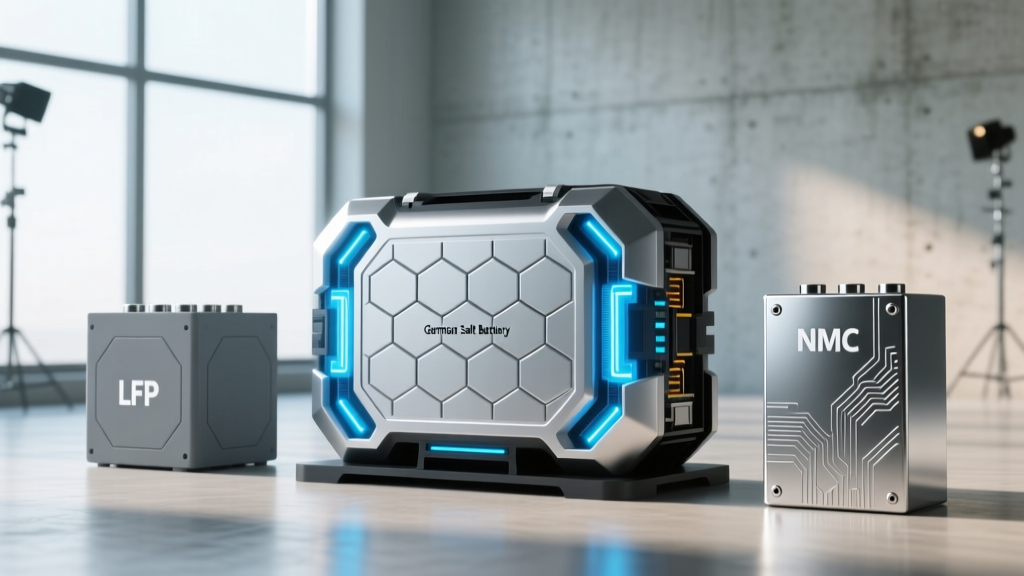
Every EV battery sold in 2026 uses one of two dominant lithium-ion chemistries: LFP (lithium iron phosphate) or NMC/NCA (nickel manganese cobalt / nickel cobalt aluminum). The chemistry determines your range, how long the battery lasts, how it performs in cold weather, and what you paid for the vehicle.
| Attribute | LFP (Lithium Iron Phosphate) | NMC / NCA (Nickel-based) |
|---|---|---|
| Energy Density | ~160–180 Wh/kg (lower) | ~220–300 Wh/kg (higher) |
| Cycle Life | 3,000–6,000+ cycles | 1,000–2,500 cycles |
| Cold-Weather Performance | Moderate — more range loss below 20°F | Better low-temp discharge |
| Cost per kWh | ~$85–$105 (cheaper) | ~$110–$140 (more expensive) |
| Recommended SoC Daily | 100% daily charging is fine | 80% daily; 100% for trips only |
| Thermal Stability | Excellent — less prone to thermal runaway | Good — requires more active management |
| Common In (2026) | Tesla Model 3/Y RWD, Ford Mustang Mach-E Select (LFP option), Rivian Standard | Hyundai Ioniq 5, Chevy Silverado EV, BMW iX, most long-range AWD models |
| Cobalt Content | None | Contains cobalt (supply-chain concern) |
Which is better? There's no universal winner. If you prioritize longevity and lower cost and can accept slightly less range per pound, LFP is the pragmatic choice — especially for daily commuters who charge at home. If you need maximum range, tow frequently, or live in extreme cold, NMC's energy density and cold-weather edge justify the trade-off. Tesla's strategy of offering LFP in Standard Range trims and NMC in Long Range/Performance trims has become the industry template.
How Long Do EV Batteries Actually Last? Degradation Data
The single most common question from prospective EV buyers: "Will I need a $20,000 battery replacement in five years?" The data says almost certainly not.
Typical EV Battery Degradation Curve (Fleet & Owner Data, 2020–2026):
| Age / Mileage | Average Capacity Retained | Notes |
|---|---|---|
| Year 1 / 15,000 mi | 95–97% | Initial calibration loss; steepest early drop |
| Year 3 / 45,000 mi | 91–94% | Curve flattens significantly |
| Year 5 / 75,000 mi | 88–92% | Most owners notice minimal daily difference |
| Year 8 / 120,000 mi | 83–89% | Still above warranty threshold for most OEMs |
| Year 10 / 150,000 mi | 80–86% | Range reduction noticeable but vehicle remains functional |
Sources: Geotab fleet data, Recurrent Auto battery health reports, manufacturer warranty filings.
For context, a 2024 Tesla Model 3 Long Range with an EPA-rated 341 miles of range that retains 87% capacity at 100,000 miles still delivers roughly 297 miles — more than enough for the vast majority of daily driving and road trips. The fear of a sudden "cliff" where the battery becomes unusable is largely a myth; degradation is gradual and logarithmic, meaning the biggest losses happen early and then slow considerably.
LFP batteries tend to show even slower degradation in real-world fleets, with some Tesla Model 3 Standard Range taxis reporting 90%+ retention past 100,000 miles thanks to the chemistry's inherent cycle-life advantage and the practice of regularly charging to 100%.
What Does the Battery Warranty Actually Cover?
Federal law mandates a minimum 8-year / 100,000-mile warranty on EV battery packs for emissions-related components, and virtually every major automaker matches or exceeds this for the traction battery. California Air Resources Board (CARB) states extend this to 10 years / 150,000 miles.
| Manufacturer (2026 Models) | Battery Warranty | Capacity Threshold |
|---|---|---|
| Tesla (Model 3/Y LFP) | 8 yr / 100,000 mi | 70% retention |
| Tesla (Model 3/Y LR, S, X) | 8 yr / 120,000 mi | 70% retention |
| Hyundai / Kia (E-GMP) | 10 yr / 100,000 mi | 70% retention |
| GM (Ultium — Silverado EV, Blazer EV) | 8 yr / 100,000 mi | 70% retention (60% for commercial use) |
| Ford (Mach-E, F-150 Lightning) | 8 yr / 100,000 mi | 70% retention |
| Rivian (R1T, R1S) | 8 yr / 175,000 mi | 70% retention |
| BMW (i4, iX, i7) | 8 yr / 100,000 mi | 70% retention |
Critical nuance: The warranty covers defects and excessive degradation below the threshold — not normal wear. If your battery drops to 72% at year 7, that's considered normal and isn't covered. If a cell module fails outright, that is covered regardless of capacity. Also note that warranty coverage transfers to subsequent owners, which supports EV resale values.
Per IRS §30D guidelines, vehicles must also meet battery sourcing requirements for federal tax credit eligibility — a separate consideration from warranty, but one that affects your effective purchase price.
EV Battery Replacement Cost: The Real Numbers
This is where the 2008 Silverado comparison becomes stark. That truck's 12V battery costs $140–$220 to replace. An EV traction battery? Here's the reality for 2026:
| Vehicle / Battery Size | Out-of-Warranty Replacement Cost | Typical Replacement Timeline |
|---|---|---|
| Tesla Model 3 RWD (~60 kWh LFP) | $10,000–$13,000 | Rarely before 200,000+ mi |
| Hyundai Ioniq 5 (~77 kWh NMC) | $14,000–$18,000 | Rarely before 180,000+ mi |
| Ford F-150 Lightning Extended (~131 kWh) | $22,000–$30,000 | Rarely before 170,000+ mi |
| Chevy Silverado EV (~200 kWh Ultium) | $30,000–$40,000 (estimated) | Too new for real-world data; module-level repair may reduce cost |
| Nissan LEAF (40–62 kWh) | $6,500–$9,000 (refurbished available) | Air-cooled packs degrade faster in hot climates |
The honest context: According to data from Recurrent Auto and fueleconomy.gov, the vast majority of EV batteries outlast the vehicle itself. Fewer than 1.5% of EV batteries have required out-of-warranty replacement due to failure, and most degradation-related concerns are resolved under warranty. The vehicles most likely to need a replacement are early-generation models (2011–2016 Nissan LEAF, early Chevy Volt) with less sophisticated thermal management.
Module-level repair is increasingly viable: instead of replacing the entire pack, shops can swap individual degraded modules for $2,000–$5,000 depending on the vehicle. GM's Ultium platform and Hyundai's E-GMP architecture were specifically designed with modular serviceability in mind.
Factors That Accelerate (or Preserve) Battery Life
Not all miles are equal when it comes to battery wear. Here's what the data shows about maximizing longevity:
What Hurts Your Battery
- Frequent DC fast charging above 150 kW — occasional use is fine, but daily 350 kW sessions increase degradation by 2–4% over 5 years compared to Level 2 charging
- Sustained 100% SoC storage — leaving an NMC battery at 100% for days (especially in heat) accelerates calendar aging; LFP is more tolerant
- Deep discharges below 10% — regularly running the pack nearly empty stresses cells
- Extreme heat exposure — parking in 110°F+ desert heat without thermal management active degrades chemistry faster
- Towing at max capacity in heat — sustained high-current draw generates internal cell heat
What Preserves Your Battery
- Daily charging to 80% (NMC) or 100% (LFP) — follow your manufacturer's recommendation
- Level 2 home charging as your primary method — gentler on cells, cheaper per kWh
- Preconditioning before DC fast charging — the car warms the battery to optimal temp, enabling faster charging AND reducing stress
- Garage parking in extreme climates — keeping the pack in a moderate temperature range extends calendar life
- Driving it regularly — lithium-ion cells prefer use to long-term storage at any SoC
How to Check Your EV's Battery Health (State of Health)
State of Health (SoH) is the percentage of original capacity your battery currently holds. Unlike the 2008 Silverado, where you'd need a multimeter to test a 12V battery, modern EVs give you several ways to monitor the high-voltage pack:
1. In-Vehicle Displays: Most 2026 EVs show battery health indirectly through range estimates that adjust over time. Tesla's app displays a "Battery Health" percentage under the Service menu. Hyundai/Kia's Bluelink app provides SoH data. GM's Ultium vehicles show projected range trends that reflect degradation.
2. OBD-II Diagnostic Apps: Tools like OBDLink MX+ paired with apps such as LeafSpy (Nissan), Teslamate (Tesla), or ABRP's OBD integration can read cell-level voltage data, total pack capacity in kWh, and calculated SoH percentage. This is the most granular owner-accessible method.
3. Dealer Diagnostic Reports: Requesting a battery health check during service gives you an official printout with SoH percentage, cell balance data, and any flagged modules. This is recommended before purchasing a used EV and provides documentation for warranty claims.
4. Third-Party Services: Companies like Recurrent Auto offer free battery health reports by connecting to your vehicle's telematics data. Their fleet-level comparisons show how your pack compares to thousands of identical vehicles — far more useful than a single SoH number in isolation.
When to be concerned: If your SoH drops below 80% within the warranty period, or if you see sudden range loss of more than 10% in a single month (not attributable to cold weather), schedule a diagnostic check. Uneven cell voltages (more than 0.1V difference between cell groups) typically indicate a module that needs attention.
Beyond Lithium-Ion: Solid-State and Silicon Anode Batteries
The battery landscape is evolving, but it's important to separate announcements from showroom reality.
Solid-State Batteries: Toyota has announced a solid-state battery targeting 2027–2028 production with a claimed 750 km (466 mi) range and 10-minute fast-charge capability. Samsung SDI, QuantumScape (backed by Volkswagen), and Nissan are pursuing similar timelines. However, as of early 2026, no solid-state EV battery is available in a production vehicle sold to consumers. Manufacturing yield, cost (currently 3–5x conventional lithium-ion per kWh), and cycle-life validation remain unresolved challenges. Realistic mass-market availability is 2029–2032 for most buyers.
Silicon Anode Batteries: Companies like Sila Nanotechnologies and Group14 are shipping silicon-dominant anode materials to manufacturers, boosting energy density by 15–25% over graphite anodes. The Mercedes-AMG G-Class electric SUV (2025) was among the first production vehicles to use silicon-anode cells from Sila. Expect broader adoption in 2026–2028 model-year premium EVs, with trickledown to mainstream vehicles by 2030.
Sodium-Ion Batteries: CATL and BYD have begun producing sodium-ion packs for sub-$25,000 Chinese-market EVs. While energy density is lower (~120–150 Wh/kg), the chemistry uses no lithium, cobalt, or nickel — a significant cost and supply-chain advantage. US-market availability remains uncertain and is likely limited to fleet/commercial applications initially.
The practical takeaway: if you're buying an EV in 2026, current LFP and NMC chemistries are mature, well-understood, and backed by extensive real-world data. Waiting for solid-state means waiting years with no guaranteed pricing advantage.
The 2008 Silverado vs a 2026 EV: A Battery Ownership Comparison
To bring this full circle, here's how battery ownership compares between that 2008 Chevy Silverado 1500 and a modern electric truck:
| Factor | 2008 Silverado 1500 (12V Lead-Acid) | 2026 Silverado EV (Ultium Li-Ion) |
|---|---|---|
| Battery Type | Group 48 AGM / Flooded lead-acid | ~200 kWh NMC lithium-ion (Ultium) |
| Energy Capacity | ~0.7 kWh | ~200 kWh usable |
| Replacement Cost | $140–$220 | $30,000–$40,000 (est. out-of-warranty) |
| Replacement Interval | Every 3–5 years | Likely never during typical ownership |
| Warranty | 1–3 years (retailer) | 8 yr / 100,000 mi (70% threshold) |
| Owner Maintenance | Check terminals, fluid (if flooded) | None — fully sealed, actively thermal-managed |
| Failure Mode | Sudden — truck won't start | Gradual — range slowly decreases over years |
The irony is clear: the 2008 Silverado's battery is cheap but needs regular replacement. The EV's battery is enormously expensive but will likely never need replacing during the vehicle's useful life. When you factor in fuel savings, maintenance elimination (no oil changes, no transmission fluid, no spark plugs), and the available federal EV tax credit under IRS §30D, the total cost of battery ownership actually favors the EV over a 10-year horizon — even accounting for the worst-case replacement scenario.
Frequently Asked Questions
How long do EV batteries last in years and miles?
Based on fleet data through 2026, modern liquid-cooled EV batteries (LFP or NMC) typically retain 80–90% of original capacity at 150,000 miles and 10 years. Most will outlast the vehicle's structural and mechanical components. Catastrophic failure before 100,000 miles is statistically rare (under 1.5% of packs).
How much does an EV battery cost to replace in 2026?
Out-of-warranty replacement ranges from ~$6,500 for a refurbished Nissan LEAF pack to $30,000–$40,000 for a large truck pack like the Silverado EV's Ultium system. However, the majority of EVs never need a full pack replacement. Module-level repairs cost $2,000–$5,000 when needed.
What does the EV battery warranty actually cover?
Standard warranties cover defects and degradation below 70% capacity for 8 years / 100,000 miles (10 yr / 150,000 mi in CARB states). Normal degradation above the threshold is not covered. Warranty transfers to second owners.
How do I check my EV battery's State of Health?
Use your vehicle's built-in app or display, connect an OBD-II reader with EV-compatible software (LeafSpy, Teslamate), request a dealer diagnostic report, or use a free service like Recurrent Auto's telematics-based health report.
LFP vs NMC — which battery chemistry should I choose?
Choose LFP if you want maximum cycle life, lower cost, and the convenience of daily 100% charging — ideal for commuters and warm-climate drivers. Choose NMC if you need maximum range, better cold-weather performance, or plan to tow — the trade-off is slightly faster degradation and a recommendation to charge to 80% daily.
Is it safe to buy a used EV with an older battery?
Generally yes, if you verify SoH before purchase. A 5-year-old EV with 88% SoH still has years of useful life and may have remaining warranty coverage. Always request a battery health report and compare it against fleet averages for the same model.
Does fast charging damage my EV battery?
Occasional DC fast charging is fine and accounted for in battery design. However, daily use of 250–350 kW chargers without preconditioning can add 2–4% additional degradation over 5 years versus primarily using Level 2 home charging. Modern thermal management systems have significantly reduced this risk compared to early-generation EVs.