Why a 2008 Hyundai Elantra Battery Search Leads to EV Battery Questions
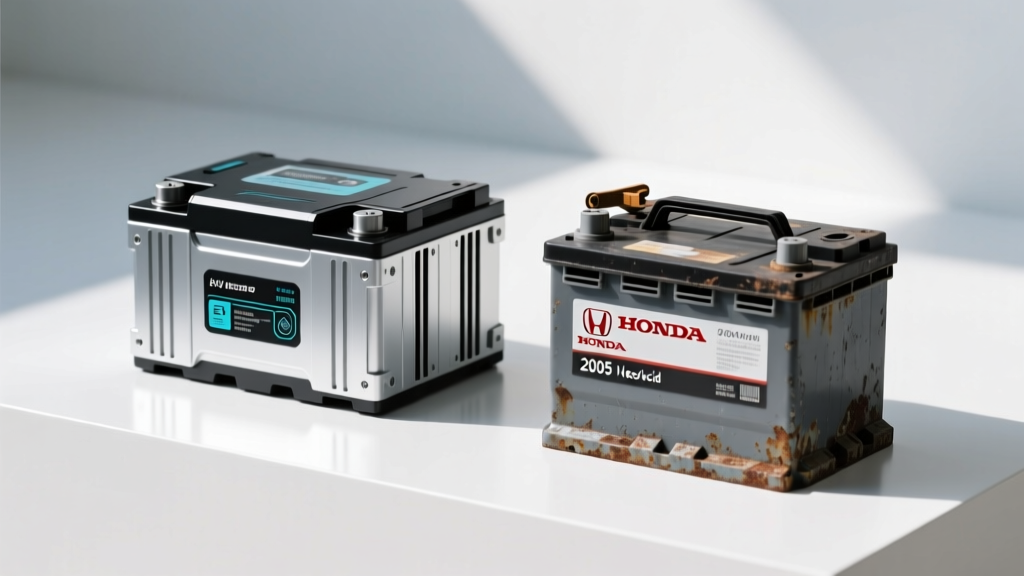
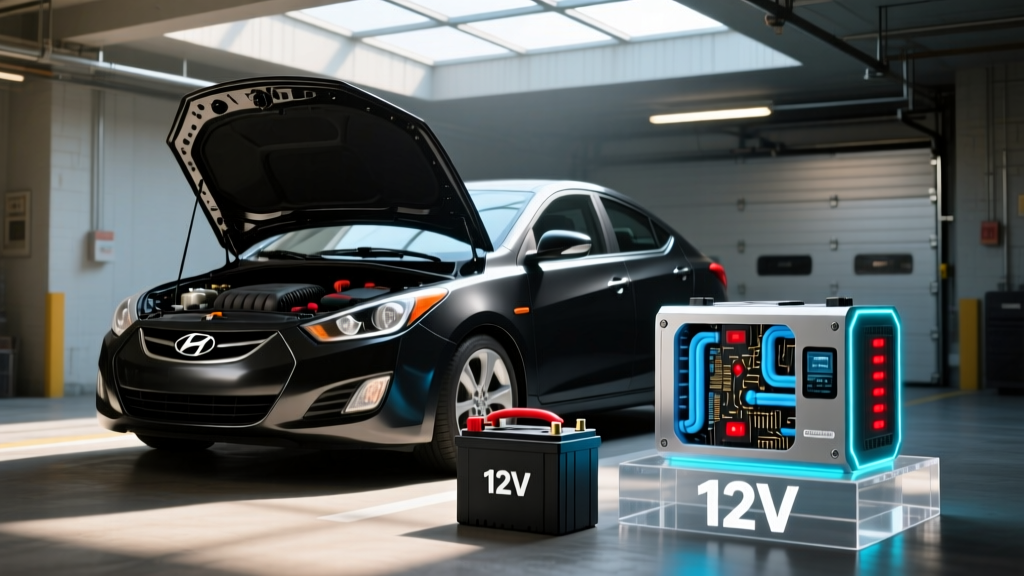
If you've been searching for a battery for 2008 Hyundai Elantra, you're likely dealing with a dead 12-volt starting battery — the group-size 121 or 47 lead-accent or AGM unit that cranks the internal-combustion engine. That replacement runs roughly $130–$220 at any auto-parts store and takes five minutes with a 10 mm wrench.
But here's the wrinkle: many shoppers land on this query while actually researching electric vehicle batteries — either because they're comparing the total cost of keeping an aging Elantra on the road versus upgrading to a modern EV, or because they've conflated the 12V auxiliary battery with the high-voltage traction battery that powers an electric car. Both are real concerns, and both deserve precise answers.
This guide resolves the 2008 Elantra 12V question quickly, then pivots to the data EV buyers actually need: lithium-ion chemistry trade-offs, real-world degradation curves, warranty thresholds, replacement economics, and what solid-state timelines actually look like from a 2026 vantage point.
The 2008 Hyundai Elantra 12V Battery: Quick Spec Reference
Before we get into high-voltage traction packs, here's the exact spec for the gas-powered 2008 Elantra (2.0 L I4):
- Group size: 121 (some aftermarket cross-lists group 47 / H5)
- CCA (cold cranking amps): 550–650 minimum
- Reserve capacity: ~90 minutes
- Chemistry: Flooded lead-acid (OEM); AGM optional upgrade
- Typical replacement cost: $130–$220 (parts only)
- Lifespan: 3–5 years depending on climate
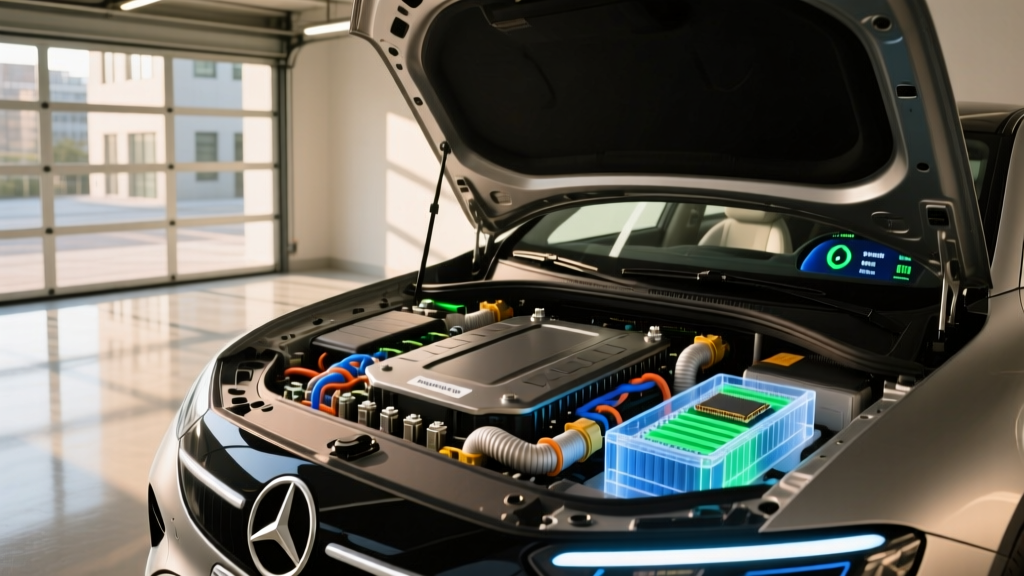
This is a completely separate system from the 400–800 V traction batteries in modern BEVs. The 12V battery powers lights, ECU, infotainment, and starter motor; the traction battery powers the drive motor(s). Never confuse the two — and never attempt to jump-start an EV's traction pack with jumper cables.
EV Traction Battery Chemistry: LFP vs NMC vs NCA
Modern EV batteries aren't a single technology. The cathode chemistry determines energy density, cycle life, cold-weather behavior, and cost. In 2026, two families dominate the US market:
- LFP (Lithium Iron Phosphate, LiFePO₄): Used in standard-range Tesla Model 3/Y, base Ford Mustang Mach-E Select, and most BYD vehicles. Cobalt-free, cheaper per kWh, longer cycle life, but lower energy density and steeper cold-weather range loss.
- NMC (Nickel Manganese Cobalt) / NCA (Nickel Cobalt Aluminum): Used in long-range and performance variants (Tesla LR/Performance, Hyundai Ioniq 5/6, GM Ultium, Rivian). Higher energy density, better cold performance, but higher cost and finite cycle life.
| Attribute | LFP | NMC / NCA |
|---|---|---|
| Energy density (cell-level) | 160–180 Wh/kg | 240–300 Wh/kg |
| Typical cycle life to 80% SoH | 3,000–5,000 cycles | 1,500–2,500 cycles |
| Cold-weather range loss (-10°C / 14°F) | ~30–40% | ~20–30% |
| Recommended daily SoC | 100% (periodic top-off helps BMS calibration) | 80% daily, 100% only for trips |
| Pack cost ($/kWh, 2026) | ~$80–$100 | ~$110–$140 |
| Thermal runaway risk | Very low | Low but higher than LFP |
| Best for | Standard-range, high-mileage, fleet, hot climates | Long-range, performance, cold climates |
Which is better? Neither, universally. If you commute 40 miles daily in Phoenix and charge at home, LFP is the lower-cost, longer-life choice. If you regularly drive 300-mile highway stretches in Minnesota winters, NMC's energy density and cold tolerance matter more. Hyundai's Ioniq 5 (77.4 kWh usable, NMC) and Tesla's Model 3 RWD (~60 kWh, LFP) exemplify how automakers segment by use case.
How Long Do EV Batteries Actually Last?
The short answer: almost certainly longer than you'll own the car. The long answer requires data, not anecdotes.
According to fueleconomy.gov and long-term fleet studies published by Geotab (analyzing >10,000 EVs across multiple model years), the average lithium-ion EV battery loses roughly 1.8–2.3% of its original capacity per year under normal use. That compounds non-linearly — most degradation occurs in the first 2–3 years, then flattens. Real-world data points:
| Milestone | Typical State of Health (SoH) | Notes |
|---|---|---|
| 1 year / 15,000 mi | ~97–98% | Initial "break-in" drop |
| 3 years / 45,000 mi | ~93–95% | Curve flattens here |
| 5 years / 75,000 mi | ~89–92% | Still well above warranty threshold |
| 8 years / 120,000 mi | ~85–89% | Typical warranty expiration |
| 10 years / 150,000 mi | ~82–86% | Most packs still functional |
| 15 years / 200,000+ mi | ~75–82% | Outliers; many packs retired with the car |
Early Tesla Model S packs from 2013–2015 are now logging 200,000+ miles with 75–85% SoH. Nissan Leaf (passive-cooled, NMC) historically degraded faster in hot climates — 2011–2017 models often hit 70% SoH by year 6–8 in Arizona, which is exactly why modern packs use active liquid thermal management.
What the Battery Warranty Actually Covers (and Doesn't)
Federal law (via EPA emissions-warranty precedent and CARB rules adopted by multiple states) effectively mandates that EV manufacturers warrant the traction battery for a minimum of 8 years / 100,000 miles, with a capacity-retention threshold typically set at 70% of original usable capacity. Some manufacturers exceed this:
| Manufacturer / Platform | Term | SoH Threshold | Notes |
|---|---|---|---|
| Tesla (Model 3/Y LFP) | 8 yr / 120,000 mi | 70% | Longer mileage than NMC variants |
| Tesla (Model 3/Y LR NMC) | 8 yr / 120,000 mi | 70% | |
| Hyundai / Kia (E-GMP) | 10 yr / 100,000 mi | 70% | Industry-leading term length |
| GM (Ultium) | 8 yr / 100,000 mi | 70% | |
| Ford (Mach-E, F-150 Lightning) | 8 yr / 100,000 mi | 70% | |
| Rivian | 8 yr / 175,000 mi | 70% | High-mileage threshold |
| BMW (iX, i4) | 8 yr / 100,000 mi | 70% |
What's covered: Capacity loss below the threshold, cell/module defects, BMS failures, thermal-management faults. What's typically excluded: Damage from accidents, flooding, improper charging equipment, unauthorized modifications, or using the pack as a stationary power source outside V2H/V2L design specs. Warranty transfers to second owners on most brands (a critical resale-value factor).
EV Battery Replacement Cost: When, Why, and How Much
Here's the context most fear-driven headlines omit: the vast majority of EV batteries never need full replacement during the vehicle's usable life. Out-of-warranty pack failures after year 8 are rare, and when they do occur, module-level repair (replacing individual cell groups rather than the entire pack) is increasingly available.
| Battery Size / Segment | Typical Pack Cost (parts) | Labor | Total Installed |
|---|---|---|---|
| 40–60 kWh (compact / standard-range) | $6,000–$9,000 | $1,500–$2,500 | $7,500–$11,500 |
| 70–85 kWh (mid-size / long-range) | $10,000–$15,000 | $2,000–$3,000 | $12,000–$18,000 |
| 90–110 kWh (large SUV / truck) | $14,000–$22,000 | $2,500–$4,000 | $16,500–$26,000 |
| Module-level repair (single module) | $800–$2,500 | $500–$1,200 | $1,300–$3,700 |
Prices have fallen roughly 8–12% per year since 2020 as cell manufacturing scales and chemistry shifts toward LFP. Refurbished packs (harvested from low-mileage salvaged EVs) are increasingly available at 40–60% of new-pack cost. A full pack replacement typically becomes economically relevant only at 15+ years or 200,000+ miles — at which point the vehicle's residual value often doesn't justify the investment, and owners retire the car rather than replace the battery.
How to Check and Maximize Battery Health
Checking State of Health (SoH):
- In-car display: Most 2020+ EVs show a battery-health percentage or bar graph in the settings menu (Tesla via service mode, Hyundai/Kia via the EV menu, BMW via iDrive).
- OBD-II apps: Tools like Leaf Spy (Nissan), TeslaFi, or ABetterRoutePlanner-linked readers pull live SoH from the BMS.
- Dealer diagnostic: A service-department BMS readout is the gold standard, especially pre-purchase on a used EV.
- Charging-data inference: Compare your actual kWh-into-pack from 0→100% against the original usable capacity. If your 77.4 kWh Ioniq 5 now accepts only 68 kWh on a full charge, SoH ≈ 88%.
Battery-care checklist — what actually moves the needle:
- Daily SoC limit: Set to 80% for NMC/NCA; 100% is fine for LFP (with a weekly top-off to re-balance cells).
- Avoid prolonged 100% sits: Don't charge to full and then let the car sit in a hot garage for days — high SoC + high temperature accelerates calendar degradation.
- DC fast-charge judiciously: Occasional 150–350 kW sessions are fine; daily DCFC on a hot pack without preconditioning does measurably increase wear. Use scheduled departure + preconditioning every time.
- Extreme-cold prep: Plug in overnight when temps drop below 20°F; the thermal system will keep the pack in its 60–80°F sweet spot using grid power instead of battery energy.
- Don't baby it too much: Modern BMS systems have substantial top/bottom buffers (typically 3–6% of gross capacity is hidden). Driving normally is fine — obsessive SoC management yields marginal gains.
What About Solid-State and Silicon-Anode Batteries?
Forward-looking context, marked clearly as not yet available in production vehicles:
- Solid-state (Toyota, Nissan, Samsung SDI): Promises 2× energy density and faster charging. Toyota has announced a 2027–2028 limited production target, but cost and manufacturing yield remain unsolved. Realistic mass-market availability: 2030+, with broad lineup integration likely 2032–2035.
- Silicon-anode (Sila Nanotechnologies, Group14): Already shipping in limited applications (Mercedes G 580 EQG uses Sila cells). Offers ~20% energy-density improvement over graphite anodes. Expect broader rollout in premium models 2026–2028, mainstream by 2029–2031.
- Sodium-ion (CATL, BYD): Cheaper than LFP, lower energy density, excellent cold performance. Appearing in Chinese-market compacts in 2025–2026; US availability uncertain and likely 2028+.
If you're buying in 2026, don't wait for solid-state — today's lithium-ion packs already outlast most ownership cycles. Waiting for next-gen chemistry is the EV equivalent of waiting for next year's gas-car model: you can always wait, but the current product is mature.
Should You Keep the Elantra or Upgrade to an EV?
Back to the original query. If your 2008 Hyundai Elantra needs a new 12V battery, that's a $150–$200 fix that buys another year or three of service. But if you're researching EV batteries because you're considering the jump, here's the honest math:
- A 2008 Elantra at 150,000 miles is worth roughly $2,500–$4,000 private-party. Annual maintenance (timing belt, suspension, transmission, head gasket on the 2.0L Beta engine) can easily run $800–$1,500/year from here.
- A 2026 Hyundai Kona Electric (base SE, $33,975 MSRP) qualifies for up to $7,500 under IRS §30D if you meet income caps ($150k single / $300k joint), the vehicle meets critical-mineral and battery-component sourcing rules, and you take point-of-sale transfer. Net effective price: ~$26,475 before state incentives.
- EPA-rated 261 miles of range, 72 kWh usable NMC pack, 10-year/100,000-mile battery warranty, ~$550/year electricity cost at 15,000 miles (vs ~$1,800/year gasoline for the Elantra at 28 MPG combined and $3.40/gal).
The EV isn't free, and upfront cost is real. But the battery — the component most feared — is the one you're least likely to pay to replace.
Frequently Asked Questions
How long do EV batteries last in years and miles?
Real-world fleet data shows most modern liquid-cooled lithium-ion packs retain 82–89% of original capacity at 10 years / 150,000 miles. Functional lifespan typically exceeds 15 years / 200,000 miles before SoH drops below 70%.
How much does an EV battery cost to replace out of warranty?
Full pack replacement runs $7,500–$26,000 installed depending on pack size (40–110 kWh). Module-level repair is $1,300–$3,700. Most owners never pay this — the pack outlasts the car's economic life.
What does the EV battery warranty cover?
Minimum 8 years / 100,000 miles with a 70% capacity-retention threshold (federal baseline). Hyundai/Kia and Rivian extend this. Covers defects and abnormal degradation; excludes accident damage and abuse.
How do I check my EV's battery health?
Use the in-car SoH display, an OBD-II reader with EV-compatible app (Leaf Spy, TeslaFi), or request a BMS diagnostic at the dealer. Cross-check by measuring kWh accepted on a 0→100% charge vs original usable capacity.
LFP vs NMC — which battery chemistry should I choose?
LFP for lower cost, longer cycle life, daily 100% charging tolerance, and hot climates. NMC/NCA for maximum range, cold-climate performance, and long highway trips. Neither is universally superior — match chemistry to your driving pattern.
Is a 2008 Hyundai Elantra battery the same as an EV battery?
No. The 2008 Elantra uses a conventional 12V lead-acid starting battery (group size 121, ~$150). EV traction batteries are 400–800V lithium-ion packs (40–110 kWh, $7,500–$26,000). They share no components, no chemistry, and no service procedures.