When shoppers search for a 2008 Toyota Highlander Hybrid battery, they are usually facing one of two realities: a replacement quote for a 17-year-old nickel-metal hydride (NiMH) pack, or a curiosity about whether older hybrid batteries are a ticking time bomb. The answer, backed by nearly two decades of real-world data, is that modern electrified-vehicle batteries — from that second-generation Highlander Hybrid to today's 800-voltage BEV architectures — are far more durable than most buyers assume.
This guide bridges the gap between early hybrid battery ownership and the current state of lithium-ion and LFP technology in 2026. Whether you are maintaining a legacy Toyota hybrid, shopping for a new EV, or weighing the economics of a battery replacement, the data below will ground your decision in exact numbers rather than forum rumors.
What Made the 2008 Toyota Highlander Hybrid Battery Different
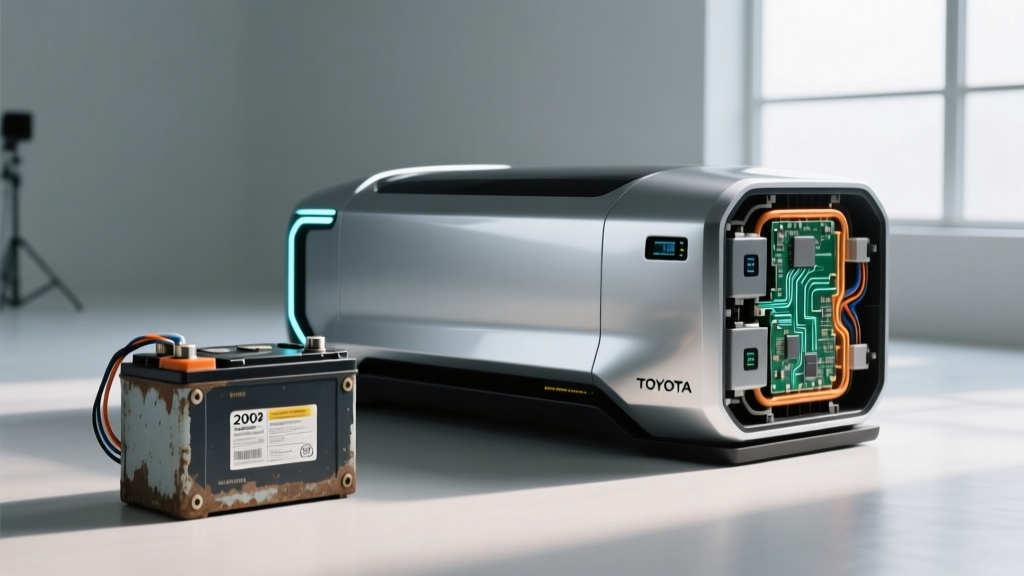
The 2008 Toyota Highlander Hybrid used a 2.4 kWh (nominal) NiMH battery pack operating at approximately 288 volts. Unlike today's lithium-ion cells, NiMH chemistry was heavier, less energy-dense, and more sensitive to temperature swings. Toyota rated the system at 270 net horsepower combined between the 3.3-liter V6 and electric motor-generators, achieving an EPA-estimated 26 MPG combined — impressive for a three-row SUV in 2008 (fueleconomy.gov).
NiMH packs in that era typically lasted 120,000 to 150,000 miles before noticeable capacity loss, though many units survived well beyond 200,000 miles with reduced electric-assist contribution. The key distinction: the Highlander Hybrid's battery was never designed to propel the vehicle on electricity alone for meaningful distances. It provided torque fill and regenerative-braking buffering, meaning the pack cycled within a narrow state-of-charge (SoC) window — a practice that, ironically, extended its life despite the less robust chemistry.
NiMH vs. Lithium-Ion in Hybrids: NiMH cells tolerate wide temperature ranges and are inexpensive to manufacture, but they suffer from higher self-discharge rates (~20% per month) and lower energy density (~60-120 Wh/kg vs. 250-300 Wh/kg for modern NMC). Toyota transitioned to lithium-ion in most hybrid models by the mid-2010s for these reasons.
Modern Battery Chemistry: LFP vs. NMC Trade-Offs
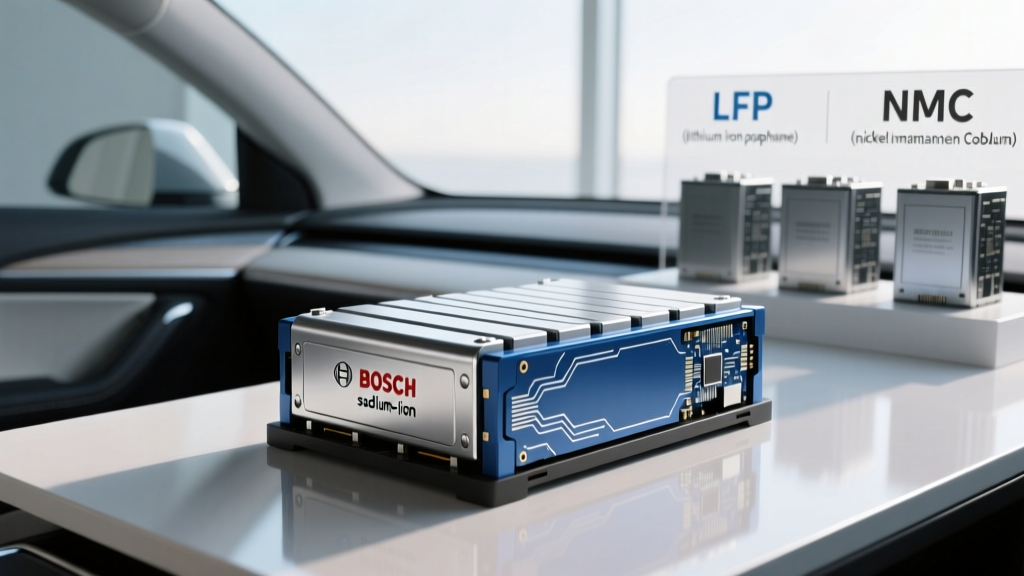
Every battery-electric and plug-in hybrid vehicle sold in 2026 uses one of two dominant lithium-ion chemistries: LFP (lithium iron phosphate) or NMC/NCA (nickel manganese cobalt / nickel cobalt aluminum). Understanding the trade-offs is essential for any buyer weighing long-term ownership costs.
| Attribute | LFP (Lithium Iron Phosphate) | NMC/NCA (Nickel-Based) |
|---|---|---|
| Energy Density | 160-200 Wh/kg (lower range per pack weight) | 250-300 Wh/kg (more range per pack weight) |
| Cycle Life | 3,000-5,000+ cycles to 80% capacity | 1,500-2,500 cycles to 80% capacity |
| Cold-Weather Performance | Reduced — slower charge acceptance below 32°F | Better low-temp discharge and regen capability |
| Cost per kWh | ~$85-100/kWh at pack level (2026) | ~$120-145/kWh at pack level (2026) |
| Recommended Daily SoC | 100% is fine; no degradation penalty | 80% daily; 100% only for trips |
| Thermal Runaway Risk | Extremely low | Low but higher than LFP |
| Common Applications | Tesla Model 3/Y RWD, BYD, Ford LFP F-150 Lightning trims | Long-range/performance trims, Hyundai, Kia, BMW, Mercedes |
The short answer to "which is better?" depends entirely on use case. If you charge at home nightly, drive under 250 miles daily, and live in a moderate climate, LFP's superior cycle life and 100%-charge tolerance make it the economically smarter choice. If you need maximum range from a single charge, frequently drive in sub-freezing temperatures, or regularly road-trip 300+ miles, NMC's higher energy density and better cold performance justify the cost and slightly faster degradation curve.
Battery Degradation: What the Real Data Shows
The fear of catastrophic battery failure persists largely because early EVs like the Nissan Leaf (with passive air cooling) demonstrated accelerated degradation in hot climates. Modern thermal management has largely solved this. Here is what fleet and warranty-claim data reveals about typical degradation trajectories:
Typical Capacity Retention Over Time (Lithium-Ion BEVs, 2020-2026 models):
- Year 1: ~2-4% loss (initial formation and SEI layer stabilization)
- Years 2-4: ~1-2% per year (linear, slow degradation phase)
- Years 5-8: ~1% per year continued; most packs at 88-93% SoH
- Years 8-10: ~85-90% SoH typical for liquid-cooled packs
- 150,000+ miles: ~80-88% SoH for NMC; ~90-95% for LFP
Sources: Geotab fleet data (6,300+ EVs), Recurrent Auto battery health reports, manufacturer warranty claim analyses.
For context, the 2008 Highlander Hybrid's NiMH pack degraded differently — losing capacity more gradually but also offering far less electric-only utility to begin with. A 20% loss in a 2.4 kWh pack meant slightly less regenerative braking capture and marginally more engine engagement. A 20% loss in a 2026 Tesla Model Y Long Range's 75 kWh NMC pack means 60 fewer miles of EPA range — still over 240 miles remaining.
The critical takeaway: most EV batteries will outlast the vehicle's useful economic life. The average passenger vehicle in the U.S. is scrapped at approximately 17 years and 180,000 miles. At that point, a modern liquid-cooled lithium-ion pack should retain 80-90% of its original capacity.
What Battery Warranties Actually Cover in 2026
Federal law mandates a minimum 8-year/100,000-mile warranty on EV and hybrid battery packs for emissions-related compliance, but most manufacturers exceed this baseline. Here is how the major brands structure their coverage:
| Manufacturer | Warranty Period | Mileage Cap | Capacity Threshold |
|---|---|---|---|
| Tesla (Model 3/Y LFP) | 8 years | 120,000 miles | 70% retention |
| Tesla (Model S/X, LR/AWD) | 8 years | 150,000 miles | 70% retention |
| Hyundai / Kia (EVs) | 10 years | 100,000 miles | 70% retention |
| Ford (F-150 Lightning, Mustang Mach-E) | 8 years | 100,000 miles | 70% retention |
| GM (Ultium-based EVs) | 8 years | 100,000 miles | 70% retention (60% for Bolt EV/EUV) |
| Toyota (Hybrids/PHEVs) | 10 years | 150,000 miles | Varies; hybrid system coverage |
| BMW / Mercedes-Benz | 8 years | 100,000 miles | 70% retention |
The warranty threshold matters: if your battery drops below 70% capacity within the warranty period, the manufacturer will replace or refurbish the pack at no cost. In practice, warranty claims are rare. Tesla's 2025 Impact Report showed that Model S/X battery packs degraded only ~12% at 150,000 miles on average — well above the 70% threshold. Hyundai has reported similarly low claim rates for its Ioniq 5 and EV6 lineups.
For the 2008 Highlander Hybrid specifically, Toyota's original 8-year/100,000-mile hybrid system warranty has long expired. However, Toyota extended hybrid battery coverage to 10 years/150,000 miles starting with 2020 model-year vehicles, reflecting their growing confidence in pack longevity (toyota.com/owners/warranty).
Battery Replacement Costs: From NiMH Hybrids to 100 kWh BEVs
When a battery does need replacement outside of warranty — typically at 15-20 years of age or 200,000+ miles — the cost depends heavily on pack size, chemistry, and whether you choose OEM, refurbished, or aftermarket options.
| Vehicle Type | Pack Size | OEM Replacement | Refurbished/Aftermarket |
|---|---|---|---|
| 2008 Toyota Highlander Hybrid | ~2.4 kWh NiMH | $3,500 - $4,800 | $1,800 - $2,800 |
| Toyota Prius (2016-2025, Li-Ion) | ~1.3 kWh | $2,500 - $3,500 | $1,200 - $2,000 |
| Chevrolet Bolt EV/EUV | 65 kWh NMC | $14,000 - $16,500 | $9,000 - $12,000 |
| Tesla Model 3/Y (LFP, 60 kWh) | 60 kWh LFP | $12,000 - $15,000 | $8,000 - $11,000 |
| Tesla Model S/X (100 kWh) | 100 kWh NCA | $18,000 - $22,000 | $13,000 - $16,000 |
| Ford F-150 Lightning (Ext. Range) | 131 kWh NMC | $22,000 - $28,000 | $15,000 - $20,000 |
| Hyundai Ioniq 5 (77.4 kWh) | 77.4 kWh NMC | $14,000 - $18,000 | $10,000 - $14,000 |
For the 2008 Highlander Hybrid, the replacement cost is relatively modest because the pack is small. The more relevant question is whether it's economically justified: a clean-title 2008 Highlander Hybrid has a private-party value of approximately $5,000-$8,000 in 2026, making a $4,000 OEM battery replacement a borderline decision. Many owners opt for refurbished NiMH modules from suppliers like Green Bean Battery or ReVolt, which replace only the degraded cells rather than the entire pack.
For modern BEVs, the calculus is different. A $15,000 replacement on a $40,000 vehicle at year 15 is significant — but it's also a cost most owners will never face, as the vehicle will likely be sold, traded, or retired before the pack falls below 70% capacity.
Factors That Accelerate (or Preserve) Battery Health
Battery degradation is not random. It follows predictable electrochemical patterns driven by temperature, charge habits, and usage intensity. Here is what the data shows:
Habits That Preserve Battery Health
- NMC/NCA: Charge to 80% for daily use; reserve 100% for road trips. LFP owners can charge to 100% daily without penalty.
- Precondition the battery before DC fast charging — most modern EVs do this automatically when you navigate to a charger.
- Park in shade or a garage when ambient temps exceed 95°F. Sustained heat above 104°F accelerates electrolyte decomposition.
- Use Level 2 (home) charging as your primary method. Occasional DC fast charging is fine; daily 150+ kW sessions add measurable wear over years.
- Don't store the vehicle at 100% or 0% SoC for extended periods. 40-60% is ideal for long-term parking.
Habits That Accelerate Degradation
- Frequent DC fast charging above 150 kW without preconditioning (adds ~0.5-1% extra annual degradation per Recurrent Auto data).
- Regularly draining below 10% SoC — stresses the anode and can trigger protective buffer limits.
- Leaving the vehicle at 100% SoC in extreme heat — the worst combination for NMC/NCA cells.
- Towing at max capacity in hot weather — sustained high discharge rates raise internal cell temperatures.
How to Check Your Battery's State of Health (SoH)
Most 2026 EVs provide a State of Health metric directly in the vehicle's infotainment system or companion app. Tesla displays estimated range at 100% charge, which you can compare to the original EPA figure. Hyundai's Bluelink app shows a battery health percentage. BMW's iDrive includes a traction battery health screen under vehicle status.
For a more precise reading, third-party tools like OBD-II dongles paired with apps such as Leaf Spy (Nissan), Teslalogger, or Torque Pro can read the battery management system's internal SoH calculation. These tools report the pack's current maximum capacity versus its factory-rated capacity, typically accurate within 1-2%.
For legacy hybrids like the 2008 Highlander Hybrid, SoH monitoring is less granular. Toyota's Techstream diagnostic software (available to dealerships and independent shops with the appropriate license) can read individual NiMH module voltages and internal resistance — the key indicators of pack imbalance and degradation. If one or more modules show significantly higher resistance or lower voltage under load, a targeted module replacement (rather than a full pack swap) may restore functionality at a fraction of the cost.
What Comes Next: Solid-State and Silicon-Anode Batteries
The next major leap in battery technology involves two parallel developments: solid-state batteries (replacing the liquid electrolyte with a solid ceramic or polymer) and silicon-anode cells (replacing graphite anodes with silicon to boost energy density).
Solid-state batteries promise 40-50% higher energy density, faster charging (potentially 10-80% in under 10 minutes), and dramatically reduced fire risk. Toyota has announced a solid-state battery targeting 2027-2028 production in limited volumes, initially for luxury Lexus models. Samsung SDI and QuantumScape are pursuing similar timelines. However, manufacturing yield, cost, and scalability challenges mean solid-state packs will not reach mainstream price parity with NMC until approximately 2030-2032, per BloombergNEF projections.
Silicon-anode technology is closer to market. Sila Nanotechnologies and Group14 Technologies are supplying silicon-dominant anode materials to manufacturers for 2026-2027 model-year vehicles, offering 15-25% energy density improvements over graphite anodes. This is an incremental but meaningful gain — not a revolution, but a steady improvement that extends range without increasing pack weight.
For today's buyers, these timelines mean: the lithium-ion battery in a 2026 EV is the most mature, cost-effective, and well-understood technology available. Waiting for solid-state means waiting at least 3-5 years for limited availability at premium prices.
Frequently Asked Questions
How long do EV batteries last in years and miles?
Modern liquid-cooled lithium-ion EV batteries (2020-present) typically retain 85-93% capacity at 8 years and 100,000 miles. At 15 years and 150,000-200,000 miles, expect 80-90% retention for NMC and 88-95% for LFP. Most packs will outlast the vehicle's economic lifespan.
How much does an EV battery cost to replace?
Replacement costs range from $2,500-$4,800 for small hybrid packs (Prius, Highlander Hybrid) to $12,000-$28,000 for full BEV packs depending on capacity. Refurbished and aftermarket options reduce costs by 30-45%. Most owners never need a replacement during their ownership period.
What does the battery warranty cover?
Federal law requires a minimum 8-year/100,000-mile warranty. Most manufacturers guarantee the battery will retain at least 70% of its original capacity during the warranty period. If it drops below that threshold, the manufacturer replaces or refurbishes the pack at no cost. Toyota extends hybrid battery coverage to 10 years/150,000 miles for 2020+ models.
How do I check and maximize battery health?
Check SoH through the vehicle's native app, an OBD-II reader with EV-compatible software, or a dealership diagnostic scan. Maximize longevity by charging NMC to 80% daily, preconditioning before fast charging, avoiding prolonged storage at extreme SoC levels, and minimizing exposure to sustained heat above 100°F.
LFP vs. NMC — which is better and why?
LFP offers longer cycle life (3,000-5,000 cycles), lower cost, safer thermal behavior, and 100% daily charging tolerance — ideal for daily commuters with home charging. NMC provides higher energy density (more range per pound), better cold-weather performance, and faster DC charging — better for long-range drivers and cold climates. Neither is universally "better"; the choice depends on your driving pattern.
Is it worth replacing the battery in a 2008 Toyota Highlander Hybrid?
It depends on the vehicle's condition and your budget. A refurbished NiMH pack ($1,800-$2,800) can extend the vehicle's life 5-8 more years at a fraction of a new vehicle payment. An OEM replacement ($3,500-$4,800) may exceed the vehicle's market value. If the rest of the SUV is in good shape — transmission, suspension, body — a refurbished pack is often the economically rational choice.