From the 2008 Ford Escape Hybrid Battery to Modern EV Packs: What Every Electrified Owner Needs to Know
If you've searched for information on the 2008 Ford Escape Hybrid battery, you're likely dealing with one of two scenarios: you own this pioneering SUV and are facing a high-voltage pack replacement, or you're researching long-term battery longevity before committing to a modern EV or hybrid. Either way, the question is the same — how long do electrified-vehicle batteries actually last, what does replacement cost, and how has the technology evolved?
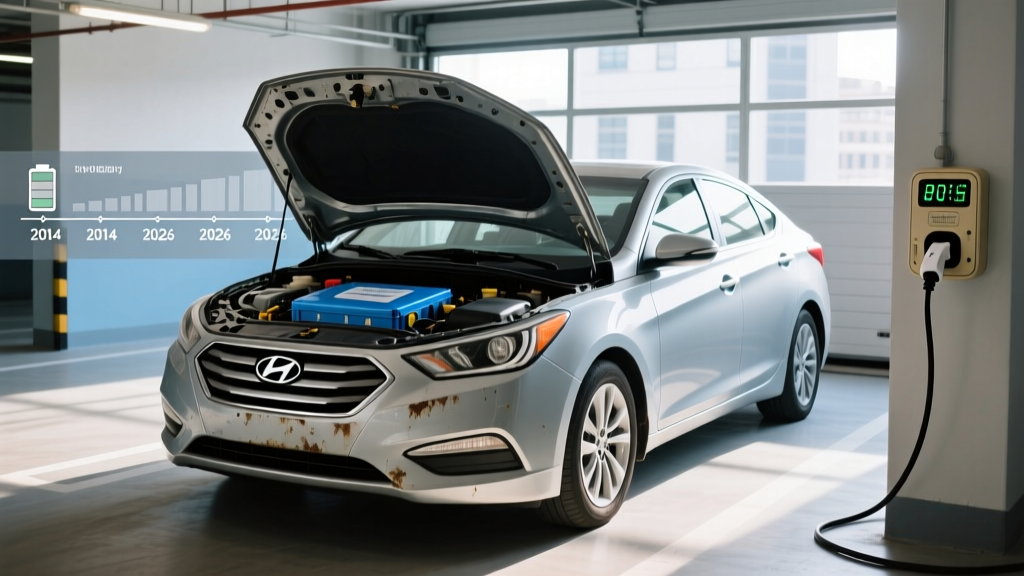
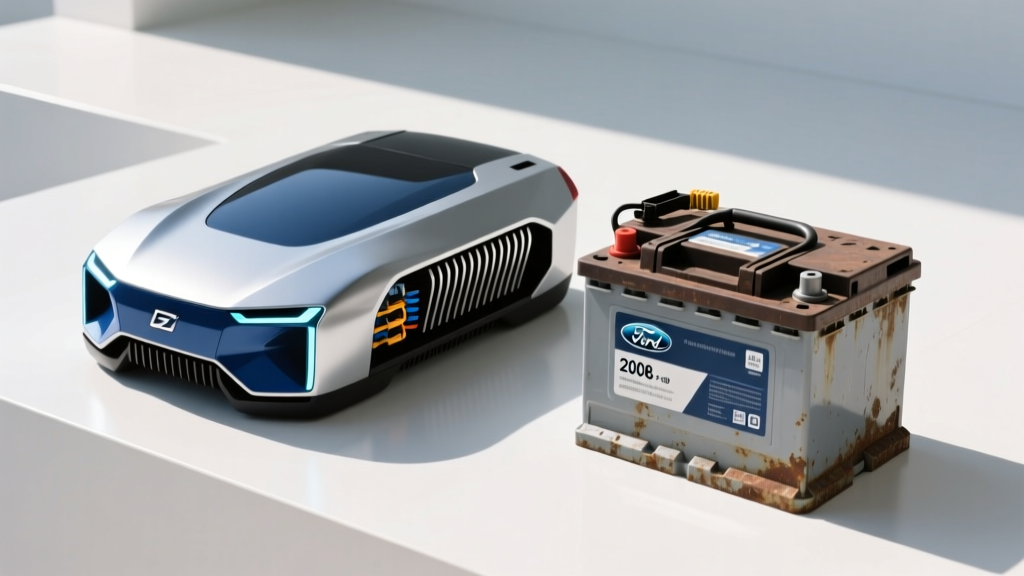
The 2008 Ford Escape Hybrid used a 1.3 kWh nickel-metal hydride (NiMH) battery pack manufactured by Sanyo. By 2026, most of these packs are 18 years old, and many have either been replaced once or are showing significant capacity loss. But the lessons from that early hybrid era directly inform today's lithium-ion EV battery landscape. This guide covers everything from that original NiMH pack to the latest LFP and NMC chemistries powering 2026's electric vehicles.
The 2008 Ford Escape Hybrid Battery: Specs, Lifespan, and Replacement
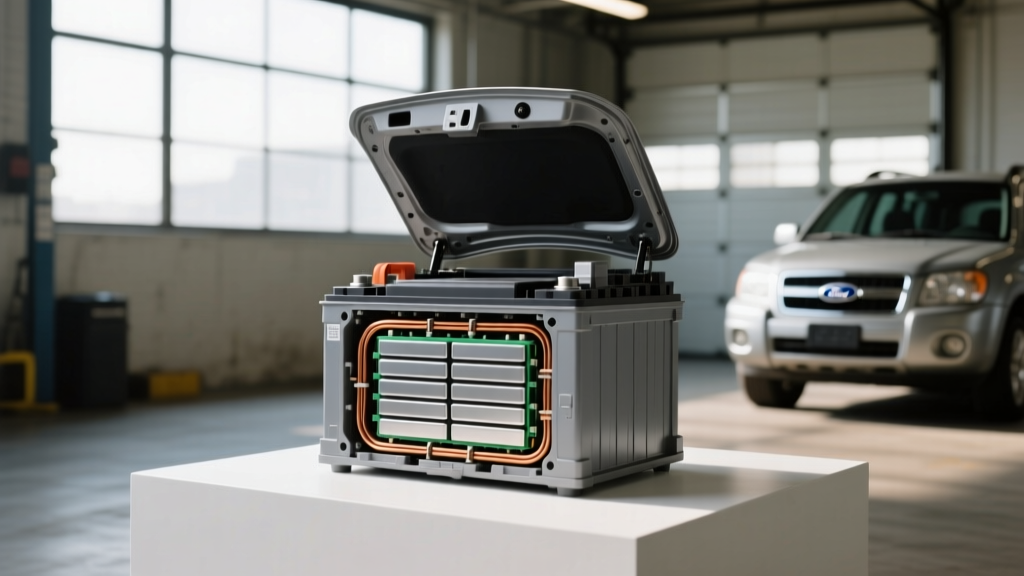
The 2008 Escape Hybrid paired a 2.3L Atkinson-cycle four-cylinder engine with a 70 kW electric motor and a Sanyo NiMH battery pack rated at approximately 1.3 kWh (330V nominal). Ford originally warranted this battery for 8 years or 100,000 miles (10 years/150,000 miles in California Air Resources Board states), with a capacity retention threshold of roughly 60%.
In real-world use, many 2008 Escape Hybrid owners reported the NiMH pack lasting between 120,000 and 180,000 miles before noticeable fuel-economy degradation or dashboard warning lights. Some packs survived past 200,000 miles with reduced electric-assist capability. By 2026, finding a replacement involves several options:
| Option | Cost Range | Warranty | Notes |
|---|---|---|---|
| OEM-equivalent new NiMH pack | $3,500–$5,500 | 1–3 years | Available from specialty hybrid suppliers |
| Refurbished/reconditioned pack | $1,500–$3,000 | 6 months–1 year | Replaced weak cells; variable quality |
| Used salvage pack | $500–$1,500 | 30–90 days | High risk — unknown remaining life |
| Individual cell replacement | $800–$2,000 | Varies | Requires skilled hybrid technician |
Installation labor typically adds $500–$1,200 depending on shop rates. For a vehicle with a 2026 Kelley Blue Book value of roughly $2,500–$5,000, a full OEM replacement often exceeds the car's worth — a decision point many aging-hybrid owners face.
Modern EV Battery Chemistry: LFP vs. NMC vs. NCA
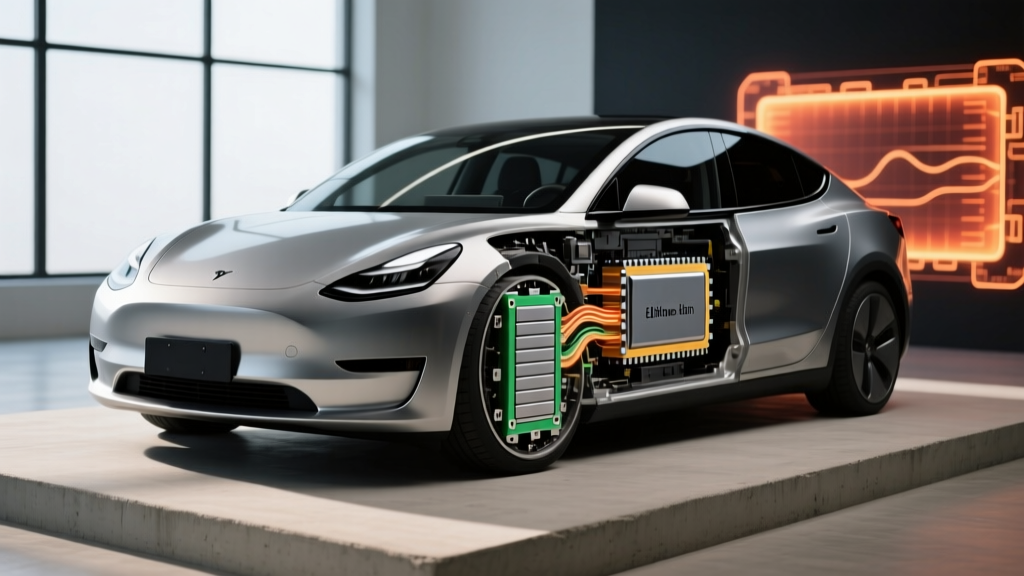
The NiMH chemistry in the 2008 Escape Hybrid has been entirely superseded by lithium-ion variants in modern EVs and hybrids. Today's buyers choose primarily between two lithium-ion families, each with distinct trade-offs:
| Attribute | LFP (Lithium Iron Phosphate) | NMC/NCA (Nickel Manganese Cobalt / Nickel Cobalt Aluminum) |
|---|---|---|
| Energy Density | Lower (~160 Wh/kg cell-level) | Higher (~250–300 Wh/kg cell-level) |
| Cycle Life | 3,000–6,000+ cycles to 80% SoH | 1,000–2,500 cycles to 80% SoH |
| Cold Performance | Weaker below 32°F; slower charging in cold | Better low-temp discharge; preconditioning helps |
| Cost per kWh | ~$80–$100 (2026 cell pricing) | ~$110–$140 (2026 cell pricing) |
| Thermal Stability | Excellent — very low thermal runaway risk | Good but requires robust BMS and cooling |
| Recommended SoC Range | Can charge to 100% daily; BMS calibration benefits from periodic full charges | Best kept 20–80% daily; 100% for trips only |
| Common 2026 Applications | Tesla Model 3/Y RWD, Ford Mustang Mach-E Select (LFP option), BYD models, Rivian Standard | Tesla Long Range/Performance, Hyundai Ioniq 5/6, BMW iX, most long-range EVs |
Which is better? It depends on your use case. If you prioritize longevity, lower cost, and daily charging to 100% (e.g., a commuter who can charge at home every night), LFP is the stronger choice. If you need maximum range per charge and can commit to 20–80% daily charging habits, NMC/NCA delivers higher energy density in a lighter, more compact pack. For cold-climate buyers in Minnesota or Maine, NMC's better low-temperature performance is a meaningful advantage — though LFP thermal management systems are improving each model year.
How Long Do EV Batteries Last? Degradation Data and Real-World Numbers
The most common fear among EV shoppers is a dead battery requiring a $20,000 replacement. The data tells a more reassuring story — but with important caveats.
- Year 1: ~2–4% capacity loss (initial "break-in" drop)
- Years 2–5: ~1–2% loss per year (linear phase)
- Years 6–10: ~0.5–1.5% loss per year (plateau phase)
- 10-year typical SoH: 85–92% for well-maintained packs
- 200,000-mile mark: Most modern liquid-cooled NMC packs retain 80–90% capacity
Sources: Geotab fleet data analysis, Recurrent Auto battery health reports.
LFP batteries degrade even more slowly. Tesla's 2025 Impact Report noted that Model 3 LFP packs retained an average of 92% capacity at 150,000 miles. Several fleet operators have reported LFP packs exceeding 300,000 miles with less than 15% degradation.
For context on older technology: the NiMH pack in the 2008 Ford Escape Hybrid typically lost 20–30% capacity over 150,000 miles — a significantly steeper curve than modern lithium-ion systems, largely due to less sophisticated thermal management and the inherent limitations of NiMH chemistry.
Factors That Accelerate Battery Degradation
Not all miles are equal when it comes to battery wear. Based on fleet data and manufacturer guidance, these are the primary factors that shorten battery life:
Battery Health Best Practices
- Avoid sustained 100% SoC (NMC/NCA): Store and park at 50–80%. Charge to 100% only when departing for a trip.
- Minimize DC fast charging: Frequent 150+ kW sessions generate heat. Use Level 2 home charging as your primary method; reserve DCFC for road trips.
- Precondition in extreme cold: Use your EV's preconditioning feature (via app or scheduled departure) to warm the battery before driving or charging below 32°F.
- Avoid deep discharge: Don't regularly run the battery below 10%. The buffer protects you, but consistently draining to near-empty stresses cells.
- Park in shade/garage when possible: Prolonged exposure to 95°F+ ambient heat accelerates calendar degradation, especially at high SoC.
- Keep firmware updated: OEM BMS (Battery Management System) updates often optimize charge curves and thermal strategies.
Fast charging deserves nuance. Occasional DC fast charging does not significantly harm modern batteries — the BMS manages cell temperatures and tapers charge rate above 80% SoC. But daily reliance on 350 kW chargers, particularly in hot climates without preconditioning, measurably accelerates degradation over a 5-year ownership period.
EV Battery Warranty Terms: What's Actually Covered
Federal law mandates that EV and hybrid battery warranties cover a minimum of 8 years or 100,000 miles (10 years/150,000 miles in CARB states). But the details vary significantly by manufacturer:
| Manufacturer | Warranty Period | Capacity Threshold | Notes |
|---|---|---|---|
| Tesla (Model 3/Y NMC) | 8 yr / 120,000 mi | 70% retention | Long Range and Performance trims |
| Tesla (Model 3/Y LFP) | 8 yr / 100,000 mi | 70% retention | RWD Standard Range |
| Hyundai / Kia | 10 yr / 100,000 mi | 70% retention | Among the longest coverage |
| Ford (Mustang Mach-E) | 8 yr / 100,000 mi | 70% retention | Covers battery and hybrid/electric components |
| GM (Ultium platform) | 8 yr / 100,000 mi | 70% retention | Covers capacity loss and defects |
| Rivian | 8 yr / 175,000 mi | 70% retention | Higher mileage cap for adventure use |
| BMW | 8 yr / 100,000 mi | 70% retention | Transferable to subsequent owners |
The critical detail is the capacity retention threshold. Most manufacturers define a warranty claim as the battery falling below 70% of original usable capacity. If your 75 kWh pack drops to 54 kWh (72%), you won't qualify for a replacement even though you've lost 28% of range. Read your specific warranty booklet — some OEMs offer prorated coverage or module-level repair rather than full pack replacement.
For hybrid vehicles like the original Escape Hybrid, the warranty structure was similar (8yr/100k mi), but the smaller battery meant degradation had a more noticeable impact on fuel economy since the electric motor contributed more proportionally to total propulsion.
EV Battery Replacement Cost: What to Expect in 2026
Battery replacement remains rare for modern EVs — most packs outlast the vehicle's economic life. But when replacement is needed (due to defect, damage, or extreme degradation outside warranty), costs vary enormously:
| Vehicle Category | Battery Size | Replacement Cost (Parts + Labor) | Typical Need Timeline |
|---|---|---|---|
| Compact EV (e.g., Chevy Bolt, Nissan Leaf) | 40–65 kWh | $8,000–$14,000 | Rarely before 200,000 mi |
| Mid-size EV (e.g., Tesla Model 3, Hyundai Ioniq 5) | 60–84 kWh | $12,000–$18,000 | Rarely before 200,000 mi |
| Large EV / SUV (e.g., Rivian R1S, Tesla Model X) | 100–149 kWh | $16,000–$25,000 | Rarely before 200,000 mi |
| Hybrid (e.g., Prius, older Escape Hybrid) | 1–2 kWh (NiMH/Li-ion) | $2,000–$5,500 | Often at 120,000–180,000 mi |
| PHEV (e.g., RAV4 Prime, Wrangler 4xe) | 15–25 kWh | $6,000–$12,000 | Rarely before 150,000 mi |
Cell prices have dropped roughly 90% since 2010, falling to approximately $100–$140/kWh at the pack level in 2026 according to BloombergNEF data. This means replacement costs will continue declining. Additionally, a growing ecosystem of independent EV repair shops now offers module-level repair — replacing individual bad cell modules rather than the entire pack — for $2,000–$6,000 on many models.
The 2008 Ford Escape Hybrid's NiMH replacement cost ($1,500–$5,500) is actually lower in absolute dollars than a modern EV pack, but represents a larger percentage of the vehicle's value. This economic reality — not technical failure — is what typically ends an older hybrid's life.
How to Check and Monitor Battery Health (State of Health)
State of Health (SoH) is expressed as a percentage: a brand-new battery is 100% SoH, and a battery retaining 75 of its original 80 kWh has 93.75% SoH. Here's how to monitor it:
- OEM apps and displays: Tesla, Hyundai, BMW, and others show battery health or degradation percentage in the vehicle settings or companion app. Tesla's service menu (accessible via the software screen) shows detailed battery health data.
- OBD-II diagnostic tools: Devices like the OBDLink SX paired with apps such as Leaf Spy (Nissan) or EVnotify can read SoH, cell voltage variance, and cycle counts from the BMS.
- Third-party services: Companies like Recurrent offer battery health reports based on connected-car data, useful when buying a used EV.
- Dealer diagnostics: A service center can run a full capacity test, though this typically requires a controlled discharge cycle and may not be offered free of charge.
- Manual range tracking: Charge to 100% (or your normal max), note the displayed range, and compare it to the EPA-rated range when new. A consistent 10% drop over 3 years is normal; a sudden 20% drop warrants investigation.
For 2008 Escape Hybrid owners, SoH monitoring is less precise — the instrument cluster shows a charge/discharge indicator but no percentage. A noticeable drop in electric-only assist duration or a decline in combined MPG (originally EPA-rated at 34 city/31 highway/33 combined) signals pack degradation.
Emerging Battery Technology: Solid-State and Beyond
Solid-state batteries replace the liquid electrolyte with a solid ceramic, polymer, or sulfide material. The theoretical advantages are significant: higher energy density (potentially 400+ Wh/kg), faster charging (10–80% in under 10 minutes), improved safety (no flammable electrolyte), and longer cycle life. Toyota has announced limited solid-state production for 2027–2028, while QuantumScape continues pilot production with Volkswagen backing. Realistic mass-market availability remains 2029–2032 based on current manufacturing timelines.
Silicon-dominant anodes are closer to market. Companies like Sila Nanotechnologies and Group14 are supplying silicon-carbon composite anode materials that increase energy density by 20–40% over graphite anodes. The Mercedes G-Class 580e (2025) incorporated silicon-anode cells. Expect broader adoption in premium EVs by 2027–2028.
Sodium-ion batteries are entering the market for lower-cost, shorter-range applications. CATL began shipping sodium-ion packs in Chinese-market vehicles in 2024–2025. These offer lower energy density than LFP but use abundant, inexpensive materials. They're unlikely to appear in US-market long-range EVs but could power future budget city cars and energy storage systems.
None of these technologies change the buying equation for 2026 EV shoppers. Today's LFP and NMC packs, properly maintained, will last 15+ years for most owners — making the battery-replacement fear largely a relic of the early hybrid era that the 2008 Escape Hybrid represented.
Frequently Asked Questions
How long does the battery in a 2008 Ford Escape Hybrid last?
The original NiMH battery pack typically lasts 120,000–180,000 miles (roughly 10–15 years) before significant capacity loss affects fuel economy. Many have been replaced at least once by 2026. Replacement options include new OEM-equivalent packs ($3,500–$5,500) or refurbished units ($1,500–$3,000).
How much does a modern EV battery cost to replace?
Replacement costs range from $8,000 for a compact EV to $25,000 for a large SUV pack, including labor. However, most modern lithium-ion EV batteries retain 80–90% capacity at 200,000 miles and rarely need replacement within typical ownership periods. Module-level repair ($2,000–$6,000) is increasingly available as a lower-cost alternative.
What does the EV battery warranty actually cover?
Federal law requires at minimum 8 years/100,000 miles of coverage (10/150k in CARB states). The warranty covers capacity loss below a stated threshold (typically 70% of original capacity) and manufacturing defects. It does not cover damage from accidents, flooding, or improper modifications. Check your specific warranty booklet for exact terms.
LFP vs NMC — which battery chemistry should I choose?
Choose LFP if you want maximum cycle life (3,000–6,000+ cycles), lower cost, the ability to charge to 100% daily, and superior thermal safety. Choose NMC/NCA if you need maximum range in a lighter, more compact pack and can maintain 20–80% daily charging habits. Cold-climate buyers should lean NMC for better low-temperature performance.
How do I check my EV's battery State of Health?
Use your vehicle's built-in battery health display (available on most modern EVs), an OBD-II diagnostic tool with EV-specific software, or a third-party service like Recurrent. For older hybrids like the Escape Hybrid, track fuel economy changes over time and note any reduction in electric-assist behavior as indicators of pack degradation.
Will solid-state batteries make current EVs obsolete?
Not anytime soon. Solid-state batteries are expected to reach limited production in 2027–2028 and mass-market availability around 2029–2032. Current LFP and NMC packs already deliver 200,000+ mile lifespans with 80%+ capacity retention. If you need an EV now, there's no reason to wait for solid-state technology.
Sources consulted: EPA Fuel Economy Guide — 2008 Ford Escape Hybrid, IRS Clean Vehicle Tax Credits (§30D), manufacturer warranty documentation, Geotab and Recurrent Auto fleet battery data.