Why a 2008 Buick Enclave Battery Search Leads to a Bigger EV Conversation
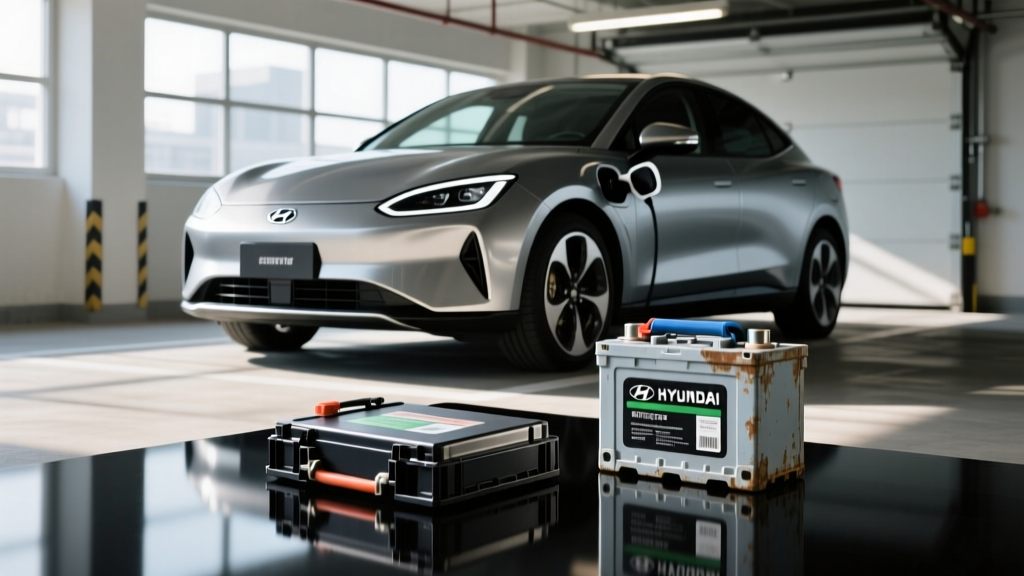
If you've landed here searching for a 2008 Buick Enclave battery, you're likely dealing with a familiar scenario: the original 12V lead-acid battery in GM's Lambda-platform crossover is dead, and you need a Group 48 AGM replacement (typically $180–$260 at parts retailers). That's a straightforward fix for a conventional internal-combustion vehicle.
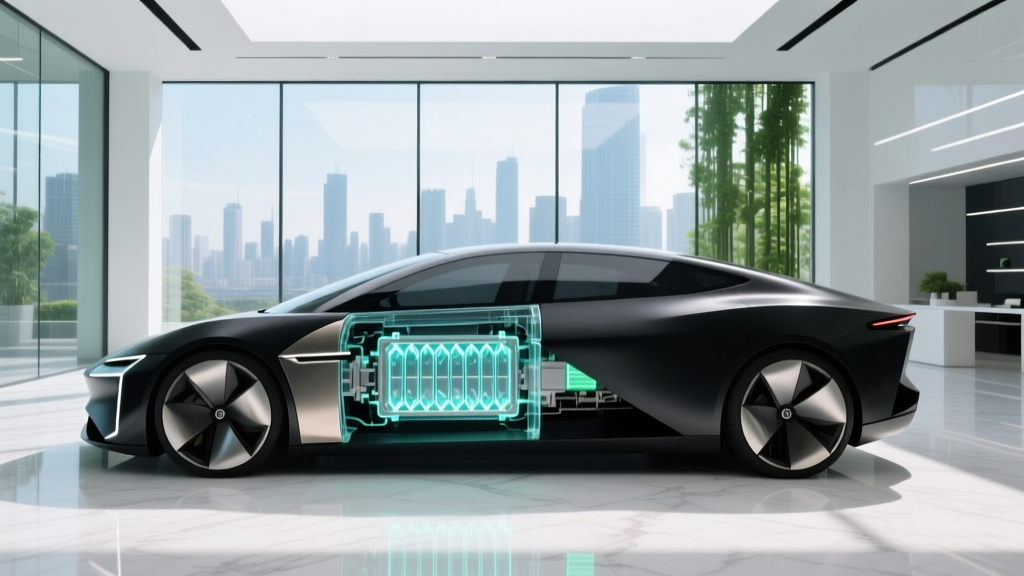
But if your search stems from curiosity about how that humble 12V battery compares to the massive high-voltage traction batteries powering today's electric vehicles — the 75 kWh to 120 kWh lithium-ion packs in vehicles like the Chevrolet Equinox EV, Tesla Model Y, or Hyundai Ioniq 5 — you're asking exactly the right question. Understanding EV battery technology is the single most important factor in evaluating long-term EV ownership.
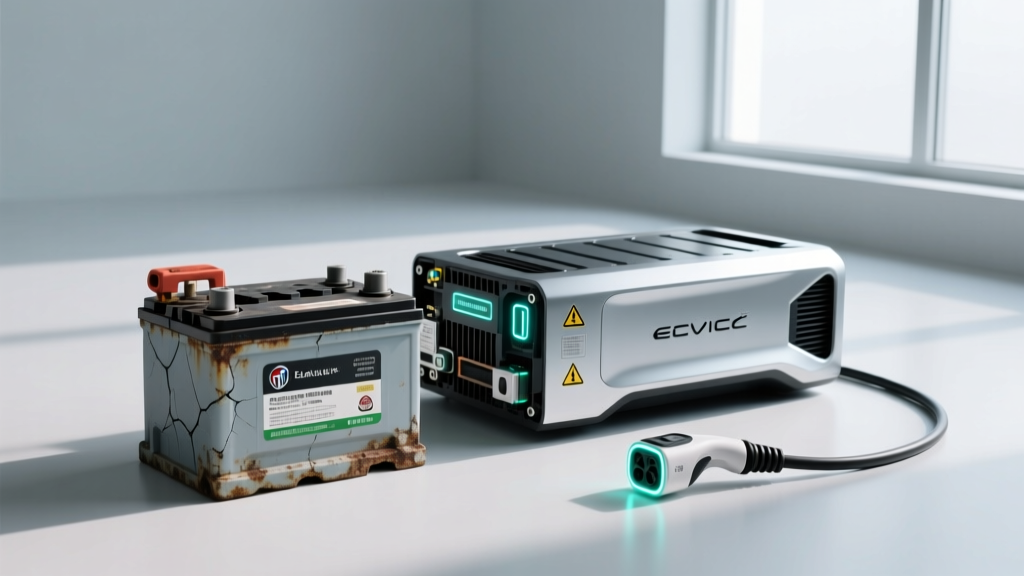
This guide bridges that gap: we'll explain modern EV battery chemistry, degradation data, warranty coverage, replacement costs, and care practices — all while clarifying the critical difference between a conventional 12V starter battery and a high-voltage EV traction battery.
LFP vs NMC/NCA: Understanding EV Battery Chemistry
Modern EV batteries use one of two dominant lithium-ion chemistries. The choice affects range, longevity, charging behavior, cold-weather performance, and cost.
| Attribute | LFP (Lithium Iron Phosphate) | NMC/NCA (Nickel Manganese Cobalt / Nickel Cobalt Aluminum) |
|---|---|---|
| Energy Density | Lower (~160–180 Wh/kg cell-level). Heavier pack for same kWh. | Higher (~220–260 Wh/kg). More range per kg. |
| Cycle Life | Superior: 3,000–5,000+ full cycles to 80% SoH. | Good: 1,000–2,000 full cycles to 80% SoH. |
| Cold Performance | Weaker in freezing temps — greater range loss, slower charging below 32°F. | Better low-temp performance, less range penalty. |
| Cost | ~20–30% cheaper per kWh. No cobalt or nickel. | Higher raw material cost (cobalt, nickel supply chains). |
| Charging Recommendation | Can charge to 100% daily without significant degradation. | Best kept 20–80% for daily use; 100% for trips only. |
| Thermal Stability | Excellent — inherently more stable chemistry. | Good with active thermal management systems. |
| Common In (2026) | Tesla Model 3 RWD, Model Y RWD, Ford Mustang Mach-E Select, BYD models | Tesla Long Range, Hyundai Ioniq 5, Kia EV6, GM Ultium-based vehicles |
Which is better? It depends on your use case. LFP wins for daily commuters who want maximum cycle life, lower cost, and the simplicity of charging to 100%. NMC/NCA wins for drivers who need maximum range per charge, better cold-weather usability, and faster DC charging in winter. Neither is universally superior — the right choice depends on climate, commute distance, and budget.
How Long Do EV Batteries Last? Real Degradation Data
The most common question from prospective EV buyers: "Will I need a new battery in five years?" The data says almost certainly not.
- Tesla Model 3/Y (NMC): Tesla's 2024 Impact Report showed fleets retaining ~88% capacity at 200,000 miles. Recurrent Auto's 2025 dataset of 15,000+ Teslas confirmed a median 12% loss at 150,000 miles.
- Chevrolet Bolt EV (NMC): Widely documented at ~6–8% degradation at 100,000 miles across owner forums and Recurrent Auto fleet data.
- LFP packs (Tesla Model 3 RWD): Early fleet data (2022–2025 models) shows ~3–5% loss at 60,000 miles, tracking toward 90%+ retention at 200,000 miles.
- Hyundai/Kia E-GMP platform: Limited high-mileage data, but 8-year warranty and liquid-cooled thermal management suggest 85–90% retention at 150,000 miles.
For context, the average American drives ~14,000 miles per year according to FHWA data. That means a 200,000-mile battery lifespan represents roughly 14 years of average use. Most EV batteries will outlast the vehicles they're installed in — the same cannot be said for the 12V battery in a 2008 Buick Enclave, which typically needs replacement every 3–5 years.
What Does the EV Battery Warranty Actually Cover?
Federal law mandates a minimum 8-year/100,000-mile warranty on EV battery packs (extended to 10 years/150,000 miles in California and states that follow CARB standards). Most manufacturers exceed this baseline.
| Manufacturer | Warranty Term | Capacity Retention Threshold | Notes |
|---|---|---|---|
| Tesla | 8 yr / 100,000–120,000 mi (varies by model) | 70% | Covers defects + capacity below threshold |
| Hyundai / Kia | 10 yr / 100,000 mi | 70% | Among the longest coverage in the market |
| GM (Ultium) | 8 yr / 100,000 mi | 70% | Covers modules; can replace individual modules |
| Ford | 8 yr / 100,000 mi | 70% | Mach-E, F-150 Lightning covered |
| BMW | 8 yr / 100,000 mi | 70% | i4, iX, i7 covered under HV battery warranty |
What triggers a warranty claim? If your battery's State of Health (SoH) drops below the stated threshold (typically 70% of original capacity) within the warranty period, the manufacturer must repair or replace the pack — often by swapping failed modules rather than the entire unit. This is important: a battery at 72% SoH still functions perfectly, just with reduced range. The warranty is a floor, not a prediction of failure.
How Much Does an EV Battery Cost to Replace?
This is where fear-mongering runs rampant. Let's look at actual numbers.
| Vehicle / Pack Size | Full Pack Replacement Cost | Module Repair Cost | Typical Need Timeline |
|---|---|---|---|
| Tesla Model 3 (60 kWh LFP) | $12,000–$16,000 | $2,000–$4,500 per module | Rarely needed within 200,000+ mi |
| Tesla Model Y / 3 LR (82 kWh NMC) | $14,000–$20,000 | $3,000–$5,500 per module | Rarely needed within 200,000 mi |
| Hyundai Ioniq 5 (77.4 kWh NMC) | $15,000–$22,000 | $2,500–$5,000 per module | Rarely needed within 200,000 mi |
| Chevrolet Equinox EV (85 kWh NMC) | $14,000–$18,000 | $2,000–$4,000 per module | Modular Ultium design simplifies repair |
| Ford F-150 Lightning (131 kWh Extended) | $22,000–$32,000 | $4,000–$7,000 per module | Larger pack = higher cost but more buffer |
Critical context: Battery replacement costs are declining roughly 8–12% annually as manufacturing scales and chemistry improves. By the time a 2026 EV actually needs an out-of-warranty replacement (likely 2038+), costs will be significantly lower. Additionally, most failures involve individual modules or the battery management system — not the entire pack. The comparison to a 2008 Buick Enclave is instructive: you'll likely spend $1,200–$2,000 on 12V battery replacements over that vehicle's remaining life, plus $3,000+ on transmission and engine repairs that EVs simply don't require.
Factors That Accelerate Battery Degradation (And How to Minimize Them)
- Avoid sustained 100% SoC (NMC/NCA only): Set daily charge limit to 80%. Charge to 100% only before road trips. LFP owners can charge to 100% daily.
- Minimize DC fast charging when possible: Frequent 150+ kW sessions generate heat. Use Level 2 home charging for daily needs; reserve DCFC for road trips.
- Don't let SoC sit at 0% or below 5%: Deep discharge stresses cells. Plug in when you get home, even if not charging immediately.
- Precondition in cold weather: Use your EV's preconditioning feature (scheduled departure or app-activated) to warm the battery before driving and before DC fast charging. This reduces lithium plating risk and improves charge speed.
- Avoid extreme heat exposure: Park in shade or garages when possible. Battery thermal management systems work harder in sustained 100°F+ heat.
- Drive moderately: Aggressive acceleration and frequent hard regen braking generate more heat cycles than smooth driving.
The physics are straightforward: lithium-ion batteries degrade fastest at extreme states of charge (0% and 100%), extreme temperatures (below 20°F and above 110°F cell temp), and under high C-rate stress (rapid charge/discharge). Modern EVs mitigate these with active liquid cooling, buffer zones (you never truly use 0–100% of the pack), and sophisticated BMS algorithms. Your job as an owner is to work with the system, not against it.
How to Check Your EV Battery's State of Health (SoH)
State of Health (SoH) represents your battery's current maximum capacity as a percentage of its original capacity. A new EV starts at 100% SoH; degradation brings this down over time.
Methods for monitoring SoH:
- OBD-II apps: Tools like TeslaFi, Scan My Tesla, Leaf Spy (Nissan), and Car Scanner ELM OBD2 (general) can read SoH directly from the BMS. Cost: $0–$50 for the app plus a $20–$40 OBD-II dongle.
- Manufacturer apps: Tesla, Hyundai, Ford, and BMW provide battery health estimates in their companion apps or service center diagnostics.
- Recurrent Auto (free): Connect your EV to Recurrent's platform for ongoing SoH tracking, range scoring, and comparison against similar vehicles in your climate zone.
- Dealership diagnostic: Request a battery health report during routine service. Most manufacturers provide this free during warranty period.
- Manual calculation: Fully charge to 100% (on a warm day, after preconditioning), note the displayed range, and compare to the original EPA-rated range. A car that originally showed 310 miles at 100% but now shows 275 miles has ~88.7% SoH. This is approximate but directionally accurate.
Check SoH quarterly or before purchasing a used EV. For a used Tesla, a Carfax or Tesla service history report will include battery replacement records if any.
Emerging Battery Technology: What's Coming (And When)
The battery landscape is evolving rapidly, but it's critical to separate laboratory announcements from production reality.
Solid-State Batteries
Solid-state batteries replace the liquid electrolyte with a solid material (ceramic, sulfide, or polymer), promising higher energy density (~400–500 Wh/kg), faster charging, and improved safety. Toyota has announced a 2027–2028 production target for a limited run; Samsung SDI targets 2027; QuantumScape is in prototype validation with Volkswagen. Realistic mass-market timeline: 2029–2032. Early vehicles will carry a significant price premium.
Silicon Anode Technology
Replacing graphite anodes with silicon can boost energy density by 20–40%. Sila Nanotechnologies and Group14 are in early production with Mercedes and Porsche applications. Expect incremental adoption in premium models from 2026–2028, with broader availability by 2030.
Sodium-Ion Batteries
CATL and BYD have begun producing sodium-ion packs for lower-cost, shorter-range EVs in China. Energy density is lower (~140 Wh/kg), but cost is 30–40% less than LFP. Potential US market entry: 2027–2029, likely in budget-oriented models or stationary storage.
Frequently Asked Questions
How long do EV batteries last in years and miles?
Based on fleet data from Recurrent Auto and manufacturer reports, modern EV batteries typically retain 85–90% capacity at 150,000 miles and 80–88% at 200,000 miles. In years, that translates to 12–18 years of average driving before reaching the 70% warranty threshold. Most batteries will outlast the vehicle's useful economic life.
How much does an EV battery cost to replace out of warranty?
Full pack replacement ranges from $12,000 for smaller packs (60 kWh) to $32,000 for large packs (130+ kWh). However, module-level repairs typically cost $2,000–$7,000, and most failures are module-specific. Costs are declining 8–12% annually. For comparison, a 2008 Buick Enclave engine or transmission replacement runs $3,500–$6,000 — and may be needed more than once.
What does the federal EV battery warranty cover?
Federal law (enforced under EPA/CARB guidelines) requires a minimum 8-year/100,000-mile warranty on high-voltage EV batteries. Coverage includes manufacturing defects and capacity loss below the stated threshold (typically 70% of original capacity). California and CARB-adopting states require 10 years/150,000 miles. The warranty transfers to subsequent owners in most cases — check your specific manufacturer's terms.
How do I maximize my EV battery's lifespan?
For NMC/NCA batteries: set daily charge limit to 80%, minimize DC fast charging, precondition in cold weather, and avoid letting the car sit at very low or very high SoC for extended periods. For LFP batteries: you can charge to 100% daily (Tesla recommends this for LFP calibration). For all chemistries: use Level 2 home charging as your primary method, park in shade when possible, and drive smoothly.
LFP vs NMC — which should I choose?
Choose LFP if: you want maximum longevity, lower upfront cost, simpler charging habits (100% daily OK), and you live in a moderate climate. Choose NMC/NCA if: you need maximum range, regularly drive in freezing temperatures, want faster DC charging in winter, or frequently take long road trips. Both chemistries are proven and reliable — the right choice depends on your specific needs.
Is the 12V battery in an EV the same as a 2008 Buick Enclave battery?
Functionally, yes. EVs carry a standard 12V lead-acid or lithium auxiliary battery to power lights, infotainment, door locks, and control modules — similar to the Group 48 battery in a 2008 Buick Enclave. However, the EV's 12V battery is charged by a DC-DC converter from the main traction pack, so it rarely dies from disuse (unless the main pack is also depleted). Replacement cost: $150–$350 depending on type.
Sources: fueleconomy.gov (EPA range and efficiency data), Recurrent Auto (fleet degradation data), IRS.gov (federal EV tax credit rules under §30D).