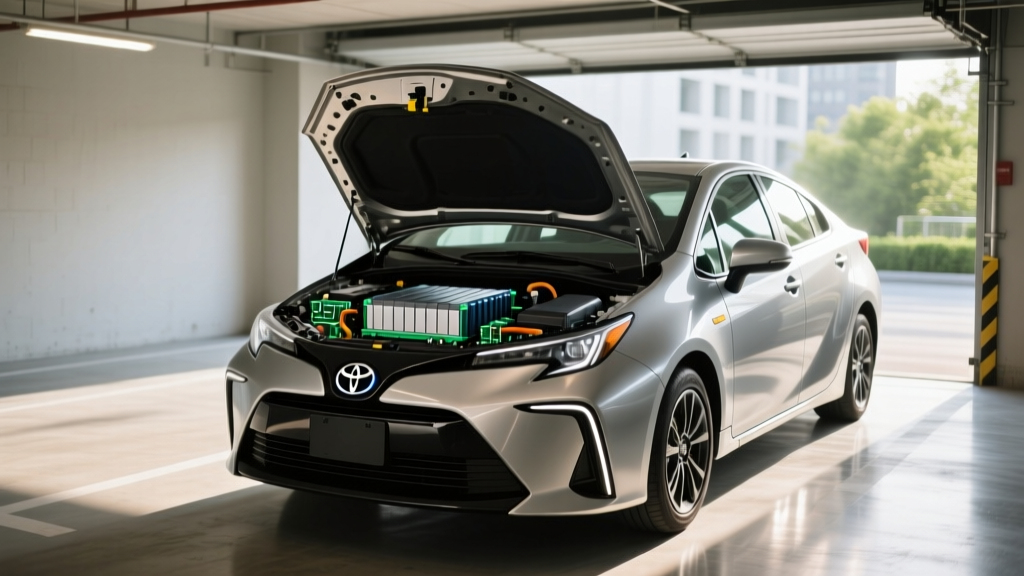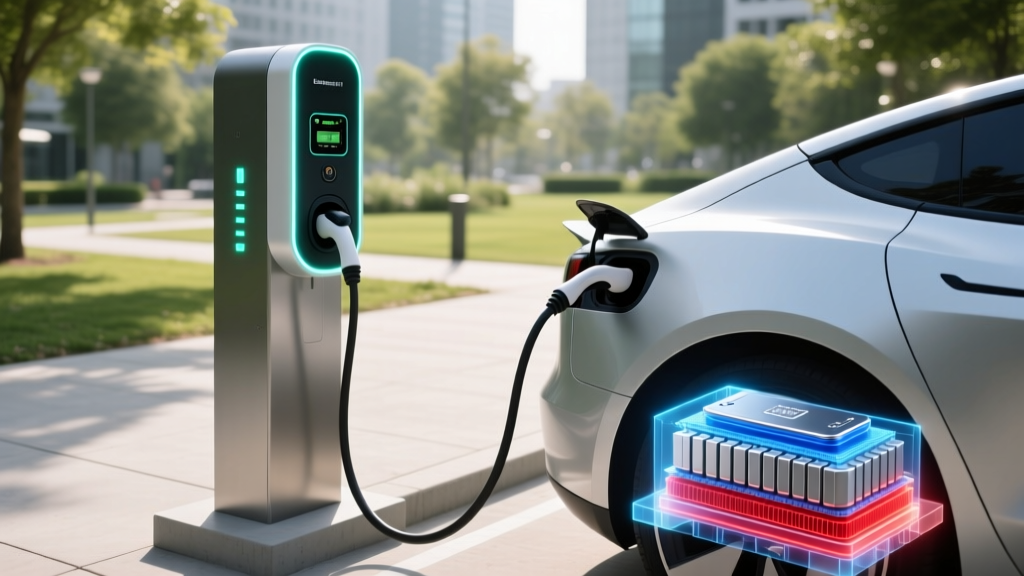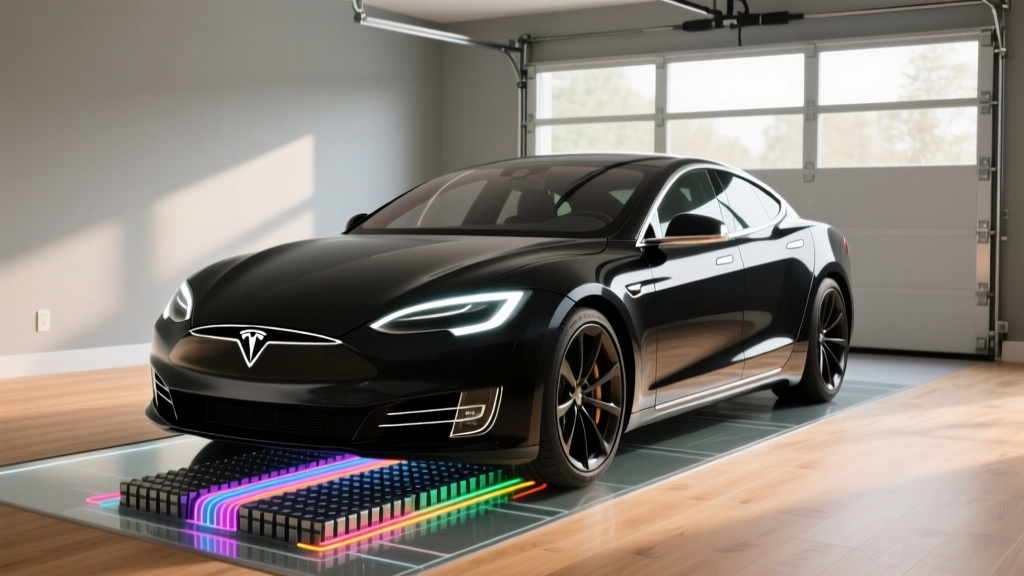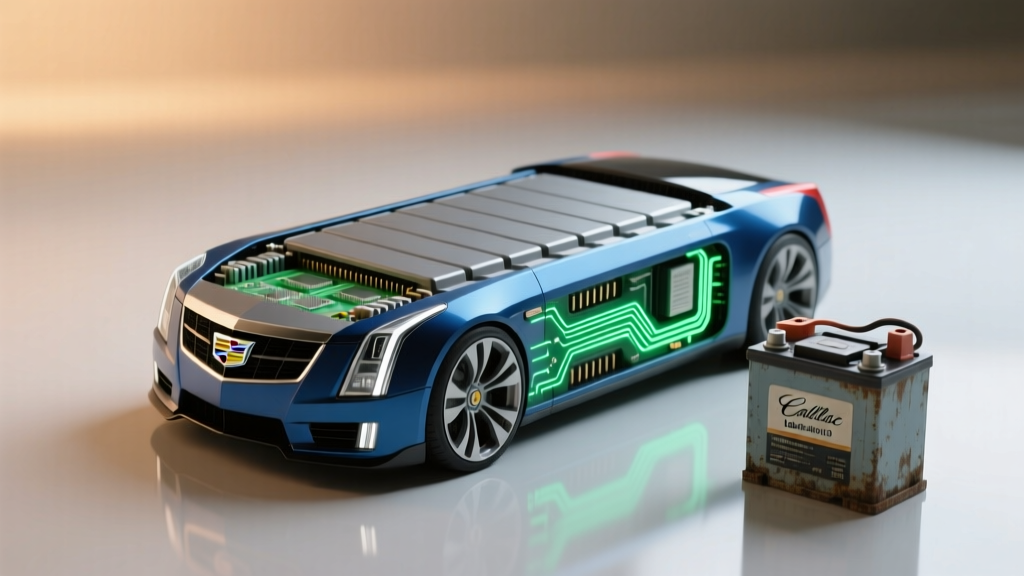
If you landed here searching for a 2007 Cadillac CTS battery, you are likely dealing with a dead 12-volt lead-acid starter battery in a conventional V6 or V8 sedan. That is an entirely different animal from the high-voltage lithium-ion traction batteries that power modern electric vehicles. But the confusion is understandable — the word "battery" now carries double duty in the automotive world, and understanding the gap between a $180 AGM replacement for a 2007 CTS and a $12,000+ EV traction pack is one of the most important things any car buyer can learn in 2026.
This guide uses that contrast as a launching point to explain everything that matters about modern EV battery technology: chemistry trade-offs, real-world degradation data, warranty coverage, replacement economics, and the emerging solid-state horizon. Whether you are maintaining a legacy Cadillac or shopping for a new EV, the battery is the single most expensive and consequential component in the vehicle.
The 2007 Cadillac CTS Battery: A 12V Baseline
The 2007 Cadillac CTS uses a standard Group 78 or Group 48 12-volt lead-acid battery (typically 70–80 Ah, ~700–800 CCA) to crank an internal combustion engine and run accessories when the alternator is not spinning. Replacement cost runs $150–$250 at any auto parts store, installation takes ten minutes, and the expected lifespan is 3–5 years depending on climate and driving habits.
That 12V battery stores roughly 0.8–1.0 kWh of usable energy. Compare that to the 75–100+ kWh traction battery in a modern EV — nearly 100 times the energy capacity, operating at 400–800 volts instead of 12, and managed by a computer system that monitors every individual cell thousands of times per second.
LFP vs NMC/NCA: The Chemistry Decision That Shapes Your EV
Every EV battery in 2026 uses one of two dominant lithium-ion chemistries: LFP (lithium iron phosphate, LiFePO4) or NMC/NCA (nickel manganese cobalt / nickel cobalt aluminum). The chemistry determines range, longevity, cold-weather behavior, and cost — and the choice is not as simple as "one is better."
| Attribute | LFP (Lithium Iron Phosphate) | NMC / NCA (Nickel-Based) |
|---|---|---|
| Energy Density | ~160–180 Wh/kg (lower) | ~220–300 Wh/kg (higher) |
| Cycle Life | 3,000–5,000+ cycles | 1,000–2,000 cycles |
| Cold Performance | Weaker below 32°F; slower charging | Better low-temp discharge and charge acceptance |
| Thermal Stability | Excellent; very low thermal runaway risk | Good but requires more active thermal management |
| Cost per kWh | ~$80–$100 (cell level, 2026) | ~$110–$140 (cell level, 2026) |
| Recommended SoC Range | Can charge to 100% regularly | Best kept 20–80% for daily use |
| Typical Applications | Tesla Model 3 RWD, Model Y RWD, BYD, Ford Mustang Mach-E Select | Tesla Long Range, Hyundai Ioniq 5/6, BMW iX, Rivian, Lucid |
The practical takeaway: LFP wins on longevity and cost — ideal for daily commuters who charge at home and do not need maximum range. NMC wins on energy density and cold-weather usability — the right call for long-range trims, cold-climate buyers, and performance models. Neither is universally superior; the correct choice depends on your driving profile.
How Long Do EV Batteries Actually Last?
The fear that EV batteries die like smartphone batteries after two years is the single biggest misconception in electric mobility. Real-world data from millions of vehicles on the road tells a far more reassuring story.
- Tesla 2025 Impact Report: Model 3/Y batteries retain ~88% capacity at 150,000 miles; ~85% at 200,000 miles.
- Geotab fleet study (2024, 10,000+ EVs): Average annual degradation of 1.8% across all chemistries; LFP packs averaged 1.3%/year.
- Recurrent Auto (2025 dataset, 15,000 vehicles): 96% of EVs tested still above their warranty capacity threshold at 8 years.
- Nissan Leaf (early passive-cooled packs, 2011–2017): Higher degradation, ~20–25% loss over 100,000 miles — a cautionary tale about thermal management.
Most modern liquid-cooled EV battery packs are engineered for 200,000+ miles before reaching 70–80% of original capacity. At that point, the vehicle still drives normally — it simply has less range. A 300-mile EPA vehicle at 80% State of Health still delivers 240 miles, which covers the daily needs of the vast majority of drivers.
To put it in perspective: the 12V battery in that 2007 Cadillac CTS will likely be replaced 3–4 times over the vehicle's life. A modern EV traction battery is designed to outlast the car itself.
Battery Warranty Terms: What Manufacturers Actually Guarantee
Federal law in the United States mandates a minimum EV battery warranty of 8 years / 100,000 miles (10 years / 150,000 miles in CARB states including California, New York, and others). But the capacity retention threshold — the percentage below which the manufacturer must replace or repair the battery — varies by brand.
| Manufacturer | Warranty Period | Capacity Threshold | Notes |
|---|---|---|---|
| Tesla | 8 yr / 120,000 mi (LR/AWD) | 70% | RWD models: 8 yr / 100,000 mi |
| Hyundai / Kia | 10 yr / 100,000 mi | 70% | Among the longest coverage |
| Ford | 8 yr / 100,000 mi | 70% | Covers battery and hybrid components |
| GM (Chevrolet, Cadillac) | 8 yr / 100,000 mi | 60–70% (varies by model) | Ultium platform; check specific model terms |
| BMW | 8 yr / 100,000 mi | 70% | Module-level repair available |
| Rivian | 8 yr / 175,000 mi | 70% | Highest mileage threshold in the market |
The warranty covers defects and abnormal degradation — meaning if your battery drops below the stated threshold within the warranty window, the manufacturer must repair or replace it at no cost. Normal wear that stays above the threshold is not covered. According to fueleconomy.gov, these warranty requirements are tied to EPA certification standards that all manufacturers selling EVs in the US must meet.
EV Battery Replacement Cost: The Numbers and the Reality
This is where the 2007 Cadillac CTS comparison becomes stark. A replacement 12V battery for a CTS costs under $250. A full EV traction battery replacement is a five-figure affair — but context matters enormously.
| Vehicle / Battery Size | Estimated Replacement Cost (2026) | Typical Replacement Timeline |
|---|---|---|
| Tesla Model 3 RWD (~60 kWh LFP) | $8,000–$12,000 | Rarely needed; most packs outlast 250,000 mi |
| Hyundai Ioniq 5 (~77.4 kWh NMC) | $10,000–$15,000 | 15–20+ years under normal use |
| Ford F-150 Lightning Ext. Range (~131 kWh NMC) | $18,000–$25,000 | Large pack; module repair may reduce cost |
| Chevrolet Bolt EV/EUV (~65 kWh NMC) | $9,000–$14,000 | Post-recall packs show strong longevity |
| BMW iX xDrive50 (~111.5 kWh NMC) | $20,000–$28,000 | Module-level repair available from BMW |
These figures sound alarming until you apply the data from the previous section: the vast majority of EV batteries never need full replacement during the vehicle's usable life. Out-of-warranty replacements are most common on early-generation EVs (2011–2017 models with passive or rudimentary thermal management) and vehicles subjected to extreme abuse patterns. For a 2024–2026 EV with liquid cooling and modern BMS (battery management system) software, a traction battery replacement is a low-probability event.
Some manufacturers (BMW, Hyundai, Tesla) now offer module-level repairs, replacing individual cell modules rather than the entire pack, which can cut costs by 50–70%. Third-party EV battery repair shops are also growing in number, offering refurbished packs at 40–60% of OEM pricing.
Factors That Accelerate (or Preserve) Battery Health
Battery degradation is not random — it follows predictable electrochemical patterns. Here is what actually moves the needle on State of Health:
- Limit DC fast charging to road trips. Frequent 150+ kW charging generates heat that accelerates electrolyte decomposition. Occasional use is fine; daily use measurably increases degradation (Geotab data shows ~0.5% additional annual loss for frequent DCFC users).
- Avoid prolonged storage at 100% SoC. For NMC batteries, storing above 90% for days or weeks stresses the cathode. LFP batteries tolerate 100% far better — this is one of their key advantages.
- Minimize deep discharges below 10%. Low SoC increases internal resistance and can cause copper dissolution in the anode current collector.
- Use preconditioning. Most modern EVs let you precondition the battery before fast charging (Tesla, Hyundai, Ford, Porsche). This brings the pack to optimal temperature (typically 30–40°C), reducing stress and improving charge speed.
- Park in shade or a garage in extreme heat. Sustained pack temperatures above 45°C (113°F) accelerate calendar degradation even when the car is not driven.
- Drive normally. Aggressive acceleration draws high C-rates, but the BMS limits peak current to protect cells. Normal spirited driving has minimal impact compared to thermal factors.
How to Check and Monitor Your EV's Battery Health
Unlike the 2007 CTS, where you would need a multimeter to check your 12V battery's voltage, modern EVs provide multiple ways to monitor traction battery State of Health (SoH):
- In-vehicle displays: Many EVs (Tesla, BMW, Mercedes, Hyundai) show estimated range that adjusts based on actual pack capacity. A noticeable drop in full-charge range over months signals degradation.
- OBD-II dongles and apps: Tools like OBDLink paired with apps such as EVNotify, LeafSpy (Nissan), or Scan My Tesla can read cell-level voltage, pack SoH percentage, and individual module balance.
- Manufacturer service diagnostics: Dealership service departments can run a full battery health report, often required for warranty claims.
- Third-party services: Companies like Recurrent Auto offer free battery health reports by connecting to your vehicle's telematics data, providing a degradation curve compared to fleet averages.
For used-EV buyers, a battery health report is as essential as a vehicle history report. According to NHTSA, battery condition is one of the top factors in used EV valuation, and a documented SoH above 90% commands a measurable premium in the resale market.
What Comes Next: Solid-State and Silicon Anode Batteries
The next generation of battery technology is well-documented in labs and pilot production lines, but it is critical to separate announcements from availability:
- Solid-state batteries replace the liquid electrolyte with a solid material, promising 30–50% higher energy density, faster charging, and improved safety. Toyota has announced a 2027–2028 production timeline for limited models. Samsung SDI targets 2027. QuantumScape has delivered prototype cells to Volkswagen for testing. No solid-state EV is currently available for purchase as of 2026.
- Silicon anode technology replaces graphite anodes with silicon-dominant materials, increasing capacity by 20–40%. Companies like Sila Nanotechnologies (partnered with Mercedes-Benz/Panasonic) and Group14 (partnered with Porsche) are in early production scaling. Expect first vehicles with silicon-dominant anodes in 2027–2028 model years.
- Sodium-ion batteries use abundant sodium instead of lithium, offering lower cost and excellent cold performance at the expense of energy density. CATL and BYD are producing these for budget EVs in China; US-market adoption is expected in fleet/commercial applications first, likely 2027+.
These technologies are real and progressing, but buyers should not delay an EV purchase waiting for them. Current lithium-ion batteries already deliver 200,000+ mile lifespans, 250–400 mile ranges, and 15–25 minute fast-charge times — sufficient for the vast majority of use cases today.
Frequently Asked Questions
How long do EV batteries last in years and miles?
Most modern liquid-cooled EV batteries (2020 and newer) are designed to retain 70–85% of original capacity at 150,000–200,000 miles, which typically corresponds to 12–18 years of average driving (13,500 miles/year). Fleet data from Geotab and Recurrent shows the average EV loses roughly 1.8% of capacity per year under normal use patterns.
How much does it cost to replace an EV battery?
Full replacement costs range from $8,000 to $28,000 depending on pack size and vehicle, with most mainstream EVs falling in the $10,000–$15,000 range. However, the vast majority of EV batteries never require full replacement — they outlast the vehicle's economic life. Module-level repairs, when available, can cost 50–70% less than a full pack swap.
What does the EV battery warranty actually cover?
Federal law requires a minimum 8-year/100,000-mile warranty on EV batteries (10/150,000 in CARB states). The warranty covers defects and degradation below a stated capacity threshold (typically 70%). If your battery falls below that threshold within the warranty period, the manufacturer repairs or replaces it at no cost. The warranty does not cover damage from accidents, misuse, or unauthorized modifications.
LFP vs NMC — which battery chemistry should I choose?
Choose LFP if you prioritize maximum longevity, lower cost, and plan to charge at home daily (LFP tolerates regular 100% charges). Choose NMC if you need maximum range, live in a cold climate, or want faster DC charging in low temperatures. Neither chemistry is universally superior — the right choice depends on your specific driving patterns and climate. See the IRS clean vehicle credit page for how battery sourcing requirements may affect tax credit eligibility based on chemistry and supply chain.
Can I check my EV battery health myself?
Yes. Most EVs display estimated range at full charge, which serves as a basic SoH proxy (compare current full-charge range to the original EPA rating). For detailed cell-level data, OBD-II adapters paired with apps like Scan My Tesla or LeafSpy provide granular readings. Third-party services like Recurrent Auto offer free telematics-based health reports. A dealership diagnostic check provides the most authoritative measurement, particularly for warranty claims.
Is a 2007 Cadillac CTS battery the same as an EV battery?
No. The 2007 CTS uses a conventional 12V lead-acid battery (~0.8 kWh, $150–$250 replacement, 3–5 year lifespan) to start the engine and power accessories. An EV traction battery is a 400–800V lithium-ion pack (60–130+ kWh, $8,000–$28,000 replacement, 15–20+ year designed lifespan) that propels the vehicle. They share the word "battery" but are fundamentally different technologies with different costs, lifespans, and maintenance requirements.
Sources: fueleconomy.gov, IRS §30D Clean Vehicle Credits, NHTSA, Geotab EV Battery Degradation Study (2024), Recurrent Auto Battery Health Data (2025), Tesla Impact Report (2025).