From Nickel-Metal Hydride to Lithium-Ion: Two Decades of Battery Evolution
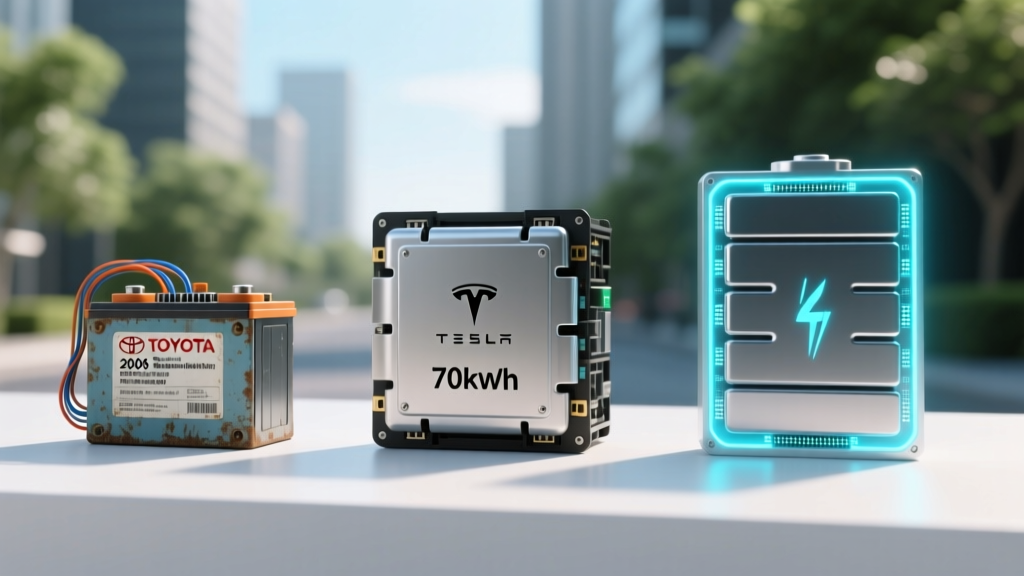
If you've ever searched for a 2006 Toyota Highlander battery, you likely discovered it uses a nickel-metal hydride (NiMH) pack — a 6.5 kWh unit in the Hybrid model that was cutting-edge for its era but fundamentally different from the lithium-ion chemistry powering today's EVs and hybrids. That early Highlander Hybrid battery was rated around 270 volts and weighed roughly 175 pounds, delivering an estimated 8–10 years of service before capacity loss became noticeable.
Fast-forward to 2026, and battery technology has transformed. Modern EV packs range from 50 kWh to over 100 kWh of usable energy, use sophisticated thermal management systems, and come with federally mandated warranties covering 8 years or 100,000 miles minimum. Yet the core questions remain the same: How long will it last? What does it cost to replace? And how do I keep it healthy?
This guide breaks down everything you need to know about EV and hybrid battery technology today — chemistry, degradation, warranties, replacement costs, and care — while acknowledging how far we've come since the NiMH days of the mid-2000s.
Battery Chemistry Explained: LFP vs NMC vs NCA
Not all lithium-ion batteries are the same. The cathode chemistry determines energy density, lifespan, cost, and cold-weather behavior. In 2026, two chemistries dominate the EV market:
| Attribute | LFP (Lithium Iron Phosphate) | NMC/NCA (Nickel Manganese Cobalt / Nickel Cobalt Aluminum) |
|---|---|---|
| Energy Density | ~160–180 Wh/kg (lower) | ~220–280 Wh/kg (higher) |
| Cycle Life | 3,000–5,000+ cycles | 1,500–2,500 cycles |
| Cold Performance | Weaker below 32°F; slower charging | Better low-temp discharge and charge acceptance |
| Cost per kWh | ~$85–$100 (lower) | ~$110–$135 (higher) |
| Thermal Stability | Excellent; less prone to thermal runaway | Good, but requires more active thermal management |
| State of Charge Tolerance | Can be charged to 100% daily without significant harm | Best kept between 20–80% for longevity |
| Typical Use | Standard-range models (Tesla Model 3 RWD, Ford Mustang Mach-E Select) | Long-range and performance models (Tesla Model Y LR, Hyundai Ioniq 5, Rivian R1S) |
| Cobalt Content | None | Contains cobalt (supply-chain concern) |
Which is better? It depends on your use case. LFP wins for daily commuting, high-mileage drivers, and buyers who want maximum cycle life at lower cost. NMC/NCA is the right choice when you need maximum range per charge, better cold-weather performance, or are buying a larger vehicle where energy density matters for keeping weight down.
According to U.S. Department of Energy data, average lithium-ion battery pack costs have fallen below $140/kWh at the cell level, with LFP cells undercutting NMC by 20–30%. This cost gap is why automakers increasingly offer LFP in base trims.
How Long Do EV Batteries Actually Last?
The short answer: longer than most buyers expect. Modern lithium-ion EV batteries are engineered to outlast the useful life of the vehicle in most cases. But degradation is real and measurable.
Typical Degradation Curve (Based on Fleet and Owner Data):
- Year 1 / 15,000 miles: 2–5% capacity loss (initial formation loss)
- Year 3 / 45,000 miles: 6–10% total loss
- Year 5 / 75,000 miles: 8–14% total loss
- Year 8 / 120,000 miles: 10–18% total loss (varies heavily by climate and charging habits)
- Year 10 / 150,000 miles: 12–22% total loss for NMC; 8–15% for LFP
Sources: Recurrent Auto fleet data, Geotab longitudinal studies, manufacturer warranty thresholds.
These numbers represent averages. Individual results depend heavily on climate (extreme heat accelerates degradation more than cold), charging habits (frequent DC fast charging and routinely sitting at 100% SoC stress NMC cells), and whether the vehicle has active liquid thermal management (most modern EVs do; some older or budget models use passive air cooling).
For context, the 2006 Toyota Highlander Hybrid's NiMH battery typically lost 20–30% capacity over 10–15 years — a steeper curve than modern lithium-ion, but those packs were also much smaller and operated in a narrower state-of-charge window managed by the hybrid system.
What Does the Battery Warranty Actually Cover?
Federal law mandates that all EV and hybrid battery packs sold in the U.S. carry a minimum warranty of 8 years or 100,000 miles (whichever comes first). In California Air Resources Board (CARB) states — which include California, New York, Massachusetts, and over a dozen others — the mandate extends to 10 years or 150,000 miles.
| Manufacturer | Warranty Term | Capacity Retention Threshold | Notes |
|---|---|---|---|
| Tesla (Model 3/Y LFP) | 8 yr / 120,000 mi | 70% | Standard Range models |
| Tesla (Model 3/Y LR/Perf) | 8 yr / 120,000 mi | 70% | NMC models |
| Hyundai / Kia | 10 yr / 100,000 mi | 70% | Among the longest terms |
| Ford (Mach-E, F-150 Lightning) | 8 yr / 100,000 mi | 70% | Components + capacity |
| GM (Ultium-based) | 8 yr / 100,000 mi | 70% | Covers battery and drive unit |
| Rivian | 8 yr / 120,000 mi | 70% | Adventure and Max packs |
| Toyota (bZ4X) | 10 yr / 100,000 mi | 70% | Hybrid battery: 10 yr / 150,000 mi |
The key detail most buyers miss: the warranty threshold. A 70% retention threshold means the manufacturer only replaces or repairs the battery if its usable capacity drops below 70% of its original value within the warranty period. A battery at 72% capacity — meaning you've lost 28% of your original range — is technically still "within spec" under warranty. In practice, very few modern EV batteries hit this threshold under normal use.
According to IRS guidelines, battery sourcing and critical-mineral requirements also affect your eligibility for the §30D federal tax credit — separate from warranty but relevant to total ownership cost.
How Much Does an EV Battery Cost to Replace?
This is the question that generates the most anxiety — and the most misinformation. Let's look at actual 2026 replacement cost ranges:
| Vehicle / Pack Size | Battery Capacity | Estimated Replacement Cost | Typical Replacement Timeline |
|---|---|---|---|
| Tesla Model 3 RWD (LFP) | ~60 kWh | $12,000–$15,000 | Rarely needed under 200,000 mi |
| Hyundai Ioniq 5 (NMC) | ~77.4 kWh | $14,000–$18,000 | Rarely needed under 180,000 mi |
| Ford F-150 Lightning (Extended) | ~131 kWh | $22,000–$30,000 | Rarely needed under 150,000 mi |
| Chevrolet Bolt EV/EUV | ~65 kWh | $10,000–$14,000 | Post-recall packs show excellent longevity |
| Toyota Highlander Hybrid (NiMH, 2006-era) | ~6.5 kWh | $3,000–$5,000 | Often needed at 150,000–200,000 mi |
| Toyota bZ4X | ~71.4 kWh | $13,000–$17,000 | Too new for widespread data |
The critical context: most EV batteries never need full replacement during the vehicle's useful life. Data from Recurrent Auto and Geotab shows that fewer than 2% of EV batteries are replaced under warranty, and the vast majority of packs retain 80%+ capacity at 100,000 miles. The fear of a sudden $20,000 bill at 80,000 miles is not supported by the data.
When replacement is needed, it's typically due to manufacturing defects (covered under warranty), physical damage from road debris or accidents, or — rarely — extreme degradation from sustained abuse (daily 100% charges combined with frequent DC fast charging in hot climates).
Also worth noting: individual module replacement is increasingly available. Rather than replacing an entire 80 kWh pack, a technician can swap out a single degraded module for $1,500–$3,000, restoring most of the pack's capacity.
Factors That Accelerate (or Preserve) Battery Life
Battery longevity isn't random — it's largely determined by how you use and store the vehicle. Here's what the data shows:
What Accelerates Degradation
- Frequent DC fast charging above 150 kW: High C-rates generate heat; occasional use is fine, but daily fast charging adds ~2–4% extra degradation over 5 years vs. Level 2 only.
- Sustained 100% State of Charge: Sitting at full charge stresses NMC cells. LFP is more tolerant, but even LFP benefits from occasional rest at lower SoC.
- Extreme heat exposure: Ambient temperatures above 95°F combined with high SoC accelerate chemical breakdown. Garage parking matters in Phoenix and Houston.
- Deep discharge below 10%: Routinely running the pack to near-zero stresses cells and can trigger protective lockouts.
- Storing the vehicle at 100% or 0% SoC for weeks: The worst combination for long-term health.
What Preserves Battery Health
- Daily charging to 80% (NMC) or 100% (LFP): Follow the manufacturer's recommended daily limit.
- Level 2 home charging as primary: 7–11 kW AC charging generates far less heat than 150+ kW DC.
- Preconditioning before fast charging: Most EVs do this automatically when you navigate to a charger; it warms or cools the pack to the optimal temperature for fast charging.
- Storing at 50–60% SoC: If the car will sit unused for 2+ weeks, set the charge limit to ~50–60%.
- Using the vehicle's built-in charge limit settings: Every modern EV lets you set a maximum charge percentage — use it.
How to Monitor Your Battery's State of Health (SoH)
State of Health (SoH) is the percentage of a battery's original capacity that remains usable. A new battery is at 100% SoH; a battery that has degraded to hold only 65 kWh of its original 77.4 kWh is at ~84% SoH.
Here's how to check it:
- In-vehicle display: Many EVs (Hyundai, Kia, BMW, Mercedes) show SoH or estimated range vs. original range directly in the infotainment or driver display.
- OBD-II dongle + app: Tools like LeafSpy (Nissan Leaf), TeslaFi, or ABRP (A Better Route Planner) with an OBD adapter can read cell-level voltage data and calculate SoH with high accuracy.
- Dealer diagnostic: Any authorized service center can run a full battery health report, typically during scheduled maintenance.
- Recurrent / fleet data apps: Some services compare your degradation curve against a fleet average for your specific model.
A useful baseline: if your EV originally had an EPA-rated 300-mile range and you're now consistently seeing 260 miles at 100% charge in similar weather conditions, your SoH is roughly 87%. That's well within normal for a 3–4 year old vehicle.
What's Next: Solid-State and Silicon-Anode Batteries
Two emerging technologies promise to reshape EV batteries — but neither is available in production vehicles as of 2026.
Solid-state batteries replace the liquid electrolyte with a solid material (ceramic, sulfide, or polymer). The potential benefits are significant: 30–50% higher energy density, faster charging (potentially 10–80% in under 10 minutes), improved safety (no flammable electrolyte), and longer cycle life. Toyota has announced plans for a solid-state-equipped EV by 2027–2028, and Samsung SDI is targeting 2027 for mass production. However, manufacturing scalability and cost remain major hurdles. Expect initial solid-state vehicles to be premium-priced, with mainstream adoption unlikely before 2030.
Silicon-anode batteries (sometimes called silicon-carbon anode) replace the graphite anode with silicon, which can store roughly 10x more lithium ions per unit mass. Companies like Sila Nanotechnologies and Group14 are already shipping early silicon-anode cells, and the Mercedes-AMG G-Class electric (announced for 2025–2026) was among the first vehicles to use the technology. Silicon anodes offer 15–25% energy density improvement in the near term, with the main challenge being silicon's tendency to expand ~300% during charging — a problem being solved through nanostructured composites.
Realistic timeline: Silicon-anode batteries will appear in limited production vehicles in 2026–2028. Solid-state batteries will begin appearing in premium models around 2028–2030 and won't reach price parity with current lithium-ion until the early 2030s. Neither technology is available to buy today.
Frequently Asked Questions
How long do EV batteries last in years and miles?
Based on fleet data from Recurrent Auto and Geotab, modern lithium-ion EV batteries (2020 and later) retain 85–92% of their original capacity at 100,000 miles. At 200,000 miles, most retain 75–85%. In years, that translates to 15–20+ years of service for average drivers (12,000–15,000 miles/year). LFP chemistry tends to outlast NMC by 2–5% over the same mileage.
How much does it cost to replace an EV battery in 2026?
Full pack replacement ranges from roughly $10,000 for a smaller pack (Chevrolet Bolt, ~65 kWh) to $22,000–$30,000 for large packs (Ford F-150 Lightning Extended Range, ~131 kWh). However, full replacement is rarely needed — fewer than 2% of EV batteries are replaced under warranty, and individual module repair can cost $1,500–$3,000.
What does the EV battery warranty cover?
Federal minimum is 8 years / 100,000 miles; CARB states mandate 10 years / 150,000 miles. The warranty covers capacity loss below a threshold (typically 70% of original capacity) and defects in materials or workmanship. It does not cover damage from accidents, improper modifications, or extreme abuse. Always check your specific manufacturer's warranty document for exact terms.
How do I maximize my EV battery's lifespan?
Set your daily charge limit to 80% for NMC or 100% for LFP. Use Level 2 home charging as your primary method. Avoid leaving the car at 100% or 0% SoC for extended periods. Precondition the battery before DC fast charging (most EVs do this automatically when navigating to a charger). Park in shade or a garage in hot climates. These habits can add 3–5% capacity retention over 5 years compared to worst-case habits.
LFP vs NMC — which battery chemistry is better for me?
Choose LFP if you primarily drive in moderate climates, charge at home most nights, want maximum cycle life, and don't need the absolute longest single-charge range. Choose NMC/NCA if you regularly drive in cold weather, need maximum range per charge, take frequent long road trips requiring fast charging, or buy a larger vehicle where energy density keeps weight manageable. Both chemistries are proven and reliable — the right choice depends on your driving pattern, not which is "better" in the abstract.
Is the 2006 Toyota Highlander Hybrid battery the same as a modern EV battery?
No. The 2006 Highlander Hybrid uses a nickel-metal hydride (NiMH) battery pack of approximately 6.5 kWh at ~270 volts. Modern EV batteries use lithium-ion chemistry (LFP or NMC/NCA), operate at 350–800 volts, and store 50–130+ kWh. The NiMH pack in the 2006 Highlander was designed for brief electric assist in a hybrid system, not for sustained electric-only driving. Replacement NiMH packs for that model typically cost $3,000–$5,000 and are widely available from aftermarket suppliers.