From a 2006 Ford F-150 Battery to EV Packs: A Truck Owner's Reality Check
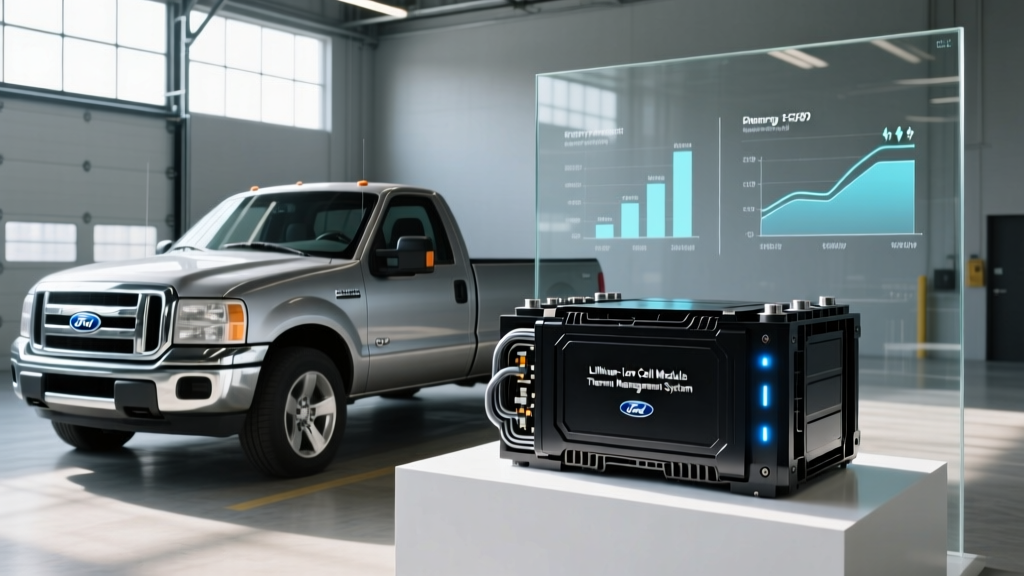
If you've landed here searching for a 2006 Ford F-150 battery, you're probably dealing with a dead 12-volt starter battery in one of America's best-selling pickups. That Group 65 lead-acid or AGM unit typically costs $150–$280 and lasts 3–5 years. But if you're also considering Ford's electric future — specifically the F-150 Lightning — you're about to encounter a completely different kind of battery: a high-voltage lithium-ion traction pack measured in kilowatt-hours (kWh), not cold-cranking amps.
This guide bridges that gap. We'll cover what EV buyers and truck loyalists need to know about modern battery chemistry, degradation data, replacement costs, and warranty protection — while clarifying why a 2006 F-150's 12V battery and an F-150 Lightning's 98–131 kWh pack are fundamentally different systems.
LFP vs NMC/NCA: The Chemistry Trade-Off That Matters
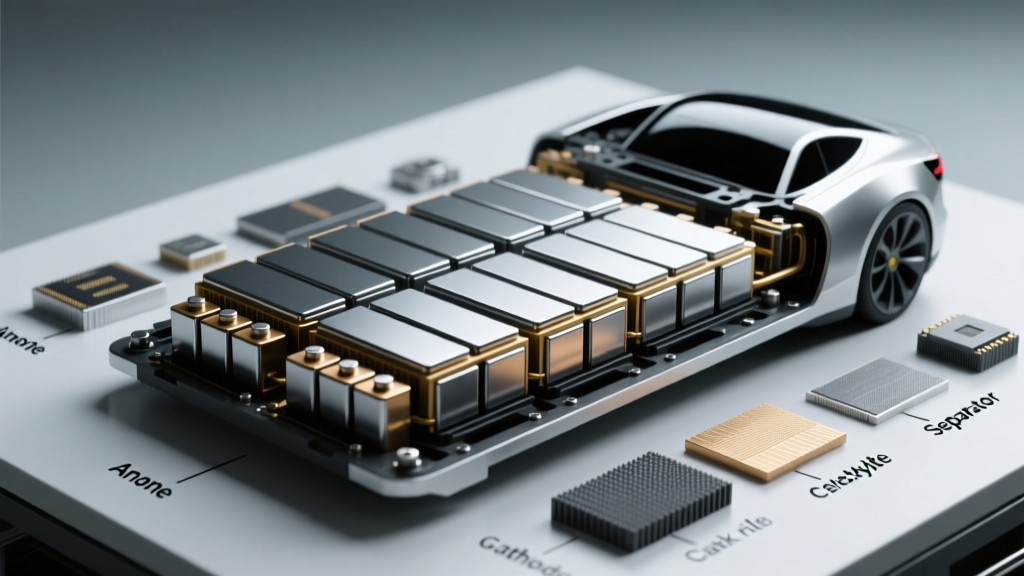
Modern EV batteries fall into two dominant chemistries: LFP (lithium iron phosphate) and NMC/NCA (nickel manganese cobalt / nickel cobalt aluminum). The Ford F-150 Lightning Standard Range uses LFP; the Extended Range uses NMC. Here's how they compare:
| Attribute | LFP (LiFePO₄) | NMC / NCA |
|---|---|---|
| Energy Density | Lower (~160 Wh/kg cell-level) | Higher (~250–300 Wh/kg) |
| Typical Use | Standard-range models (F-150 Lightning SR, Tesla Model 3 RWD) | Long-range / performance models |
| Cycle Life | 3,000–5,000+ cycles | 1,000–2,500 cycles |
| Cold-Weather Performance | More range loss below 32°F (~30–40% reduction) | Better low-temp output (~20–30% reduction) |
| Cost per kWh | Lower (no cobalt/nickel) | Higher (commodity-sensitive) |
| State of Charge (SoC) Habit | Can charge to 100% daily | Best kept 20–80% daily; 100% for trips only |
| Thermal Stability | Excellent (lower runaway risk) | Good, with active thermal management required |
Which is better? It depends on your use case. If you commute daily and charge at home, LFP's longevity and 100% SoC tolerance make it ideal. If you need maximum range for towing or road trips, NMC's energy density wins. Ford chose LFP for the Lightning Standard Range specifically because fleet and work-truck buyers cycle batteries heavily — LFP handles that abuse better.
How Long Do EV Batteries Actually Last?
The fear that EV batteries die like smartphone batteries after two years is not supported by fleet data. According to fueleconomy.gov and long-term studies from Geotab and Recurrent Auto, modern liquid-cooled EV batteries typically retain 85–92% of original capacity after 100,000 miles.
Typical Degradation Curve (Liquid-Cooled NMC/LFP Packs)
- Year 1 / 15,000 mi: ~3–5% loss (initial formation loss)
- Year 3 / 45,000 mi: ~6–9% total loss
- Year 5 / 75,000 mi: ~8–12% total loss
- Year 8 / 120,000 mi: ~10–15% total loss
- Year 10 / 150,000 mi: ~12–18% total loss
Most EV batteries will outlast the vehicle's body and suspension components. Catastrophic failure (sudden death) is exceedingly rare — degradation is gradual and linear after the first year.
By contrast, the 12V lead-acid battery in your 2006 Ford F-150 will need replacement every 3–5 years regardless of mileage, because sulfation and electrolyte loss are time-dependent chemical processes. A 2006 F-150 battery replacement is routine maintenance; an EV traction battery replacement is an edge case.
EV Battery Warranty Terms: What's Actually Covered
Federal law mandates a minimum 8-year / 100,000-mile warranty on EV battery packs (10 years / 150,000 miles in CARB states like California). Most manufacturers exceed that baseline:
| Vehicle | Warranty Term | Capacity Retention Threshold |
|---|---|---|
| Ford F-150 Lightning | 8 yr / 100,000 mi | ≥70% of original capacity |
| Tesla Model Y (NMC) | 8 yr / 120,000 mi | ≥70% of original capacity |
| Hyundai Ioniq 5 | 10 yr / 100,000 mi | ≥70% of original capacity |
| Chevrolet Silverado EV | 8 yr / 100,000 mi | ≥70% of original capacity |
| Rivian R1T | 8 yr / 175,000 mi | ≥70% of original capacity |
The key detail is the 70% retention threshold. If your F-150 Lightning's 131 kWh Extended Range pack drops below ~91.7 kWh of usable capacity within the warranty period, Ford replaces or repairs it at no cost. In practice, hitting that threshold requires severe abuse or a manufacturing defect — most trucks will retain 80%+ at 100,000 miles.
EV Battery Replacement Cost: Numbers and Context
This is where EV skeptics focus, so let's use real figures. According to 2025–2026 service data and IRS guidance on clean vehicle components:
| Vehicle / Pack Size | Estimated Cost (Parts + Labor) | Typical Replacement Trigger |
|---|---|---|
| F-150 Lightning Standard Range (98 kWh, LFP) | $18,000–$25,000 | Collision damage, rare cell failure post-warranty |
| F-150 Lightning Extended Range (131 kWh, NMC) | $25,000–$35,000 | Same as above |
| Tesla Model 3 / Y (75–82 kWh) | $13,000–$20,000 | High-mileage fleet vehicles, salvage rebuilds |
| Chevrolet Bolt EV (65 kWh) | $14,000–$16,000 | Post-recall replacements (largely covered) |
When is replacement typically needed? Almost never during normal ownership. Out-of-warranty replacements are predominantly due to collision damage (where insurance covers the cost) or vehicles exceeding 200,000+ miles. For context, the average age of a vehicle on U.S. roads is 12.6 years — most EVs will be scrapped or sold long before the pack needs replacement.
Compare this to your 2006 Ford F-150: a new 12V battery costs ~$200, but you'll buy 3–4 of them over 15 years. An EV owner buys zero traction batteries over the same period.
Factors That Accelerate (or Protect) Battery Life
Battery longevity is not random — it responds predictably to how you charge, drive, and store the vehicle:
Battery Care Best Practices
- Limit DC fast charging to road trips. Frequent 150+ kW sessions generate heat that accelerates degradation. Home Level 2 (7–11 kW) is gentler.
- Avoid extreme SoC states. For NMC packs, keep daily SoC between 20–80%. LFP packs tolerate 100% daily — Ford recommends weekly 100% charges for LFP calibration.
- Precondition before fast charging. Most EVs warm the battery en route to a DC station; this reduces charge time and stress.
- Park in shade or a garage in summer. Sustained 95°F+ ambient heat degrades cells faster than cold.
- Don't store at 100% or 0% SoC. If leaving the EV for weeks, set SoC to ~50%.
- Use regenerative braking moderately in cold weather. Aggressive regen on a cold pack stresses cells; most EVs auto-limit this.
How to Check Your Battery's State of Health (SoH)
State of Health (SoH) is the percentage of original capacity your pack can still hold. Most 2026 EVs surface this data in-vehicle or via the companion app:
- FordPass App: Displays estimated range vs. original; dealers can pull detailed SoH via diagnostic scan.
- Tesla App / Service Mode: Shows battery health percentage directly in newer software builds.
- Hyundai / Kia: SoH visible in the EV menu of the infotainment cluster.
- OBD-II tools: Apps like LeafSpy (Nissan) or third-party scanners read cell voltage variance and SoH for most brands.
- Dealer diagnostic: Any authorized service center can print a full SoH report — request this before buying a used EV.
A healthy used EV will show SoH of 88–95% at 50,000 miles. Anything below 80% at low mileage warrants a warranty claim or a walk-away.
Emerging Tech: Solid-State and Silicon Anode (Forward-Looking)
Next-generation battery tech promises higher energy density and faster charging, but timelines remain fluid:
- Solid-state batteries: Toyota, Samsung SDI, and QuantumScape target 2027–2029 production. Expect initial deployment in luxury/low-volume models before reaching trucks like the F-150 Lightning successor. Projected benefits: 40% more range, 10-minute fast charges.
- Silicon anode cells: Already in limited production (GM's Ultium with silicon-dominant anodes). Offers ~20% energy density improvement over graphite anodes, with gradual rollout through 2026–2028.
- Sodium-ion batteries: CATL and BYD are producing these for budget EVs in China. Lower cost than LFP but ~30% less energy density — unlikely in U.S. trucks before 2030.
These are announced or pilot-stage technologies. Current buyers should make decisions based on today's proven LFP and NMC packs, not speculative future chemistries.
EV Battery FAQ
How long do EV batteries last in years and miles?
Modern liquid-cooled EV batteries typically last 15–20 years or 200,000+ miles before dropping below 70% capacity. Fleet data from Recurrent Auto shows most packs retain 85–92% at 100,000 miles. They generally outlast the vehicle itself.
How much does an EV battery cost to replace?
Out-of-warranty replacement costs range from $13,000 for a Tesla Model 3 pack to $35,000 for an F-150 Lightning Extended Range pack, including labor. However, most replacements are due to collision damage (covered by insurance) — degradation-based replacements during normal ownership are extremely rare.
What does the EV battery warranty cover?
Federal law requires 8 years / 100,000 miles of coverage (10/150,000 in CARB states). Coverage triggers when capacity drops below 70% of original. Manufacturing defects and excessive degradation are covered; collision damage is handled by your auto insurance.
How do I check and maximize my EV battery health?
Check SoH via your vehicle's app, infotainment menu, or a dealer diagnostic scan. Maximize longevity by favoring Level 2 home charging, keeping NMC packs between 20–80% SoC (LFP can hit 100%), preconditioning before DC fast charging, and avoiding prolonged storage at extreme SoC levels.
LFP vs NMC — which battery chemistry is better?
Neither is universally better. LFP offers longer cycle life (3,000–5,000 cycles), lower cost, and tolerance for daily 100% charging — ideal for commuters and fleet use. NMC delivers higher energy density for longer range and better cold-weather performance — better for road-trippers and cold-climate buyers. The Ford F-150 Lightning uses LFP for Standard Range and NMC for Extended Range, reflecting this trade-off.
Is a 2006 Ford F-150 battery the same as an EV battery?
No. A 2006 F-150 uses a 12V lead-acid or AGM starter battery (Group 65, ~$150–$280, replaced every 3–5 years). An F-150 Lightning uses a high-voltage lithium-ion traction battery (98–131 kWh, $18,000–$35,000 replacement cost, designed to last 15–20 years). They serve completely different functions and are not interchangeable.