Why Searches for a 2006 Chevy Equinox Battery Lead to EV Battery Questions
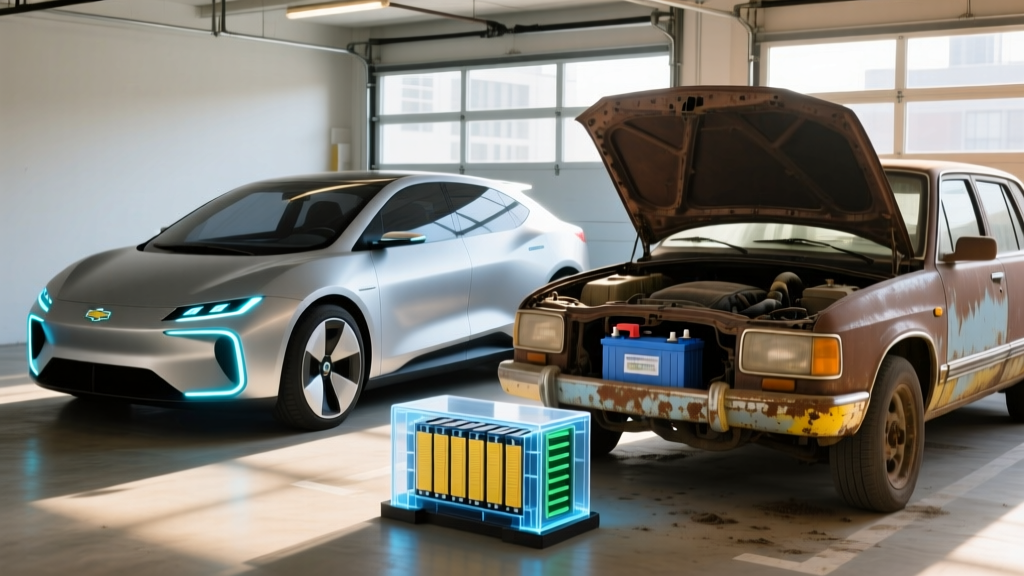
If you've ever replaced the 12-volt lead-acid battery in a 2006 Chevy Equinox, you know the drill: a $140–$220 group-34 or group-48 battery from an auto parts store, a few wrench turns, and you're back on the road in twenty minutes. That simple, inexpensive swap is the mental model many drivers carry into the electric-vehicle era — and it's the source of a lot of unnecessary anxiety.
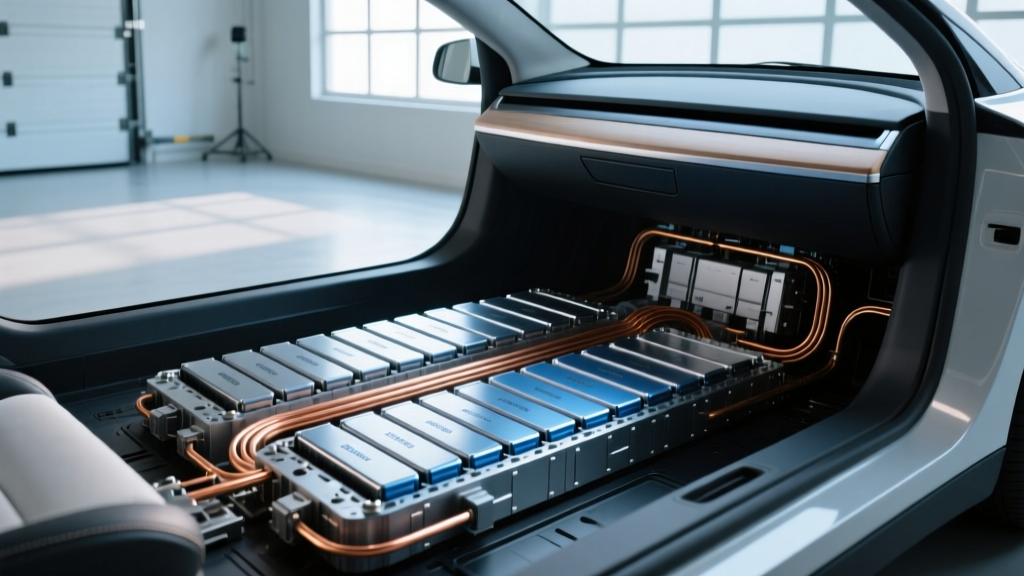
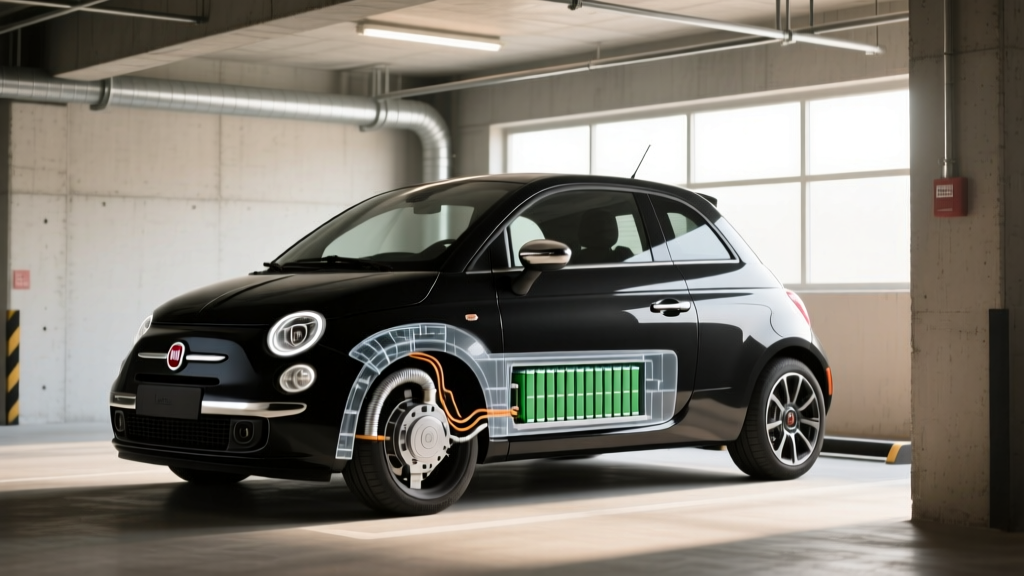
The high-voltage traction battery in a modern EV is a fundamentally different component. It stores between 50 and 130 kWh of energy (compared to roughly 0.7 kWh in that Equinox's 12V battery), uses lithium-ion chemistry, weighs 700–1,200 pounds, and is engineered to last the operational life of the vehicle. Understanding how these batteries actually age, what they cost to replace if they don't, and how to care for them is one of the highest-leverage things an EV buyer or owner can learn.
This guide covers every practical dimension of EV battery ownership in 2026 — from chemistry trade-offs to real degradation data — using the 2006 Chevy Equinox battery as a baseline reference for how far automotive energy storage has come.
EV Battery Chemistry in 2026: LFP vs NMC vs NCA
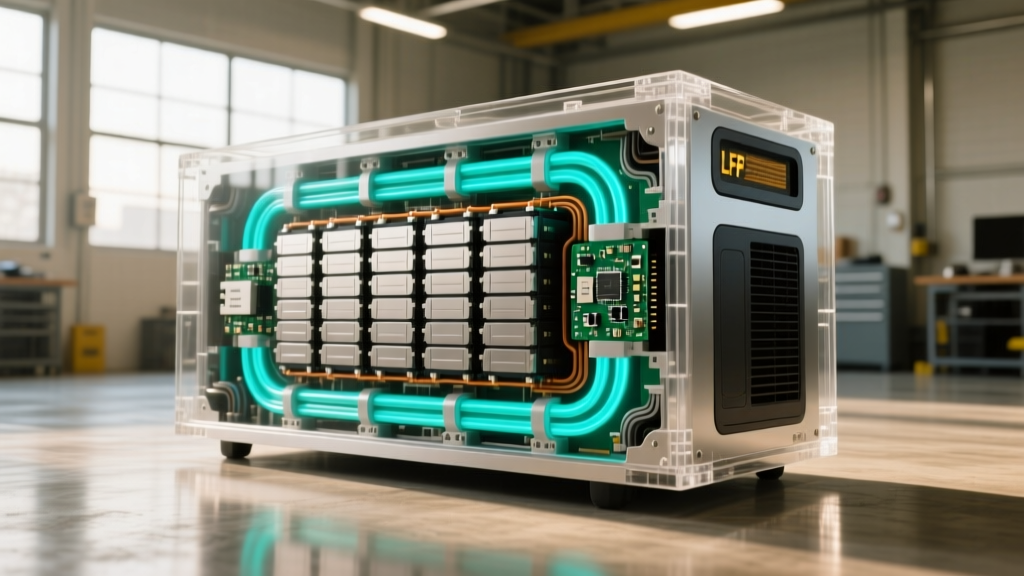
Not all lithium-ion batteries are the same. The two dominant chemistries in passenger EVs today are NMC/NCA (nickel-manganese-cobalt or nickel-cobalt-aluminum) and LFP (lithium iron phosphate). The chemistry inside your pack determines its energy density, cycle life, cold-weather behavior, and cost.
| Attribute | NMC / NCA | LFP |
|---|---|---|
| Energy Density | High (~250–300 Wh/kg cell-level) | Moderate (~160–200 Wh/kg) |
| Typical Cycle Life | 1,000–2,000 full cycles | 3,000–5,000+ full cycles |
| Cold-Weather Performance | Better low-temp discharge | Reduced range in freezing temps; preconditioning critical |
| Cost per kWh (2026) | $110–$140/kWh pack-level | $80–$110/kWh pack-level |
| Thermal Stability | Good; requires active thermal mgmt | Excellent; inherently more stable |
| Common in (2026 models) | Tesla Model 3 LR, Hyundai Ioniq 5, Ford F-150 Lightning Ext Range | Tesla Model 3 RWD, Ford Mustang Mach-E Select, BYD models |
Which is better? It depends on your use case. NMC/NCA packs deliver more range in a lighter, smaller package — ideal for long-range sedans and trucks. LFP packs sacrifice some range density but last significantly longer, tolerate daily 100% charging (NMC prefers 80% daily), and cost less. If you commute 40 miles daily and charge at home, LFP is arguably the superior choice. If you regularly drive 300+ mile highway trips in cold climates, NMC's energy density and cold performance matter more.
How Long Do EV Batteries Actually Last?
The short answer: almost always longer than the car around them. Data from fleet operators, manufacturer reports, and independent testing consistently shows modern EV batteries retaining 85–95% of original capacity after 100,000 miles.
Real-World Degradation Data Points:
- Tesla fleet data (2025 Impact Report): Model 3/Y batteries retain approximately 85% capacity at 200,000 miles.
- Geotab fleet study (14 models, 10,000+ vehicles): Average annual degradation of 1.8% per year across mixed chemistries, meaning ~91% retained after 5 years.
- Taxi fleet Nissan Leaf (40 kWh, NMC): Earlier-generation packs showed 20–25% loss at 100,000 miles, largely due to passive air cooling and frequent DC fast charging in hot climates — a problem modern liquid-cooled packs have largely solved.
- LFP Tesla Model 3 RWD fleet: Operators report 90%+ retention at 150,000 miles, consistent with LFP's superior cycle life.
For comparison, a 2006 Chevy Equinox with the 3.4L V6 might see its original lead-acid battery need replacement every 3–5 years — but at $150 a pop, that's a minor line item. The EV equivalent is a battery that loses perhaps 10–15% of its range over a decade of typical use, going from an EPA-estimated 310 miles to a still-very-usable 265–280 miles.
Battery Warranty Coverage: What You're Protected Against
Federal law mandates a minimum EV battery warranty of 8 years / 100,000 miles for emissions-related components, and most manufacturers align their high-voltage battery warranties to this standard or exceed it. The key metric is the capacity retention threshold — the point at which the manufacturer considers the battery "failed" and will repair or replace it.
| Manufacturer (2026) | Warranty Term | Capacity Threshold |
|---|---|---|
| Tesla (Model 3/Y) | 8 yr / 120,000 mi (LR/AWD); 8 yr / 100,000 mi (RWD LFP) | 70% retention |
| Hyundai / Kia | 10 yr / 100,000 mi | 70% retention |
| Ford (Mach-E, F-150 Lightning) | 8 yr / 100,000 mi | 70% retention |
| Chevrolet (Equinox EV, Blazer EV) | 8 yr / 100,000 mi | 60–70% retention (varies by model) |
| BMW / Mercedes-Benz | 8 yr / 100,000 mi | 70% retention |
Critical nuance: warranties cover defective batteries and excessive degradation below the threshold. Normal, gradual capacity loss above the threshold (say, dropping from 100% to 82% over 8 years) is expected behavior and is not a warranty claim. Read the fine print — and keep records of your charging habits, as abuse (repeated 0% storage, exclusive DC fast charging without Level 2 use) can void coverage.
Source: fueleconomy.gov provides EV incentive and warranty context; always verify current terms on manufacturer sites.
EV Battery Replacement Cost: Numbers and Context
This is the question that generates the most anxiety, and it deserves a clear-eyed answer. Out-of-warranty EV battery replacement is expensive — but it's also rare, and costs are falling.
| Vehicle / Pack Size | Estimated Replacement Cost (2026) | Typical Need Timeline |
|---|---|---|
| Tesla Model 3 RWD (~60 kWh LFP) | $10,000–$13,000 | Rarely needed before 300,000+ mi |
| Hyundai Ioniq 5 (~77 kWh NMC) | $13,000–$17,000 | Rarely needed before 200,000+ mi |
| Ford F-150 Lightning Ext Range (~131 kWh) | $20,000–$28,000 | Insufficient long-term data; projected 200,000+ mi |
| Chevy Bolt EV (retired, ~65 kWh) | $14,000–$16,000 (recall replacements were free) | Recall-driven; normal degradation low |
| BMW iX xDrive50 (~111 kWh) | $22,000–$30,000 | Projected 200,000+ mi |
Context matters enormously here. A 2006 Chevy Equinox might cost $3,000–$5,000 per year in maintenance as it ages (transmission work, timing chain, suspension). An EV eliminates nearly all of that. Even if you eventually face a $15,000 battery replacement at year 15 — which is far from guaranteed — you've likely saved $10,000–$20,000 in fuel and maintenance over that same period.
Also worth noting: module-level repair is increasingly common. Rather than replacing the entire pack, specialized shops can identify and swap individual degraded modules for $2,000–$5,000, depending on the vehicle.
Factors That Accelerate Battery Degradation
Not all miles are equal when it comes to battery aging. The following factors have the most measurable impact on long-term capacity retention:
- Exclusive DC fast charging: Frequent use of 150+ kW DC chargers generates sustained heat. Packs that are DC-fast-charged daily degrade measurably faster than those primarily charged on Level 2 (7–19 kW). Aim for 80%+ Level 2 charging with DCFC reserved for road trips.
- Extreme state-of-charge storage: Sitting at 100% SoC for days, or below 10% SoC, stresses lithium-ion cells. The ideal storage range is 40–60% for extended parking, 20–80% for daily use.
- High ambient heat without preconditioning: Battery chemistry degrades fastest above 104°F (40°C). Liquid-cooled packs handle this well, but charging a hot-soaked pack at high power without thermal preconditioning accelerates wear.
- Cold charging without preconditioning: Charging an LFP pack below freezing without warming it first can cause lithium plating — a permanent, irreversible capacity loss. Always use your vehicle's preconditioning feature before cold-weather charging.
- High discharge rates (performance driving): Repeated hard acceleration pulls high current from cells, generating internal heat. Occasional spirited driving is fine; daily track use is not what these packs are optimized for.
Monitoring Battery Health: How to Check Your State of Health (SoH)
Most modern EVs provide some form of battery health data, though the depth varies by manufacturer:
- In-vehicle displays: Tesla, Hyundai, and BMW offer battery health or range-vs-new comparisons in the vehicle settings menu. Tesla's service mode (accessible via the software menu) shows detailed pack data including individual module voltages.
- OBD-II dongles + apps: Third-party tools like OBDLink paired with apps such as EV Battery Health or Car Scanner can read State of Health percentage directly from the BMS (Battery Management System) on many models.
- Dealer diagnostic reports: Request a battery health printout during service visits. This gives you a documented SoH record useful for resale.
- Range tracking: The simplest method — track your full-charge range estimate over time. If your vehicle showed 310 miles at 100% when new and now shows 285 miles at 100% after 40,000 miles, that's roughly 8% degradation, which is normal and healthy.
For a 2006 Chevy Equinox owner transitioning to an EV, think of SoH monitoring like tracking your fuel economy over time — it's a gradual, predictable metric, not a sudden failure point.
What's Next: Solid-State and Silicon-Anode Batteries
The next generation of battery technology is in active development, but it's important to separate announcements from availability.
Solid-state batteries replace the liquid electrolyte with a solid material, promising higher energy density (potentially 400+ Wh/kg), faster charging, and improved safety. Toyota has announced limited solid-state production for 2027–2028, initially in low-volume models. Samsung SDI and QuantumScape are targeting similar timelines. Realistically, solid-state packs won't reach mainstream, affordable EVs until 2029–2032.
Silicon-anode batteries (from companies like Sila Nanotechnologies and Group14) replace graphite anodes with silicon, boosting energy density by 20–40%. These are closer to market — appearing in the Mercedes G-Class EV (2025) and expected in select 2026–2027 models — but remain premium-priced.
Neither technology is available in a vehicle you can buy today. If you're shopping now, current LFP and NMC packs are mature, well-understood, and backed by extensive real-world data. Waiting for solid-state means waiting at minimum 3–5 years for broad availability.
Source: NHTSA EV resources for safety and regulatory context on emerging battery technologies.
Frequently Asked Questions
How long do EV batteries last in years and miles?
Modern liquid-cooled EV batteries (2020 and later) typically retain 85–95% of original capacity at 100,000 miles and 80–90% at 200,000 miles. In years, that translates to 15–25 years of typical use before capacity drops below 70%. LFP chemistries tend toward the longer end of that range.
How much does it cost to replace an EV battery?
Out-of-warranty replacement costs range from approximately $10,000 for a 60 kWh LFP pack to $28,000+ for a 130+ kWh NMC pack (parts and labor). However, the vast majority of EV batteries never need replacement during the vehicle's usable life. Module-level repairs, when possible, cost $2,000–$5,000.
What does the EV battery warranty cover?
Standard warranties cover 8 years / 100,000 miles (some manufacturers offer 10 years). They guarantee the battery will retain a minimum percentage of original capacity — typically 70%. Coverage includes defects and excessive degradation below the threshold. Normal gradual loss above the threshold is expected, not warrantable.
How do I check and maximize my EV battery health?
Check health via in-vehicle battery status menus, OBD-II diagnostic apps, or dealer service reports. Maximize longevity by favoring Level 2 home charging over DC fast charging, keeping daily SoC between 20–80% (NMC) or charging to 100% freely (LFP), using preconditioning in extreme temperatures, and avoiding prolonged storage at very high or very low SoC.
LFP vs NMC — which battery chemistry is better?
LFP wins on cycle life (3,000–5,000+ cycles vs 1,000–2,000), cost ($80–110/kWh vs $110–140/kWh), and thermal stability. NMC wins on energy density (longer range per pound) and cold-weather performance. For daily commuting and home-charging owners, LFP is often the practical winner. For long-range, cold-climate, or towing use cases, NMC remains the better fit.
Is an EV battery anything like the 12V battery in my 2006 Chevy Equinox?
No. The 2006 Chevy Equinox uses a conventional 12-volt lead-acid battery (group 34 or 48, ~$150, ~0.7 kWh capacity, 3–5 year lifespan) to start the engine and run accessories. An EV's high-voltage traction battery is a 50–130 kWh lithium-ion pack weighing 700–1,200 lbs, costing $10,000–$28,000, and designed to last 15–25 years. EVs also carry a separate, smaller 12V battery for accessory systems — that one is similar to the Equinox battery and may need replacement every 4–6 years for $200–$400.