Why Searching for a 2005 Honda CR-V Battery Leads to an EV Battery Reality Check
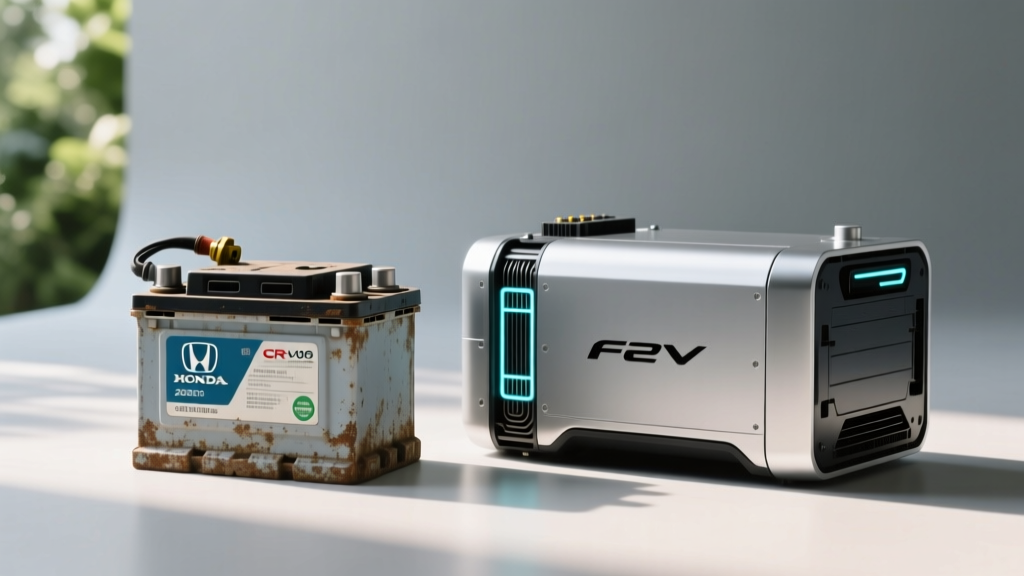
If you've landed here searching for a 2005 Honda CR-V battery, you're likely dealing with a dead 12V lead-acid starter battery — a Group 51R unit that costs roughly $120–$180 at any auto parts store and takes five minutes to swap. That's a straightforward fix for a straightforward vehicle.
But if your search is really about understanding how car batteries work in the broader sense — particularly the high-voltage traction batteries powering modern electric vehicles — you've come to the right place. The contrast between a 2005 CR-V's simple 12V system and a 2026 EV's 60–100+ kWh lithium-ion pack is one of the most instructive comparisons in automotive technology today.
This guide covers everything an EV owner or prospective buyer needs to know about battery chemistry, degradation, replacement costs, warranties, and care — with real numbers, not marketing fluff.
LFP vs. NMC/NCA: The Chemistry Decision That Defines Your EV
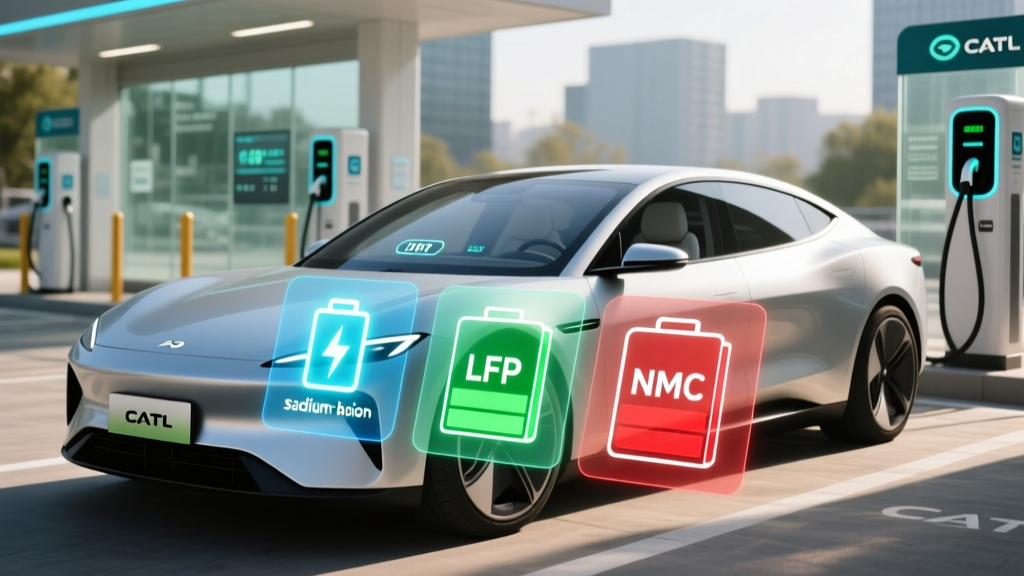
Not all EV batteries are the same. The two dominant lithium-ion chemistries in 2026 are LFP (Lithium Iron Phosphate) and NMC/NCA (Nickel Manganese Cobalt / Nickel Cobalt Aluminum). Each has distinct trade-offs that affect range, longevity, cold-weather performance, and price.
| Attribute | LFP (Lithium Iron Phosphate) | NMC/NCA (Nickel-based) |
|---|---|---|
| Energy Density | ~160–180 Wh/kg (lower) | ~220–280 Wh/kg (higher) |
| Cycle Life | 3,000–5,000+ cycles | 1,000–2,000 cycles |
| Cold Performance | Weaker — more range loss below 32°F | Better cold-weather retention |
| Max Charge Habit | Can charge to 100% daily (recommended) | Best kept at 80% daily; 100% for trips only |
| Cost | Lower — no cobalt or nickel | Higher — commodity-sensitive materials |
| Thermal Stability | Excellent — very resistant to thermal runaway | Good — requires robust BMS management |
| Common In (2026) | Tesla Model 3/Y RWD, Ford Mustang Mach-E Select, BYD, base Hyundai Ioniq 5 | Tesla Long Range, Hyundai Ioniq 5 Long Range, BMW i4, most luxury EVs |
Which is better? It depends on your use case. If you want maximum range per charge and live in a cold climate, NMC/NCA delivers higher energy density and better winter performance. If you want a battery that lasts longer (more charge cycles), costs less upfront, and you don't mind slightly less range, LFP is the more durable and economical choice. Tesla now recommends charging LFP vehicles to 100% regularly — a practice that would accelerate degradation in NMC packs.
How Long Do EV Batteries Actually Last? Real Degradation Data
The fear that EV batteries die early and need expensive replacement is one of the most persistent myths in the automotive world. The data tells a different story.
According to long-term fleet data compiled by Recurrent Auto and real-world owner tracking, here's what typical lithium-ion battery degradation looks like in practice:
- Year 1 / 15,000 mi: ~2–4% capacity loss (initial break-in degradation)
- Year 3 / 45,000 mi: ~6–9% total loss
- Year 5 / 75,000 mi: ~8–12% total loss
- Year 8 / 120,000 mi: ~10–15% total loss
- Year 10 / 150,000 mi: ~12–18% total loss (varies significantly by care habits)
Most degradation occurs in the first 1–2 years, then slows to a gradual linear decline. A 250-mile EPA-rated EV at year 8 might realistically offer 215–225 miles of range — still entirely usable for daily driving.
LFP batteries degrade even more slowly. Tesla's own 2024 impact report noted that Model 3/Y LFP vehicles showed an average of only ~12% degradation at 200,000 miles. Given that the average American drives ~13,500 miles per year (per FHWA data), a 200,000-mile battery lifespan translates to roughly 15 years of driving.
For context, your 2005 Honda CR-V's original 12V battery probably lasted 3–5 years before needing replacement. An EV traction battery is engineered for the life of the vehicle.
What Does the EV Battery Warranty Actually Cover?
Federal law mandates that EV manufacturers provide a minimum battery warranty of 8 years or 100,000 miles (whichever comes first). In California and states that follow CARB (California Air Resources Board) emissions standards, the requirement extends to 10 years or 150,000 miles.
| Manufacturer | Warranty Term | Capacity Retention Threshold | Notes |
|---|---|---|---|
| Tesla | 8 yr / 120,000 mi (Model 3/Y) | 70% | Transferable to subsequent owners |
| Hyundai / Kia | 10 yr / 100,000 mi | 70% | Among the longest in the industry |
| Ford | 8 yr / 100,000 mi | 70% | Covers battery components + management system |
| BMW | 8 yr / 100,000 mi | 70% | Includes module-level replacement option |
| General Motors | 8 yr / 100,000 mi | 60–70% (varies by model) | Ultium platform; module serviceability |
| Rivian | 8 yr / 175,000 mi (R1T/R1S) | 70% | Highest mileage cap among mainstream brands |
What triggers a warranty claim? If your battery's usable capacity drops below the stated threshold (typically 70%) within the warranty period, the manufacturer must repair or replace it at no cost. In practice, very few EVs fall below 70% within 8 years under normal use. The warranty covers defects and abnormal degradation — not damage from accidents, flooding, or unauthorized modifications.
EV Battery Replacement Costs: What the Numbers Actually Say
Yes, EV battery replacement is expensive. But context matters enormously. Here are current replacement cost ranges based on manufacturer service data and independent shop estimates as of 2026:
| Vehicle / Battery Size | Full Pack Replacement | Module-Level Repair | Typical Replacement Timing |
|---|---|---|---|
| Tesla Model 3 (60 kWh, LFP) | $12,000–$16,000 | Not module-serviceable | Rarely needed within 15 years |
| Tesla Model Y Long Range (82 kWh, NMC) | $15,000–$20,000 | Not module-serviceable | Rarely needed within 15 years |
| Hyundai Ioniq 5 (77.4 kWh, NMC) | $14,000–$18,000 | $3,000–$5,000 per module | Module repair more common |
| Ford Mustang Mach-E (91 kWh ext. range) | $18,000–$22,000 | $4,000–$6,000 per module | Module-level service available |
| Chevrolet Equinox EV (85 kWh, Ultium) | $14,000–$17,000 | $2,500–$4,500 per module | Ultium designed for module swaps |
| BMW i4 eDrive40 (83.9 kWh) | $18,000–$24,000 | $4,000–$6,500 per module | Dealer-only service currently |
The critical context: Most EV batteries will never need full replacement during the original owner's time with the vehicle. Data from Recurrent Auto shows that fewer than 2% of EV batteries have been replaced outside of warranty claims for defects. The battery pack prices above are also declining — BloombergNEF reports that lithium-ion pack prices fell from ~$1,200/kWh in 2010 to approximately $115/kWh by late 2025, and the trend continues downward.
Compare that to the $150 you'd spend on a replacement 12V battery for a 2005 Honda CR-V. The scale is different, but so is the engineering: an EV battery pack is the single most complex and energy-dense component in any consumer vehicle ever sold.
Factors That Accelerate (or Preserve) Battery Health
Battery degradation isn't purely a function of time — how you use and store your EV matters significantly. Here's what the data shows:
- Avoid daily DC fast charging: Frequent use of 150+ kW DC fast chargers accelerates degradation by ~1–2% over 5 years compared to primarily Level 2 home charging. Use DCFC for road trips; rely on Level 2 for daily needs.
- Manage State of Charge (SoC): For NMC/NCA batteries, keep daily SoC between 20–80%. For LFP, charging to 100% regularly is fine and actually recommended for accurate SoC calibration.
- Avoid extreme SoC storage: Don't leave any EV sitting at 100% or below 10% for extended periods (weeks). If storing for vacation, set the charge limit to ~50%.
- Precondition before fast charging: Most EVs automatically precondition the battery when you navigate to a DC fast charger. This warms the cells to optimal temperature (~77–95°F), enabling faster charging and reducing lithium plating risk.
- Cold-weather awareness: Charging a cold battery (below 32°F) at high power causes permanent damage. Modern BMS systems restrict charge rate when cold, but plugging in and letting the car warm the battery before charging is ideal.
- Heat is the bigger enemy: Sustained battery temperatures above 104°F (common in Phoenix summers or during repeated track use) degrade cells faster than cold. Park in shade or a garage when possible.
- Use scheduled charging: Set your EV to charge during off-peak hours and finish shortly before departure. This minimizes time spent at high SoC, which stresses NMC chemistry.
How to Check Your EV Battery's State of Health (SoH)
State of Health (SoH) is the percentage of your battery's original capacity that remains usable. A brand-new EV has 100% SoH; at 70% SoH, your 300-mile EV effectively has a 210-mile range.
Here's how to monitor it:
- In-vehicle displays: Tesla, Hyundai, BMW, and others now include battery health readouts in the service or energy menus. Tesla's is accessible through the service menu (tap the car icon → Software → Battery Health).
- Manufacturer apps: The Tesla app, Hyundai BlueLink, FordPass, and BMW Connected all surface estimated battery SoH or at least show degradation trends over time.
- OBD-II diagnostic tools: Devices like the OBDLink MX+ (~$120) paired with apps such as EV Health or ABRP can read the BMS-reported SoH directly from the vehicle's CAN bus. This is the most accurate consumer-accessible method.
- Third-party services: Companies like Recurrent and Geotab offer fleet-level battery health reports. Some dealerships will perform a battery health check as part of a pre-purchase inspection for used EVs.
- Manual calculation: Charge to 100%, note the displayed range, and compare it to the original EPA rating (adjusted for the car's age and known degradation curves). This is imprecise but gives a rough indicator.
According to fueleconomy.gov, the EPA's official range ratings provide a standardized baseline. If your 2024 Model 3 Long Range originally showed 341 miles at 100% and now shows 310 miles after 30,000 miles, that's roughly 9% degradation — entirely within the normal curve.
What's Next: Solid-State, Silicon Anodes, and Beyond
The battery landscape is evolving, but timelines matter. Here's a realistic assessment of emerging technologies as of 2026:
Solid-state batteries: Toyota has announced limited production of solid-state EVs for 2027–2028, claiming 750+ km (~465 miles) of range and 10-minute fast charging. Samsung SDI and QuantumScape are also in advanced testing. However, these remain in pilot production with extremely limited availability. Mass-market solid-state EVs are realistically a 2029–2032 prospect. No currently purchasable EV uses a solid-state battery.
Silicon anode technology: Companies like Sila Nanotechnologies and Group14 are integrating silicon-dominant anodes into existing lithium-ion cells, boosting energy density by 20–40%. The Mercedes G-Class electric (2025) was among the first vehicles to use silicon-anode cells. This technology is already shipping and will become more widespread through 2027–2028 model years.
Sodium-ion batteries: CATL and BYD have begun producing sodium-ion packs for lower-cost, shorter-range EVs in China. These trade energy density for dramatically lower material costs and better cold performance. US-market availability remains uncertain and likely limited to fleet/budget vehicles initially.
The takeaway: today's lithium-ion batteries (both LFP and NMC) are mature, well-understood, and proven to last. Waiting for solid-state is not a rational purchase strategy unless your timeline extends well into the next decade.
Frequently Asked Questions
How long do EV batteries last in years and miles?
Based on current degradation data, most modern EV batteries retain 70–85% of their original capacity after 10 years or 150,000 miles. Many will outlast the vehicle itself. LFP chemistry batteries tend to last even longer — Tesla's fleet data shows LFP packs retaining ~88% capacity at 200,000 miles.
How much does it cost to replace an EV battery?
Full pack replacements range from approximately $12,000 to $24,000 depending on the vehicle and battery size. However, many modern platforms (GM Ultium, Hyundai E-GMP, BMW) support module-level repairs for $2,500–$6,500 per module. Full replacement is rarely needed — fewer than 2% of EV batteries have required out-of-warranty replacement according to fleet data.
What does the EV battery warranty cover?
Federal law requires a minimum 8-year/100,000-mile warranty covering defects and capacity loss below a stated threshold (typically 70% of original capacity). CARB states extend this to 10 years/150,000 miles. The warranty covers the battery pack, management system, and associated power electronics — but not damage from accidents, misuse, or unauthorized modifications.
How do I check and maximize my EV battery health?
Monitor SoH through your vehicle's app, in-car service menu, or an OBD-II scanner with EV-compatible software. Maximize longevity by using Level 2 charging for daily needs, keeping NMC batteries between 20–80% SoC (LFP can go to 100%), avoiding prolonged high-temperature exposure, and preconditioning before DC fast charging.
LFP vs. NMC — which battery chemistry is better?
Neither is universally better. LFP offers longer cycle life (3,000–5,000 cycles), lower cost, better thermal safety, and the ability to charge to 100% daily — but with lower energy density and worse cold-weather performance. NMC/NCA delivers higher range per kWh and better winter performance but degrades faster and should be kept at 80% for daily use. Choose LFP for commuting and value; choose NMC for maximum range and cold climates.
Can I put a regular car battery in an EV?
EVs still use a 12V auxiliary battery (similar to what a 2005 Honda CR-V uses) for computers, lights, and accessory systems. This is a separate, small lead-acid or lithium 12V battery that can be replaced like any conventional car battery. The high-voltage traction battery is an entirely different system and requires specialized dealer or certified-shop service.