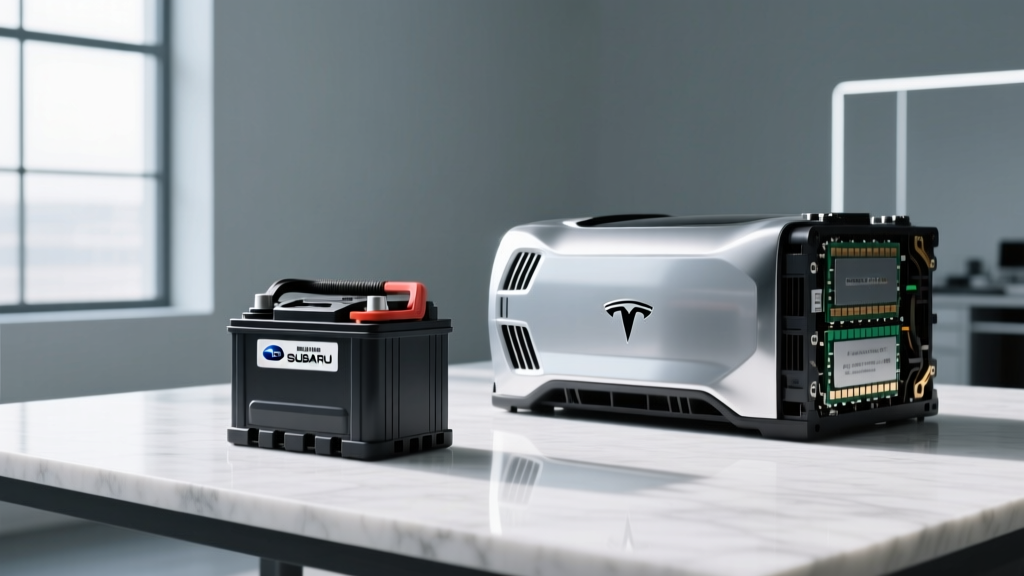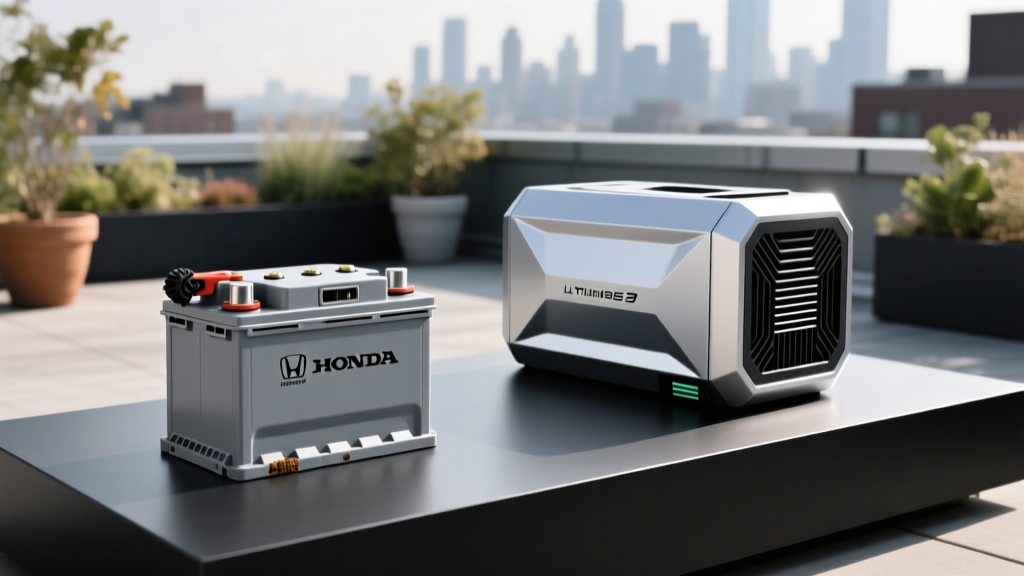
If you've ever searched for a 2004 Honda Accord battery, you were almost certainly looking for a 12-volt lead-acid starter battery — a $120–$180 commodity item that cranks an internal-combustion engine. Fast-forward to 2026, and the word "battery" in an automotive context means something radically different: a 60–120 kWh lithium-ion traction pack that powers an electric vehicle for 250–400+ miles per charge and costs between $5,000 and $22,000 to replace.
This guide uses that generational leap as a lens to explain everything modern EV buyers and owners need to know about battery technology — chemistry, degradation, warranties, replacement economics, and care habits that maximize lifespan. We'll also touch on where battery tech is heading next.
Why a 2004 Honda Accord Battery and an EV Battery Are Completely Different Animals
The 2004 Honda Accord (4-cylinder or V6) uses a Group 24F or 35 lead-acid 12V battery rated at roughly 0.6 kWh of stored energy. Its sole job is to spin the starter motor and run accessories when the alternator isn't engaged. Typical lifespan: 3–5 years. Replacement cost at an auto parts store in 2026: $130–$175.
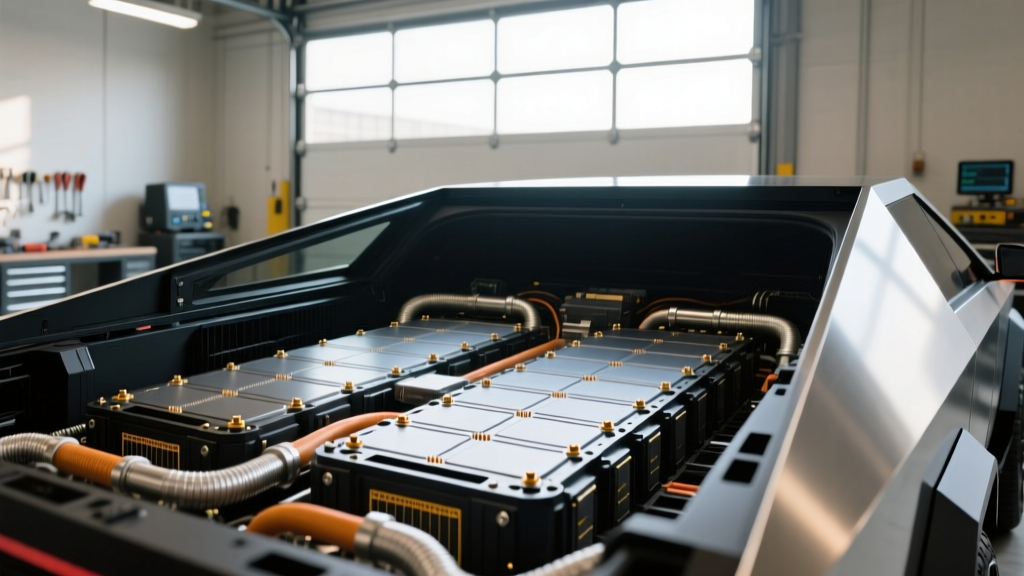
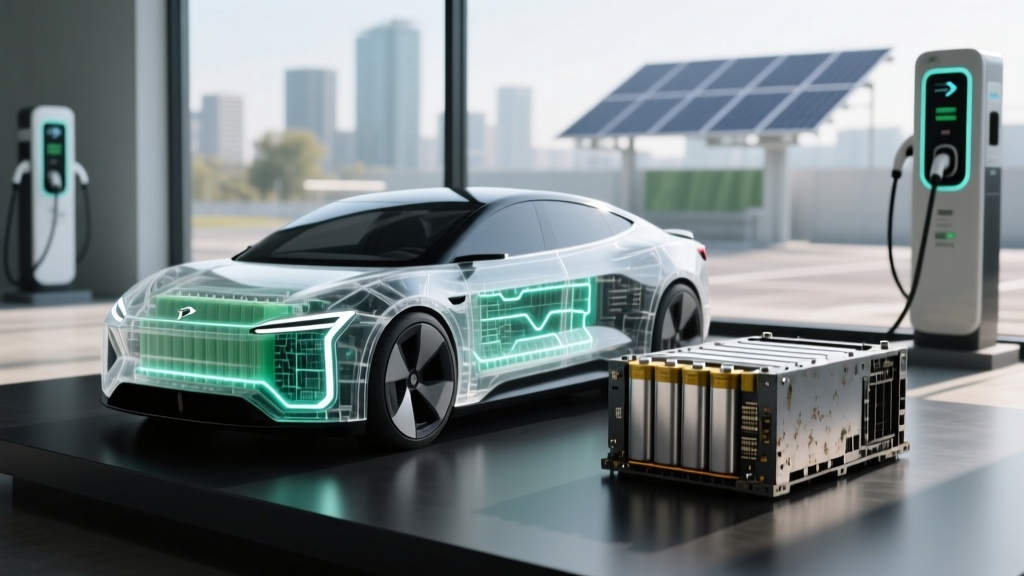
A modern EV traction battery, by contrast, stores 60 to 120+ kWh — roughly 100 to 200 times the energy — and directly determines the vehicle's range, performance, and resale value. It uses lithium-ion cells (NMC, NCA, or LFP chemistry), active thermal management, and sophisticated battery-management systems (BMS). This is the component we're dissecting in the rest of this guide.
Battery Chemistry in 2026: LFP vs NMC vs NCA
Not all lithium-ion batteries are the same. The cathode chemistry determines energy density, cycle life, thermal stability, cold-weather behavior, and cost. In 2026, three chemistries dominate the EV market:
- NMC (Nickel Manganese Cobalt): Used in most Hyundai, Kia, Volkswagen, BMW, and Ford long-range models. High energy density, good cold performance, but higher cobalt content and slightly faster calendar degradation.
- NCA (Nickel Cobalt Aluminum): Tesla's long-range packs (Model 3, Model Y, Model S) and some Panasonic-supplied packs. Very high energy density, similar trade-offs to NMC.
- LFP (Lithium Iron Phosphate): Standard-range Tesla Model 3/Y, Ford Mustang Mach-E Select, Rivian Standard, and many Chinese-market vehicles. Lower energy density but superior cycle life, lower cost, no cobalt, and better thermal stability.
| Attribute | LFP | NMC | NCA |
|---|---|---|---|
| Energy Density (Wh/kg, cell-level) | 160–200 | 220–280 | 250–300 |
| Typical Cycle Life (80% SoH) | 3,000–5,000+ | 1,500–2,500 | 1,200–2,000 |
| Cold-Weather Range Loss (~20°F) | ~25–35% | ~20–30% | ~20–30% |
| Cobalt Content | None | Moderate | Low-Moderate |
| Relative Cost ($/kWh, pack-level) | $90–$115 | $120–$150 | $125–$155 |
| Thermal Stability | Excellent | Good | Good |
| Recommended Daily SoC | 100% OK | 80% for daily | 80% for daily |
Which is better? It depends on your use case. LFP is the clear winner for daily commuters who charge at home and want maximum longevity — you can charge to 100% daily without accelerated degradation. NMC/NCA wins for road-trippers and cold-climate drivers who need maximum range per kWh and better low-temperature efficiency. In 2026, LFP adoption is growing rapidly; Tesla's standard-range packs and Ford's base Mach-E have both shifted to LFP, and industry analyses project LFP will exceed 40% of global EV battery production by 2027.
How Long Do EV Batteries Actually Last?
The short answer: almost certainly longer than you'll own the car. Data from fleet operators, manufacturer reports, and third-party studies consistently show that modern liquid-cooled EV batteries lose roughly 1–2% of capacity per year under normal use.
- Tesla's 2025 Impact Report states Model 3/Y packs retain ~88% capacity at 150,000 miles (source).
- Recurrent Auto's fleet data across 15,000+ vehicles shows median degradation of ~12% at 5 years / 100,000 miles for NMC packs, and ~8% for LFP packs.
- Nissan Leaf (passively cooled, older-generation NMC) showed steeper loss — ~15–20% at 100,000 miles — highlighting the importance of active thermal management.
- Hyundai/Kia's E-GMP platform vehicles (Ioniq 5, EV6) average ~10% loss at 80,000 miles based on owner-reported data on EV forums and fueleconomy.gov tracking.
At these rates, a 2026 EV with an EPA range of 310 miles would realistically deliver roughly 275–285 miles after 5 years and 260–275 miles after 10 years. That's a meaningful reduction, but not a cliff — and most batteries will outlast the vehicle's economic life.
Battery Warranty Terms: What's Actually Covered
Federal regulations mandate a minimum 8-year / 100,000-mile warranty on EV batteries (10 years / 150,000 miles in CARB states like California, New York, and Massachusetts). Most manufacturers exceed the floor:
| Manufacturer | Warranty Term | Capacity Threshold |
|---|---|---|
| Tesla (Model 3/Y LFP) | 8 yr / 120,000 mi | 70% retention |
| Tesla (Model 3/Y Long Range NMC) | 8 yr / 120,000 mi | 70% retention |
| Hyundai / Kia (E-GMP) | 10 yr / 100,000 mi | 70% retention |
| Ford (Mach-E, F-150 Lightning) | 8 yr / 100,000 mi | 70% retention |
| GM (Ultium platform) | 8 yr / 100,000 mi | 70% retention |
| Rivian | 8 yr / 175,000 mi | 70% retention |
| BMW (Neue Klasse) | 8 yr / 100,000 mi | 70% retention |
The "70% retention" threshold means the warranty covers replacement or repair only if your battery degrades below 70% of its original usable capacity within the stated term. Given that real-world data shows most packs retain 85–92% at the 8-year mark, warranty claims remain uncommon. The warranty covers defects and abnormal degradation — not damage from accidents, flooding, or unauthorized modifications.
EV Battery Replacement Cost: What It Actually Takes
This is the fear that keeps some buyers on the sideline. Let's put real 2026 numbers to it:
| Vehicle / Pack Size | Battery Chemistry | Estimated Replacement Cost |
|---|---|---|
| Tesla Model 3 Standard (60 kWh, LFP) | LFP | $7,000–$9,500 |
| Tesla Model Y Long Range (75 kWh, NMC) | NMC | $10,000–$14,000 |
| Hyundai Ioniq 5 (77.4 kWh, NMC) | NMC | $11,000–$15,000 |
| Ford F-150 Lightning Extended (131 kWh, NMC) | NMC | $18,000–$24,000 |
| Chevrolet Equinox EV (85 kWh, NMC) | NMC | $10,500–$14,500 |
| Rivian R1S Dual-Motor (106 kWh, NMC) | NMC | $16,000–$21,000 |
These figures include the battery pack and labor but can vary by region and service center. Importantly, pack-level prices have dropped from roughly $190/kWh in 2020 to approximately $115–$140/kWh in 2026, and they continue falling. Module-level repair (replacing individual degraded modules rather than the entire pack) is increasingly available at independent EV shops for $2,500–$6,000 depending on the vehicle.
When is replacement typically needed? For most liquid-cooled EVs, the honest answer is: rarely during first or second ownership. Catastrophic failure (manufacturing defect) is covered under warranty. Gradual degradation to below 70% is uncommon before 150,000–200,000+ miles on modern packs. The vehicles most likely to need out-of-warranty replacements are early-generation, passively cooled models (2011–2017 Nissan Leaf, early Fiat 500e) — not 2024–2026 models with active thermal management.
Factors That Affect EV Battery Lifespan
Not all miles age a battery equally. These are the variables within your control:
- State of Charge (SoC) habits: Storing an NMC/NCA battery at 100% SoC for extended periods accelerates calendar degradation. Daily charging to 80% and avoiding prolonged periods below 10% is optimal. LFP batteries tolerate 100% daily charging well — Tesla and Ford explicitly recommend periodic 100% charges for LFP to allow the BMS to recalibrate.
- DC fast-charging frequency: Occasional DCFC (1–2 times per week) has minimal impact. Daily DCFC, especially at high power (150–350 kW) without preconditioning, can add roughly 1–3% additional degradation over 100,000 miles compared to Level 2 home charging. Modern BMS and thermal management mitigate most of this, but heat is the enemy.
- Extreme temperatures: Sustained operation in 95°F+ ambient heat or repeated cold-soaking below 10°F without preconditioning stresses cells. Garage parking in hot climates meaningfully extends battery life.
- Charge rate and preconditioning: Using your vehicle's navigation-based preconditioning (which warms the battery before arriving at a DC fast charger) reduces stress. Tesla, Hyundai, Ford, and Rivian all offer this feature — use it.
- Depth of discharge: Shallow cycles (e.g., 30%–70%) are gentler than deep cycles (5%–95%). You don't need to obsess over this, but avoiding repeated full discharges helps.
- ☑ Set daily charge limit to 80% (NMC/NCA) or 100% (LFP)
- ☑ Enable preconditioning for DC fast-charging stops
- ☑ Use Level 2 home charging as your primary method
- ☑ Avoid leaving the vehicle at 100% SoC for more than 24 hours
- ☑ Park in shade or a garage in hot climates when possible
- ☑ Don't let the battery sit below 10% for extended periods
- ☑ Use the vehicle regularly — calendar degradation is worse when a battery sits idle at high SoC
How to Monitor Your EV Battery's State of Health (SoH)
State of Health (SoH) is the percentage of your battery's original usable capacity that remains. A new EV starts at 100% SoH; at 70%, you're approaching warranty-claim territory. Here's how to check it in 2026:
- In-vehicle displays: Tesla (under Service mode), Hyundai/Kia (via the EV battery diagnostic screen accessible through the cluster or infotainment), and BMW (iDrive battery health screen) now show SoH or estimated remaining capacity directly.
- OBD-II dongles + apps: Tools like the OBDLink SX paired with apps such as EV Battery Health or LeafSpy (for Nissan) read the BMS-reported SoH directly. Cost: $40–$80 for the dongle.
- Dealer diagnostics: Any authorized service center can run a full battery health report. Request this during routine service or before purchasing a used EV.
- Third-party services: Companies like Recurrent and Geotab offer fleet and individual battery health reports based on telematics data.
- Manual calculation: Fully charge to 100%, note the displayed range, and compare to the original EPA-rated range (adjusted for temperature). If your 310-mile EV shows 255 miles at 100% on a 70°F day, your SoH is roughly 82%.
For used-EV buyers, always request a battery health report before purchase. A 2022 model with 92% SoH at 35,000 miles is a strong indicator of healthy cells and good charging habits by the previous owner.
What's Next: Solid-State, Silicon Anode, and Beyond
Looking forward — and it's critical to note these technologies are not yet commercially available in production EVs as of 2026:
- Solid-state batteries: Toyota, Samsung SDI, and QuantumScape are targeting 2027–2029 production timelines. Promised benefits include 50%+ higher energy density, 10-minute fast charging, and improved safety. However, manufacturing scale and cost remain unsolved challenges. Toyota's announced 2027–2028 rollout is for limited-production vehicles, not mass-market models.
- Silicon-dominant anodes: Companies like Sila Nanotechnologies and Group14 are replacing graphite anodes with silicon composites, boosting energy density by 15–25%. Early commercial deployment is expected in 2027–2028 model-year vehicles. This is an incremental but meaningful improvement, not a revolution.
- Sodium-ion batteries: CATL and BYD are deploying sodium-ion packs in budget Chinese-market EVs. Lower energy density but significantly lower cost and no lithium or cobalt. US-market adoption is uncertain before 2028–2029.
- LMFP (Lithium Manganese Iron Phosphate): A hybrid chemistry blending LFP's safety with higher voltage for better energy density. CATL and Tesla are testing LMFP cells; limited production may appear in 2027 models.
None of these are reasons to delay an EV purchase. Current lithium-ion technology is mature, reliable, and backed by real-world data spanning billions of fleet miles. The improvements ahead will be incremental cost and density gains, not a reason to wait on the sidelines.
Frequently Asked Questions
How long do EV batteries last in years and miles?
Modern liquid-cooled EV batteries (2022–2026 models) typically retain 85–92% capacity at 8 years / 100,000 miles and are projected to deliver usable service for 15–20 years / 200,000+ miles before degrading to levels that might warrant replacement. Early-generation passively-cooled packs (2011–2017 Leaf) degraded faster, but that generation is not representative of current technology.
How much does it cost to replace an EV battery in 2026?
Full pack replacement ranges from roughly $7,000 for a 60 kWh LFP pack (Tesla Model 3 Standard) to $24,000 for a 131 kWh NMC pack (F-150 Lightning Extended Range). Module-level repairs cost $2,500–$6,000. Pack-level prices continue to decline year over year, and most current-generation EVs will not need replacement during typical ownership.
What does the EV battery warranty actually cover?
Federal law requires a minimum 8-year / 100,000-mile warranty (10/150,000 in CARB states). Coverage applies if the battery degrades below a stated capacity threshold — typically 70% of original usable capacity. It covers defects and abnormal degradation but not accident damage, flooding, or unauthorized modifications. Check your specific manufacturer's terms, as some (Rivian, Hyundai/Kia) exceed the federal minimum.
LFP vs NMC: which battery chemistry should I choose?
Choose LFP if you primarily charge at home, commute daily, prioritize maximum cycle life and lower cost, and don't need the last 30–40 miles of range. Choose NMC/NCA if you frequently road-trip, live in a cold climate where energy density matters, or need maximum range from a given pack size. Both are proven, reliable chemistries with strong warranty backing.
Can I check my EV battery health myself?
Yes. Many 2024–2026 EVs display SoH or remaining capacity in the infotainment or service menu. For vehicles without a built-in display, an OBD-II dongle ($40–$80) paired with a battery health app can read BMS data directly. You can also manually compare your 100%-charge displayed range to the original EPA figure on a moderate-temperature day.
Does frequent DC fast charging damage my battery?
Occasional DCFC (a few times per week) has minimal measurable impact on modern packs with active thermal management. Daily high-power DCFC without preconditioning can add 1–3% extra degradation over 100,000 miles. The bigger risk is heat accumulation — always use your vehicle's preconditioning feature, and rely on Level 2 home charging as your daily method.