From a 2004 Ford Ranger Battery to the EV Era: Why Battery Knowledge Matters
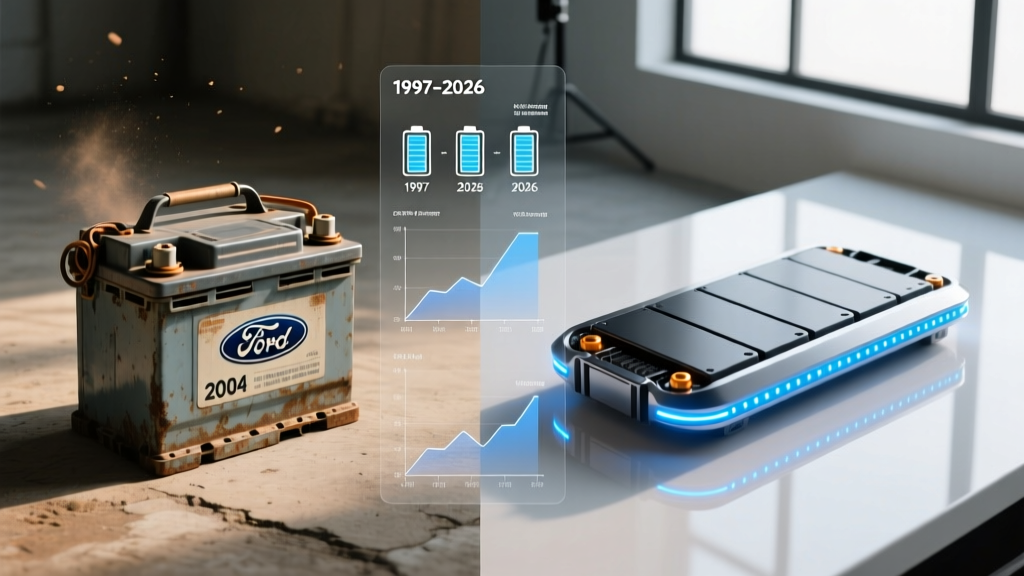
If you've ever replaced a 2004 Ford Ranger battery, you know the drill: pop the hood, swap a 12V lead-acid unit for about $120, and you're back on the road. The internal-combustion battery world is simple, cheap, and well understood. But as millions of drivers transition to electric vehicles, the conversation shifts to a far more complex — and far more consequential — component: the high-voltage traction battery.
Unlike the 12V auxiliary battery that still exists in every EV (and still needs occasional replacement, just like your Ranger's), the traction battery is the single most expensive component in an electric vehicle. It determines range, performance, charging speed, resale value, and long-term ownership cost. Understanding how modern EV batteries work, how they age, and what it costs to maintain or replace them is no longer optional for informed buyers — it's essential.
This guide breaks down EV battery chemistry, real-world degradation data, warranty protections, replacement economics, and care strategies from a 2026 ownership perspective.
LFP vs NMC: Choosing Your Battery Chemistry
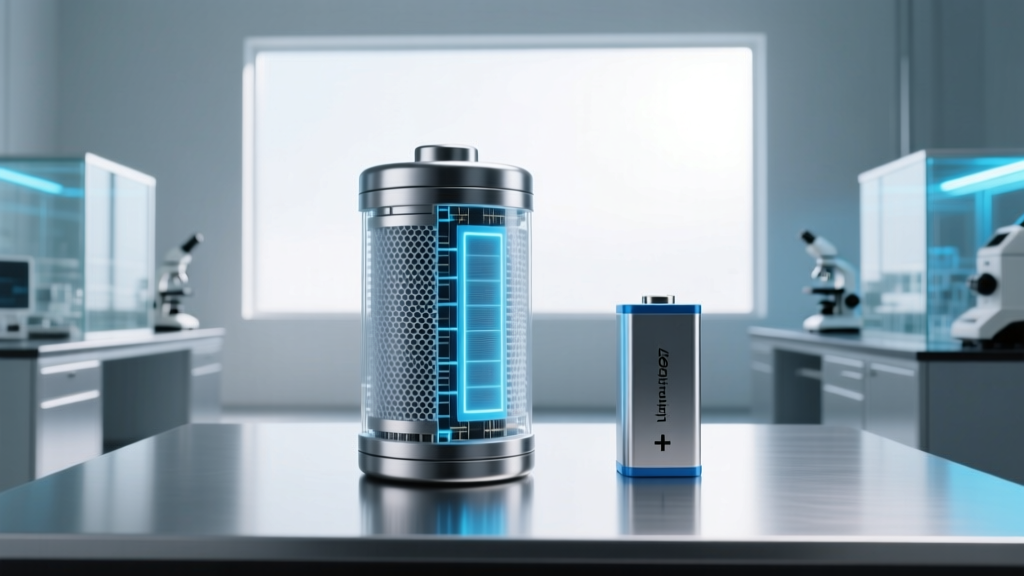
Two dominant lithium-ion chemistries power today's EVs: LFP (lithium iron phosphate) and NMC/NCA (nickel manganese cobalt / nickel cobalt aluminum). The choice affects range, longevity, cost, and how you should charge.
| Attribute | LFP (Lithium Iron Phosphate) | NMC / NCA (Nickel-based) |
|---|---|---|
| Energy Density | ~160–180 Wh/kg (lower) | ~220–280 Wh/kg (higher) |
| Cycle Life | 3,000–5,000+ cycles | 1,000–2,000 cycles |
| Calendar Life | Excellent (slower degradation) | Good (faster calendar aging) |
| Cold Performance | Weaker below 32°F; slower charging | Better low-temp performance |
| Cost per kWh | ~$85–$100 (lower) | ~$115–$140 (higher) |
| Optimal Daily SoC | 100% daily is fine | 80% daily recommended |
| Thermal Stability | Superior (less runaway risk) | Good with active management |
| Common In (2026) | Tesla Model 3/Y RWD, BYD, Rivian standard, Ford LFP Mustang Mach-E | Long-range AWD models, Hyundai Ioniq 5/6, BMW iX, Rivian Max |
The practical takeaway: LFP batteries sacrifice some energy density (meaning slightly less range for a given weight) but deliver dramatically longer cycle life and tolerate daily 100% charging without accelerated wear. NMC/NCA packs offer more range per kilogram but degrade faster if routinely charged to 100% and benefit from a daily ceiling around 80%. If your commute is short and you charge at home nightly, LFP is arguably the better long-term bet. If you need maximum range for road trips and can manage charge limits, NMC delivers.
How Long Do EV Batteries Actually Last?
The short answer: far longer than most buyers expect. Data from fleet operators, manufacturer reports, and independent testing consistently shows that modern liquid-cooled EV batteries retain the vast majority of their capacity well past 150,000 miles.
Real-World Degradation Data Points
- Tesla Model 3/Y (NMC, 2019–2023): Average ~8–10% capacity loss at 100,000 miles per Tesla's 2024 Impact Report, with the curve flattening significantly after the initial 20,000-mile break-in period.
- Chevrolet Bolt EV (NMC, 2017–2023): Recurrent Auto data shows median ~90% State of Health (SoH) at 80,000 miles across thousands of tracked vehicles.
- Nissan LEAF (passive-cooled, 2011–2017): The cautionary tale — early air-cooled packs degraded 15–25% by 80,000 miles in hot climates, prompting Nissan to improve thermal management in later models.
- Tesla Model S/X (2012–2020): Data aggregated by EV tracking platforms shows ~10–12% loss at 150,000 miles, with some high-mileage examples exceeding 200,000 miles on original packs.
- LFP-equipped vehicles (2021+): Still early in lifecycle, but initial data from fleet operators suggests <5% degradation at 60,000 miles, consistent with LFP's superior cycle-life chemistry.
Sources: Tesla Impact Report, Recurrent Auto battery data, fueleconomy.gov.
The pattern is clear: expect roughly 5–8% loss in the first 30,000 miles (the steepest part of the degradation curve), then a gradual, nearly linear decline of 0.5–1% per year thereafter. Most modern EVs will retain 80–85% of original capacity at 150,000 miles — still providing usable daily range for the vast majority of drivers.
What Does the EV Battery Warranty Cover?
Federal law in the United States mandates that EV batteries carry a minimum warranty of 8 years or 100,000 miles (whichever comes first). In California Air Resources Board (CARB) states, that extends to 10 years or 150,000 miles. Most manufacturers meet or exceed these floors.
| Manufacturer | Warranty Period | Capacity Retention Threshold | Notes |
|---|---|---|---|
| Tesla (Model 3/Y RWD — LFP) | 8 yr / 100,000 mi | 70% | NMC Long Range: 8 yr / 120,000 mi at 70% |
| Hyundai / Kia | 10 yr / 100,000 mi | 70% | Among the longest coverage in the industry |
| Ford (Mustang Mach-E, F-150 Lightning) | 8 yr / 100,000 mi | 70% | Covers battery and hybrid/electric components |
| General Motors (Ultium platform) | 8 yr / 100,000 mi | 70% | Covers capacity below threshold, not abuse damage |
| Rivian | 8 yr / 175,000 mi | 70% | Highest mileage threshold among major OEMs |
| BMW | 8 yr / 100,000 mi | 70% | Transferable to subsequent owners |
Critical detail: The warranty threshold — typically 70% of original capacity — is the trigger for a warranty claim. If your 85 kWh pack degrades to 59.5 kWh or below within the warranty window, the manufacturer must repair or replace it at no cost. In practice, very few modern liquid-cooled packs breach this threshold within the warranty period based on current fleet data.
How Much Does an EV Battery Cost to Replace?
Replacement cost remains the number-one anxiety for prospective EV buyers. Context matters enormously here: most EV batteries are never replaced during the vehicle's useful life. But when replacement is needed — typically due to physical damage, manufacturing defect outside warranty, or extreme high-mileage degradation — costs are significant.
| Vehicle / Battery Size | Estimated Pack Cost | Labor + Installation | Total Range |
|---|---|---|---|
| Compact (40–60 kWh, e.g., Nissan LEAF, Chevy Bolt) | $6,000–$10,000 | $1,500–$3,000 | $7,500–$13,000 |
| Mid-size (70–85 kWh, e.g., Tesla Model 3, Hyundai Ioniq 5) | $10,000–$16,000 | $2,000–$4,000 | $12,000–$20,000 |
| Large (90–130 kWh, e.g., F-150 Lightning, Rivian R1T, GMC Hummer EV) | $15,000–$25,000 | $2,500–$5,000 | $17,500–$30,000 |
These figures are trending downward. Battery pack prices have fallen from over $200/kWh in 2018 to roughly $115–$130/kWh in 2026 for NMC and below $100/kWh for LFP, per industry tracking. Refurbished and remanufactured packs are increasingly available at 40–60% of new-pack cost, and some shops now offer module-level repair — replacing only the degraded cells within a pack rather than the entire assembly — for $3,000–$7,000 depending on the vehicle.
The honest framing: if you bought a $35,000 EV in 2020 and the battery needs replacement at year 12, the vehicle's residual value is likely $8,000–$12,000. A $15,000 battery swap may not be economically justified, and the car would likely be retired or sold for parts. This mirrors the ICE world — you don't put a $6,000 transmission in a 2004 Ford Ranger worth $3,500. The battery simply outlasts the economic life of the vehicle in most cases.
Factors That Accelerate (or Preserve) Battery Life
Not all miles age a battery equally. How you charge, where you park, and how you drive all influence the degradation curve.
Battery Longevity: What Helps and What Hurts
- ✅ Do: Keep daily SoC between 20–80% for NMC/NCA vehicles (100% is fine for LFP).
- ✅ Do: Use Level 2 home charging as your primary method — slow, steady charging generates less heat.
- ✅ Do: Precondition the battery before DC fast charging (most EVs do this automatically when you navigate to a charger).
- ✅ Do: Park in shade or a garage during extreme heat; plug in during extreme cold so the thermal management system can maintain battery temperature.
- ✅ Do: Install the latest OTA updates — manufacturers frequently refine charge algorithms and thermal management.
- ❌ Avoid: Daily DC fast charging if possible — frequent 150+ kW sessions accelerate wear through heat and lithium plating risk.
- ❌ Avoid: Leaving the vehicle at 100% SoC for extended periods (days/weeks), especially in hot weather.
- ❌ Avoid: Letting the battery sit below 10% SoC for prolonged periods.
- ❌ Avoid: Repeatedly draining to near-zero and charging to 100% in a single cycle unless necessary for a trip.
Research published in the Journal of Power Sources and validated by fleet data from companies like Recurrent Auto confirms that temperature is the single largest degradation multiplier. Vehicles in Phoenix or Las Vegas consistently show 2–4% more degradation at equivalent mileage than those in temperate climates. Active liquid cooling — standard on virtually every 2026 EV — mitigates this substantially compared to the passive-cooled packs of the early 2010s.
How to Check and Monitor Your Battery's State of Health
State of Health (SoH) is the percentage of original battery capacity remaining. A new EV starts at 100% SoH; a vehicle with 10% degradation sits at 90% SoH. Monitoring this number is key to understanding your battery's trajectory and detecting anomalies early.
Methods for Checking SoH
In-vehicle displays: Many 2026 EVs now include a battery health indicator in the settings menu. Tesla added a battery health percentage display via OTA in late 2023, and Hyundai/Kia, BMW, and Ford have followed with similar features in their 2025–2026 model-year software updates.
Third-party apps: Tools like TeslaFi, Tessie, and Recurrent Auto connect to your vehicle's API and track SoH over time using charge-session data — comparing energy added during a known SoC window to calculate effective capacity.
OBD-II diagnostics: Apps like LeafSpy (Nissan LEAF) and Car Scanner ELM OBD2 can read battery management system (BMS) data directly, displaying cell-level voltage, pack capacity, and degradation estimates.
Dealer inspection: Any authorized service center can perform a battery health check, typically reading BMS-reported SoH and performing a controlled discharge test. Request this during routine service, especially if you're approaching warranty mileage limits.
Emerging Battery Technologies: What's Next
Several next-generation battery technologies are in development, but it's critical to separate announced timelines from production reality.
Solid-state batteries: Promising 30–50% higher energy density, faster charging, and improved safety by replacing the liquid electrolyte with a solid material. Toyota, Samsung SDI, and QuantumScape have all announced pilot production targets for 2027–2028, with limited commercial availability expected around 2029–2030. These are not available in any production vehicle as of 2026. Expect initial deployment in premium, low-volume models before reaching mainstream pricing.
Silicon-dominant anodes: Companies like Sila Nanotechnologies and Group14 are replacing graphite anodes with silicon-based composites, boosting energy density by 15–25%. Mercedes-Benz's G-Class electric SUV (2025) uses a Sila anode in its battery, marking the first significant commercial deployment. Expect broader adoption across 2027–2028 model-year vehicles.
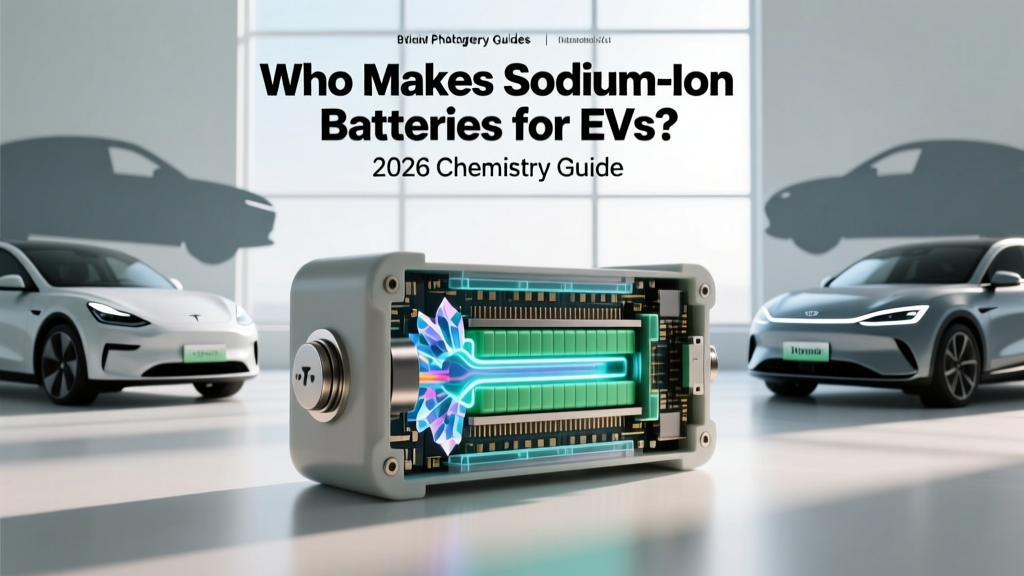
Sodium-ion batteries: Lower-cost alternatives to lithium-ion using abundant sodium instead of lithium. CATL has begun production for Chinese-market vehicles, and the technology is expected to reach the US market in budget EV segments by 2028–2029. Energy density is lower than LFP, making sodium-ion best suited for urban commuter vehicles with modest range requirements.
For current buyers, these technologies are forward-looking context — not reasons to delay a purchase. Today's LFP and NMC batteries are mature, well-understood, and backed by extensive warranty coverage.
EV Battery FAQ
How long do EV batteries last in years and miles?
Most modern liquid-cooled EV batteries retain 80–85% of their original capacity at 150,000 miles or 12–15 years. Many will outlast the vehicle's economic life. Early-generation air-cooled packs (pre-2017 Nissan LEAF) degraded faster, but this is no longer representative of current technology.
How much does an EV battery cost to replace?
Between $7,500 and $30,000 depending on pack size and vehicle class, including labor. Refurbished packs and module-level repairs can reduce this to $3,000–$12,000. Costs continue declining as battery manufacturing scales. Most batteries are never replaced — they outlive the car.
What does the EV battery warranty cover?
Federal minimum is 8 years / 100,000 miles with a 70% capacity retention threshold. Some manufacturers exceed this (Hyundai/Kia at 10 years; Rivian at 175,000 miles). The warranty covers defects and abnormal degradation below the threshold — not damage from accidents, abuse, or unauthorized modifications. Always check IRS guidelines as battery sourcing also affects federal tax credit eligibility under §30D.
How do I check and maximize my EV battery health?
Use your vehicle's built-in battery health display, third-party apps like Tessie or Recurrent, or OBD-II diagnostic tools. Maximize longevity by keeping NMC batteries between 20–80% daily, minimizing DC fast charging, preconditioning before fast charges, and avoiding prolonged storage at extreme SoC levels or temperatures.
LFP vs NMC — which is better?
Neither is universally "better." LFP offers longer cycle life, lower cost, better thermal stability, and tolerance for daily 100% charging — but with lower energy density and weaker cold-weather performance. NMC delivers more range per kilogram and better cold performance — but degrades faster if routinely charged to 100%. Choose LFP for daily commuting and long-term durability; choose NMC for maximum range and road-trip capability.
Does DC fast charging damage my battery?
Occasional DC fast charging is fine and accounted for in warranty terms. However, exclusive reliance on 150+ kW DC fast charging accelerates degradation by 1–3% over the battery's lifetime compared to primarily Level 2 charging, per fleet data. The heat and high current stress cells more than slow AC charging. Use DC fast charging for road trips, not as your daily routine.
Will my EV battery need replacing before 200,000 miles?
Statistically unlikely for any 2020+ model with active liquid cooling. Tesla's fleet data shows Model S/X packs averaging ~88% capacity at 200,000 miles. The more common end-of-life scenario is gradual range reduction that makes the vehicle less practical — not sudden failure. Think of it like an aging engine that burns a little more oil each year rather than one that seizes.
Whether you're replacing a 2004 Ford Ranger battery under the hood for $120 or evaluating a 98 kWh LFP pack in a 2026 electric truck, the principle is the same: understand what you're buying, how it ages, and what protection you have. The difference is that today's EV batteries are engineered to last the life of the vehicle — and the data increasingly proves it.