From Lead-Acid to Lithium: Why the 2003 Honda Element Battery Matters to EV Buyers
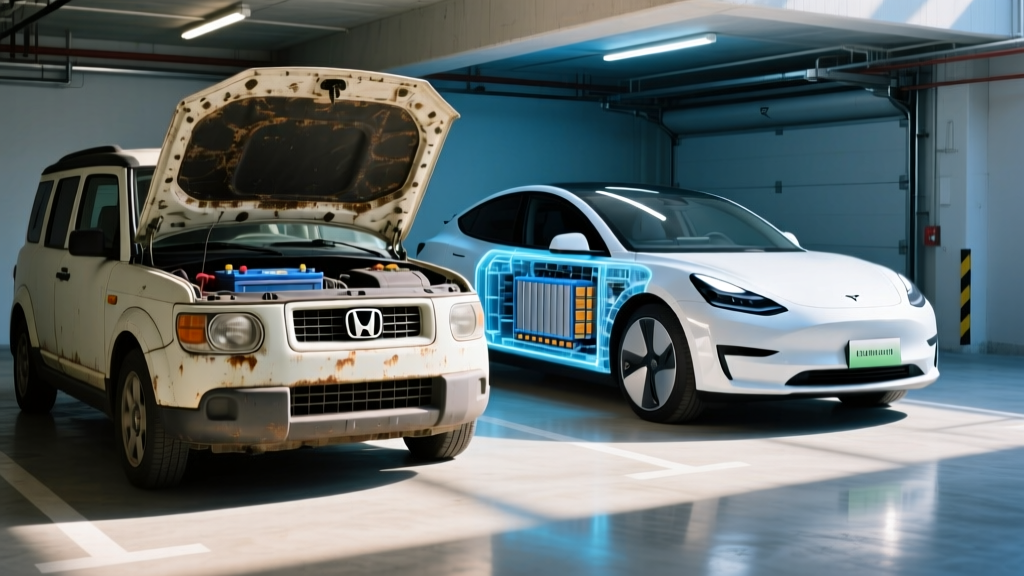
Search for "2003 Honda Element battery" and you'll mostly find 12-volt lead-acid replacements for a beloved boxy crossover. But that search query reveals something deeper about how drivers think about automotive batteries — they want to know how long a battery lasts, what it costs to replace, and whether they can trust it. In 2003, swapping the 12V battery in your Element was a $120 trip to the auto parts store. In 2026, replacing the high-voltage traction battery in a modern EV is a fundamentally different conversation — involving lithium chemistry, thermal management, and packs that routinely outlast 200,000 miles before needing attention.
This guide bridges that gap. Whether you landed here researching your aging Honda or you're an EV-curious buyer worried about long-term battery costs, the data below covers exactly how modern EV traction batteries perform, degrade, and warrant over time — with hard numbers, not marketing promises.
A critical distinction: Every EV also carries a conventional 12V auxiliary battery (just like your 2003 Element) that powers lights, infotainment, and computers. This article focuses exclusively on the high-voltage traction battery — the large pack (typically 50–120 kWh) that actually propels the vehicle. These are entirely different systems with entirely different economics.
LFP vs NMC/NCA: Understanding EV Battery Chemistry
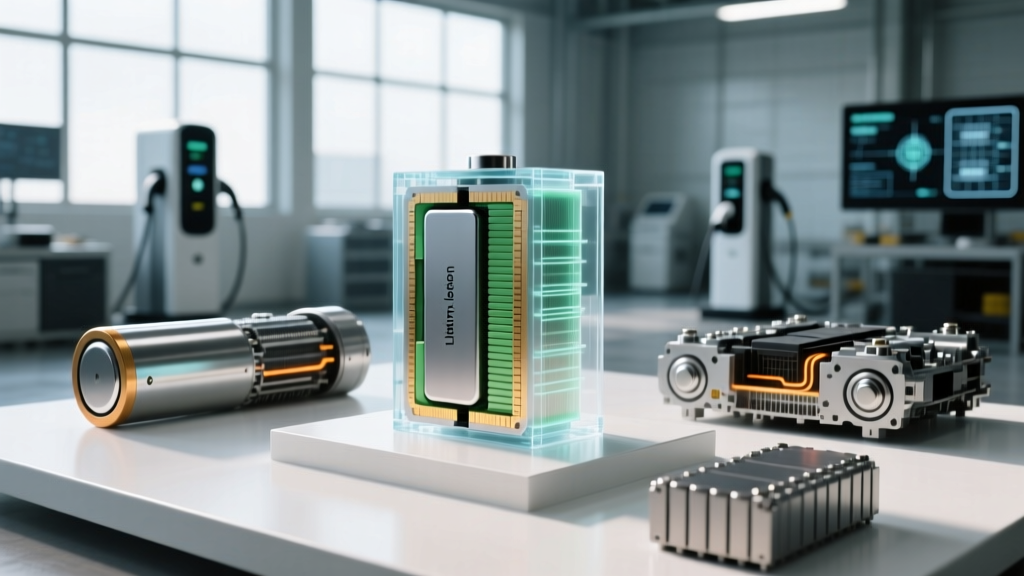
The two dominant lithium-ion chemistries in 2026 EVs are NMC/NCA (nickel manganese cobalt / nickel cobalt aluminum) and LFP (lithium iron phosphate). Your choice between them affects range, longevity, cold-weather behavior, and cost.
| Attribute | LFP (Lithium Iron Phosphate) | NMC / NCA (Nickel-based) |
|---|---|---|
| Energy Density | ~160–180 Wh/kg (lower) | ~230–300 Wh/kg (higher) |
| Typical Cycle Life | 3,000–6,000+ cycles | 1,000–2,500 cycles |
| Cold-Weather Performance | Moderate — slower charging below 32°F | Better low-temp charge acceptance |
| Thermal Stability | Excellent — higher runaway threshold | Good — requires more active cooling |
| Cost per kWh | ~$80–100 (cell level) | ~$110–140 (cell level) |
| Recommended Daily SoC | Can charge to 100% daily | 80% preferred for daily use |
| Common 2026 Applications | Tesla Model 3/Y RWD, Ford Mustang Mach-E Select, Rivian Standard | Hyundai Ioniq 5/6, BMW iX, Lucid Air, Tesla Long Range/Performance |
Which is better? There is no universal winner. NMC/NCA delivers more range per pound — essential for long-range sedans and performance models where every kilogram matters. LFP sacrifices some energy density for dramatically longer cycle life, lower cost, and the convenience of daily 100% charging without accelerated degradation. For a commuter who charges at home nightly and doesn't need 350+ miles of range, LFP is increasingly the rational choice. For road-trippers and cold-climate drivers who need maximum range, NMC still holds the edge.
How Long Do EV Batteries Actually Last?
The short answer: far longer than most buyers expect. Real-world fleet data consistently shows modern lithium-ion packs retaining 85–92% of original capacity after 100,000 miles, with most packs lasting the functional life of the vehicle.
According to Recurrent Auto's fleet analysis of over 15,000 EVs, median range retention at 100,000 miles sits around 90–92% for vehicles with active thermal management. Early-2010s EVs without liquid cooling (like the first-generation Nissan Leaf) showed steeper curves, but that's largely a solved engineering problem.
- Year 1 / 15,000 mi: ~2–4% loss (initial formation drop)
- Year 3 / 45,000 mi: ~5–8% total loss
- Year 5 / 75,000 mi: ~8–12% total loss
- Year 8 / 120,000 mi: ~12–16% total loss
- Year 10+ / 150,000+ mi: ~15–20% total loss
Degradation is non-linear — the steepest drop occurs in the first year, then the curve flattens significantly. Most packs will still deliver 80%+ capacity well past 150,000 miles.
For context, a 2026 Hyundai Ioniq 5 with its 77.4 kWh NMC pack (EPA 305 miles) would realistically still offer roughly 255–265 miles of range at 120,000 miles — still ample for daily driving and road trips with brief DC fast-charging stops.
What Does the EV Battery Warranty Cover?
Federal law mandates a minimum 8-year / 100,000-mile warranty on EV battery packs (extended to 10 years / 150,000 miles in CARB states like California, New York, and Massachusetts). Most manufacturers meet or exceed this baseline.
| Manufacturer | Warranty Period | Mileage Cap | Capacity Retention Threshold |
|---|---|---|---|
| Tesla (Model 3/Y LFP) | 8 years | 100,000 mi | 70% |
| Tesla (Model 3/Y LR NMC) | 8 years | 120,000 mi | 70% |
| Hyundai / Kia | 10 years | 100,000 mi | 70% |
| Ford (Mustang Mach-E) | 8 years | 100,000 mi | 70% |
| GM (Ultium platform) | 8 years | 100,000 mi | 70% (60% for LYRIQ fleet) |
| Rivian | 8 years | 175,000 mi | 70% |
| BMW | 8 years | 100,000 mi | 70% |
The 70% threshold is the industry standard trigger — if your pack drops below 70% of original usable capacity within the warranty window, the manufacturer replaces or refurbishes it at no cost. In practice, warranty claims remain rare. EPA data on fueleconomy.gov and owner surveys consistently show that liquid-cooled packs from 2020 onward rarely breach that threshold within the warranty period under normal use.
EV Battery Replacement Cost: What to Budget
This is the question that generates the most anxiety — and the most misinformation. Headlines cite $20,000 replacement bills without context. The reality in 2026 is more nuanced: most original owners will never need a replacement, cell-level prices have fallen dramatically, and modular repair is increasingly available.
| Vehicle / Pack Size | Battery Capacity | Full Pack Replacement (Parts + Labor) | Typical Need Timeline |
|---|---|---|---|
| Tesla Model 3 RWD (LFP) | ~60 kWh | $10,000–$14,000 | Rarely before 200,000+ mi |
| Hyundai Ioniq 5 (NMC) | 77.4 kWh | $13,000–$18,000 | Rarely before 180,000+ mi |
| Ford F-150 Lightning Ext. Range | 131 kWh | $20,000–$28,000 | Rarely before 150,000+ mi |
| Chevrolet Bolt EV/EUV | 65 kWh | $9,000–$13,000 | Rarely before 180,000+ mi |
| BMW iX xDrive50 | 111.5 kWh | $18,000–$25,000 | Rarely before 160,000+ mi |
Several factors reduce the sting: cell prices have dropped from over $1,000/kWh in 2010 to roughly $100–130/kWh at the pack level in 2026 (per BloombergNEF data). Many shops now offer module-level repair — replacing only degraded cell groups rather than the entire pack — for $3,000–$7,000. Third-party refurbishers are growing in number, offering remanufactured packs at 40–60% of OEM pricing.
The honest framing: if you're buying a new EV in 2026, the battery will very likely outlast your ownership. If you're buying a used EV with 100,000+ miles, a pre-purchase battery health check (see below) is your insurance policy.
What Kills an EV Battery? Five Degradation Factors
Not all miles are equal when it comes to battery wear. These five factors drive degradation — and most are within your control.
- Avoid sustained 100% SoC (NMC/NCA only): Charge to 80% for daily driving. Reserve 100% for road trips. LFP owners can charge to 100% daily — the chemistry tolerates it and benefits from periodic full-charge calibration.
- Minimize DC fast-charging frequency: Occasional Supercharging is fine. Daily 150+ kW DC sessions accelerate degradation by ~1–3% over the pack's life versus primarily Level 2 charging. Use DC fast charging for road trips, not your daily commute.
- Precondition before fast charging: Most EVs automatically precondition the battery when you navigate to a charger. This warms the cells to optimal temperature (~77–95°F), enabling faster charging and reducing lithium plating risk. If your EV doesn't auto-precondition, initiate it manually via the app 15–20 minutes before arriving.
- Don't store at extremes: If leaving your EV for weeks, aim for ~50% SoC. Never store at 100% in hot weather or below 10% in freezing weather for extended periods.
- Let thermal management do its job: Liquid-cooled packs handle heat far better than passively cooled ones. If you live in a hot climate (Arizona, Texas), prioritize vehicles with active liquid cooling — it's the single biggest longevity differentiator between a 2026 Ioniq 5 and a 2015 Leaf.
Cold weather temporarily reduces range (expect 20–35% loss below 20°F due to increased internal resistance and cabin heating), but this is not permanent degradation — range recovers when temperatures rise. Permanent cold-related damage occurs mainly from fast-charging a frozen battery without preconditioning, which causes lithium plating on the anode.
How to Check Your EV Battery's State of Health
State of Health (SoH) is the percentage of remaining usable capacity compared to when the pack was new. A SoH of 92% means your 77.4 kWh pack now holds about 71.2 kWh. Here's how to monitor it:
Built-in vehicle displays: Many 2026 EVs show SoH or estimated current range vs. original range directly in the infotainment system. Tesla displays projected range at 100% charge; comparing this to the original EPA figure gives a rough SoH estimate. Hyundai/Kia offers a battery health readout in the EV menu.
OBD-II diagnostic tools: Devices like the OBDLink SX paired with apps such as EVNotify, LeafSpy (Nissan), or TeslaFi (Tesla) pull real-time battery data including SoH, individual cell voltages, and pack temperature. This is the most accurate consumer-accessible method and costs $30–80 for the hardware.
Dealer diagnostic reports: Request a battery health printout during service visits. Most dealerships can generate a detailed SoH report that's also useful for resale documentation.
Third-party pre-purchase inspections: Services like Recurrent Auto provide battery health reports based on telematics data — increasingly requested by used-EV buyers as standard due diligence.
What's Next: Solid-State, Silicon Anodes, and Realistic Timelines
Next-generation battery technologies promise step-change improvements, but separating hype from production reality is essential.
Solid-state batteries replace the liquid electrolyte with a solid material, offering potential energy density gains of 40–70%, faster charging, and improved safety. Toyota has announced limited solid-state production for 2027–2028, initially in low-volume hybrid applications. Samsung SDI targets 2027 for mass production. Realistically, expect solid-state packs in select premium EVs by 2028–2029, with mainstream availability not before 2030–2032. Cost remains the primary barrier — current solid-state cells cost 3–5x more than equivalent lithium-ion.
Silicon-dominant anodes (replacing graphite with silicon to increase lithium storage capacity) are closer to market. Companies like Sila Nanotechnologies and Group14 are supplying silicon anode materials to manufacturers including Mercedes-Benz and Panasonic. Expect 10–20% energy density improvements from silicon-blend anodes in production EVs starting 2026–2027. This is an incremental improvement, not a revolution, but it meaningfully extends range without larger packs.
Sodium-ion batteries are emerging for budget and stationary applications. CATL began sodium-ion production in 2024, and the chemistry offers ultra-low cost and excellent cold performance — but with ~30–40% lower energy density than LFP. Watch for sodium-ion in entry-level city EVs and as a range-extender supplement in larger packs by 2027–2028.
None of these technologies invalidate current lithium-ion purchases. Today's LFP and NMC packs are mature, well-understood, and backed by robust warranties. Waiting for solid-state is like waiting for a better smartphone — by the time it arrives affordably, you'll have missed years of perfectly capable transportation.
Frequently Asked Questions
How long do EV batteries last in years and miles?
Modern liquid-cooled EV batteries (2020–2026 models) typically retain 85–92% capacity at 100,000 miles and 80%+ at 150,000 miles. In years, expect 12–20+ years of usable service before capacity drops to a level that noticeably impacts daily driving. Most packs will outlast the vehicle's body and suspension components.
How much does an EV battery cost to replace in 2026?
Full pack replacements range from approximately $9,000 for a Chevrolet Bolt to $28,000 for a Ford F-150 Lightning Extended Range. Module-level repairs cost $3,000–$7,000. Cell prices continue declining, and third-party refurbishment options are expanding. Most original owners never pay for a replacement — the pack is covered under the 8-year/100,000-mile federal warranty minimum.
What does the battery warranty actually cover?
The federal minimum is 8 years / 100,000 miles (10 years / 150,000 miles in CARB states). Coverage triggers when the pack's usable capacity falls below the manufacturer's threshold — typically 70% of original capacity. The warranty covers defects, premature degradation, and cell failures. It does not cover damage from accidents, flooding, or unauthorized modifications.
LFP or NMC — which should I choose?
Choose LFP if you charge at home daily, commute under 60 miles, want maximum cycle life, and prefer the simplicity of charging to 100% every day. Choose NMC/NCA if you need maximum range (300+ miles), take frequent road trips, live in a cold climate, or prioritize performance. Neither is universally "better" — they optimize for different ownership patterns.
Does fast charging damage my EV battery?
Occasional DC fast charging (road trips, a few times per month) has minimal impact — roughly 1–2% additional degradation over the pack's life compared to exclusive Level 2 charging. Daily DC fast charging at 150+ kW can add 3–5% more degradation over 100,000 miles. The bigger risk is fast-charging a cold battery without preconditioning, which can cause lithium plating. Modern EVs manage this automatically when you navigate to a charger.
How does the 2003 Honda Element battery compare to modern EV batteries?
The 2003 Honda Element used a conventional 12V lead-acid battery (Group 51R, ~$100–$150 replacement) that lasted 3–5 years and powered only accessories and engine starting. A 2026 EV's high-voltage traction battery stores 50–131 kWh of energy, lasts 12–20 years, and costs $9,000–$28,000 to replace — but also delivers 200–400 miles of driving range and is warrantied for 8–10 years. The EV also has a separate 12V battery for accessories, similar in concept to what your Element used.
Sources: fueleconomy.gov (EPA), Recurrent Auto Battery Research, manufacturer warranty documentation.