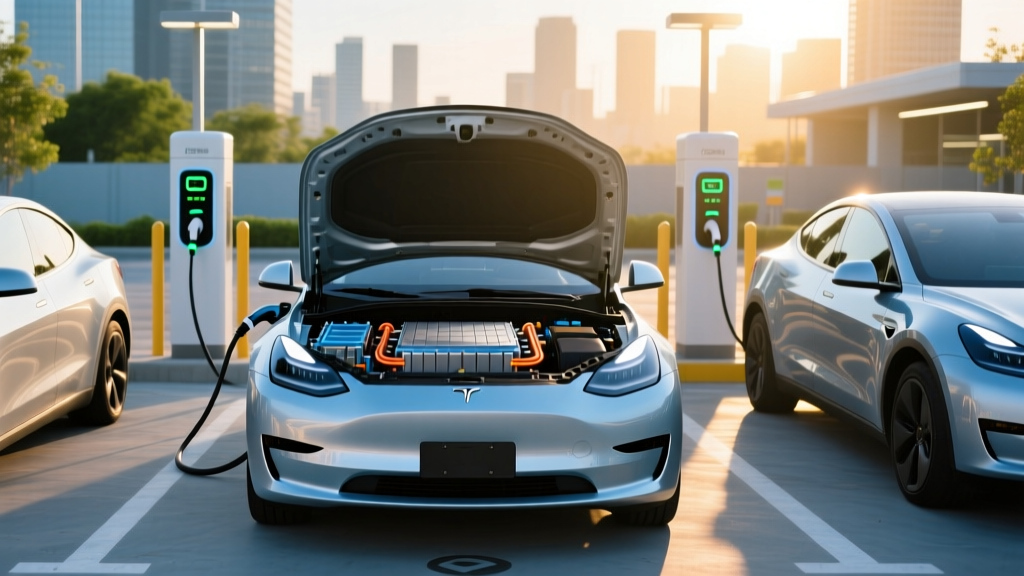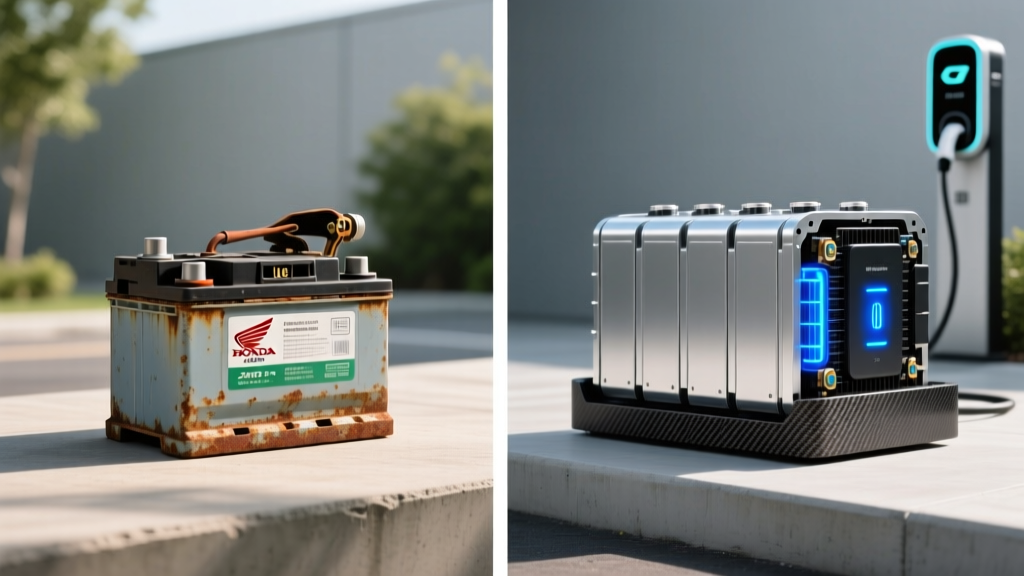
If you've searched for a 2003 Honda Accord battery, you're likely looking at a straightforward $130–$200 swap for a Group 24F or 35 lead-acid 12V unit — a 30-minute job at any auto parts store. That simplicity is exactly why many shoppers transitioning from two-decade-old internal-combustion sedans to modern electric vehicles find EV battery technology intimidating. The high-voltage traction battery in a 2026 EV is a fundamentally different animal: a 60–100+ kWh lithium-ion pack that powers the entire drivetrain, costs thousands if replaced out of warranty, and is engineered to outlast the vehicle itself.
This guide bridges that knowledge gap. We'll use the familiar 2003 Accord battery as a reference point, then walk through everything current and prospective EV owners need to know about lithium-ion traction batteries: chemistry trade-offs, real degradation data, warranty protections, replacement economics, and how to maximize pack longevity.
How Long Do EV Batteries Actually Last?
The short answer: significantly longer than most buyers expect. Data aggregated from fleet operators, manufacturer reports, and independent testing shows that modern lithium-ion EV battery packs retain approximately 85–92% of their original capacity after 150,000 miles under typical use. The median pack is designed to deliver 200,000+ miles before reaching the industry-standard 70% state-of-health (SoH) threshold that triggers warranty replacement.
Recurrent Auto, a battery analytics firm tracking over 15,000 EVs in real-world conditions, published degradation curves showing that most packs experience a steeper drop in the first 20,000–40,000 miles (roughly 2–5% loss), then settle into a slow, linear decline of about 0.5–1.0% per year thereafter. A 2025 Tesla Model 3 Long Range with its 79 kWh NMC pack, for example, might show 95% SoH at 30,000 miles and 88% SoH at 120,000 miles — still delivering over 290 miles of the EPA-rated 330-mile range.
• 1 year / 12,000 mi: ~96–98% SoH (2–4% loss)
• 3 years / 40,000 mi: ~92–95% SoH (5–8% loss)
• 5 years / 75,000 mi: ~89–93% SoH (7–11% loss)
• 8 years / 100,000 mi: ~85–90% SoH (10–15% loss)
• 10 years / 150,000 mi: ~82–88% SoH (12–18% loss)
Sources: Recurrent Auto fleet data, manufacturer warranty thresholds, fueleconomy.gov EV technology overview.
For comparison, a 2003 Honda Accord's lead-acid 12V battery typically lasts 3–5 years before replacement — and that car's engine might need a timing belt at 105,000 miles, a water pump shortly after, and eventually a transmission rebuild. The EV traction battery is designed to be the last major component you worry about.
LFP vs. NMC/NCA: Which Chemistry Is Right for You?
Not all lithium-ion batteries are created equal. The two dominant chemistries in 2026 EVs are NMC (nickel-manganese-cobalt) / NCA (nickel-cobalt-aluminum) and LFP (lithium iron phosphate). Your choice of chemistry affects range, longevity, cost, and cold-weather performance.
| Attribute | LFP (Lithium Iron Phosphate) | NMC / NCA |
|---|---|---|
| Energy Density | Lower (~160–180 Wh/kg cell-level) | Higher (~220–270 Wh/kg cell-level) |
| Cycle Life | 3,000–5,000+ cycles to 80% SoH | 1,500–2,500 cycles to 80% SoH |
| 100% SoC Charging | Recommended regularly; no upper-limit penalty | Best kept to 80% daily; 100% for trips only |
| Cold-Weather Performance | Weaker; 30–40% range loss below freezing | Better; 20–30% range loss below freezing |
| Cost per kWh | Lower ($90–$110/kWh pack-level in 2026) | Higher ($115–$140/kWh pack-level in 2026) |
| Thermal Stability | Excellent; very low thermal runaway risk | Good; requires more active thermal management |
| Common in (2026 models) | Tesla Model 3/Y RWD, Ford Mustang Mach-E Select (base), many Chinese-market EVs | Tesla Long Range, Hyundai Ioniq 5/6, BMW i4/iX, most premium/long-range trims |
The practical takeaway: If you mostly drive under 250 miles daily, can charge at home, and live in a moderate or warm climate, an LFP pack offers superior longevity and the convenience of charging to 100% without guilt. If you need maximum range per charge, frequently drive in freezing conditions, or regularly road-trip 300+ miles, NMC/NCA's higher energy density is the better fit. Neither is universally "better" — they solve different problems.
What Does the EV Battery Warranty Actually Cover?
Federal law mandates that EV battery warranties cover at least 8 years / 100,000 miles (10 years / 150,000 miles in California Air Resources Board states). Most automakers match or exceed this baseline. The critical detail is the capacity retention threshold — the SoH percentage below which the manufacturer must repair or replace the pack.
| Manufacturer | Coverage Period | Capacity Threshold | Notes |
|---|---|---|---|
| Tesla | 8 yr / 120,000 mi (Model 3/Y LR); 8 yr / 100,000 mi (RWD) | 70% retention | LFP RWD: 100k mi; NMC LR: 120k mi |
| Hyundai / Kia | 10 yr / 100,000 mi | 70% retention | Among the longest coverage periods |
| Ford | 8 yr / 100,000 mi | 70% retention | Covers battery + hybrid/PHEV components |
| GM (Chevrolet, Cadillac) | 8 yr / 100,000 mi | 60% retention (some models 70%) | Verify threshold per model — varies |
| BMW | 8 yr / 100,000 mi | 70% retention | Modular pack allows section replacement |
What's covered: Defects in materials/workmanship, and capacity loss below the stated threshold under normal use. What's typically excluded: Damage from accidents, improper charging equipment, aftermarket modifications, or failure to follow the owner's manual maintenance schedule. The warranty follows the vehicle, not the owner, which supports resale value.
To put this in perspective: if you drive the US average of 13,500 miles per year, an 8-year/100,000-mile warranty covers you through roughly 7.4 years of ownership. Given that real-world data shows most packs retain 85%+ capacity at that point, the warranty is essentially a safety net that few owners ever need to use.
EV Battery Replacement Costs: The Real Numbers
This is where buyers fixate — and where context matters most. Yes, a full traction battery replacement is expensive. But the probability of needing one is low, and the trajectory is favorable.
| Vehicle / Pack Size | Battery (kWh) | Chemistry | Replacement Cost Range |
|---|---|---|---|
| Tesla Model 3 RWD | 60 kWh | LFP | $8,000 – $12,000 |
| Tesla Model Y Long Range | 79 kWh | NMC | $12,000 – $16,000 |
| Hyundai Ioniq 5 (Long Range) | 77.4 kWh | NMC | $11,000 – $15,000 |
| Ford F-150 Lightning (Extended) | 131 kWh | NMC | $18,000 – $25,000 |
| Chevrolet Equinox EV | 85 kWh | NMC | $12,000 – $16,000 |
Important context: pack-level battery prices have fallen from over $500/kWh in 2012 to approximately $100–$140/kWh in 2026, according to BloombergNEF. That trend continues as manufacturing scales and chemistries evolve. A replacement pack in 2032 will likely cost significantly less than one today.
Also worth noting: many manufacturers now offer modular battery repair. BMW, for example, can replace individual modules within the i4/iX pack rather than the entire assembly, reducing out-of-warranty costs to $2,000–$5,000 per module. Tesla's service centers similarly replace individual modules when a single cell group degrades disproportionately.
When is replacement typically needed? In practice, out-of-warranty full replacements remain rare. The packs that do require it tend to be in high-mileage fleet vehicles (200,000+ miles), early-generation EVs with less sophisticated thermal management (2011–2016 models), or vehicles subjected to extreme abuse. For a privately owned, reasonably maintained 2026 EV, the battery will very likely outlast the body and interior.
Factors That Accelerate (or Preserve) Battery Health
Lithium-ion degradation isn't purely a function of time — it's driven by specific stressors. Understanding these lets you meaningfully extend your pack's useful life.
- State of Charge (SoC) habits: For NMC/NCA packs, routinely charging to 100% and leaving the car parked at full charge accelerates degradation. The sweet spot is 20–80% for daily use, with 100% reserved for road trips. LFP packs are the exception — manufacturers recommend charging to 100% at least weekly to keep the battery management system (BMS) calibrated.
- DC fast charging frequency: Occasional DC fast charging (1–2 times per week) has minimal measurable impact on modern packs with active thermal management. Daily fast charging in extreme heat without preconditioning, however, can add 1–3% additional degradation over 100,000 miles compared to Level 2 home charging.
- Temperature extremes: Sustained exposure to ambient temperatures above 95°F or below 10°F stresses the cells. Parking in shade/garages, using preconditioning before charging, and avoiding fast charging when the pack is cold-soaked all help. Most 2026 EVs include heat pumps and liquid thermal management that actively protect the pack, but physics still applies.
- Depth of discharge: Regularly draining the battery below 10% SoC stresses the chemistry. Setting a lower charge limit of 15–20% and plugging in before the pack is nearly empty extends cycle life.
- Calendar aging: Even a parked EV battery degrades slowly over time. Storing a vehicle long-term at 50% SoC in a temperature-controlled environment minimizes this effect.
How to Monitor and Maximize Battery Health
Modern EVs provide several ways to track State of Health (SoH) — the percentage of original capacity your pack still holds.
Built-in tools: Most 2026 EVs display estimated range that adjusts based on actual capacity. Tesla's app shows a rated range figure that, when compared to the original EPA rating, gives a rough SoH estimate (e.g., if your Model 3 Long Range originally displayed 330 miles at 100% and now shows 300, that's approximately 91% SoH). Hyundai's infotainment system in the Ioniq 5/6 includes a dedicated battery health screen showing real-time SoH percentage.
OBD-II diagnostic apps: Third-party tools like Scan My Tesla, Leaf Spy (for Nissan), or generic OBD-II readers with EV-specific software can pull detailed BMS data including cell voltage variance, total energy throughput, and precise SoH readings. These are especially useful when evaluating a used EV purchase.
Dealer/service center reports: During scheduled service, most manufacturers can run a full battery health diagnostic that produces a detailed SoH report — useful for warranty claims and resale documentation.
- Set daily charge limit to 80% (NMC/NCA) or 100% (LFP) per manufacturer guidance
- Enable preconditioning before scheduled departures and fast-charging sessions
- Use Level 2 home charging as your primary method; reserve DCFC for road trips
- Avoid parking in direct sun for extended periods in summer; garage when possible
- Don't let SoC sit below 10% for more than a few hours
- Check tire pressure monthly — underinflated tires increase energy draw and heat generation
- Update vehicle firmware regularly — BMS algorithms improve with OTA updates
Emerging Battery Tech: What's Coming (and When)
The battery landscape is evolving rapidly, but separating marketing from production reality matters.
Solid-state batteries replace the liquid electrolyte with a solid material, promising higher energy density (potentially 400+ Wh/kg at the cell level), faster charging, and improved safety. Toyota has announced a solid-state pack targeting 2027–2028 production in limited models, with a claimed 750 km (~465 miles) range. Samsung SDI and QuantumScape are also progressing through validation phases. However, manufacturing scalability and cost remain unsolved challenges — expect solid-state to appear first in premium, low-volume applications before reaching mainstream pricing, likely not before 2030 at scale.
Silicon-dominant anodes (replacing graphite) offer 20–40% energy density improvements. Companies like Sila Nanotechnologies and Group14 are already shipping silicon-composite anode materials to cell manufacturers, with integration into production EV packs expected in the 2026–2028 timeframe. This is a more near-term, incremental improvement rather than a full technology leap.
Sodium-ion batteries use abundant, low-cost materials and are entering the market in Chinese-market EVs (BYD, CATL). They offer lower energy density than LFP but dramatically lower material costs, making them viable for budget city cars and stationary storage. US-market availability remains uncertain pending supply chain development.
None of these technologies are reasons to delay a 2026 EV purchase. Today's lithium-ion packs, as the degradation data above shows, are already mature, reliable, and warrantied for the vast majority of ownership lifecycles.
The 2003 Accord Battery vs. an EV Traction Battery: A Perspective Shift
Coming back to our starting point: a 2003 Honda Accord's 12V battery costs ~$160, lasts 3–5 years, and powers the starter motor and accessories. Over a 200,000-mile vehicle life, you'd replace it 4–6 times — a total of $640–$960 in batteries alone, not counting the alternator, starter, and associated electrical system maintenance.
A 2026 EV's traction battery, by contrast, costs $8,000–$25,000 but is warrantied for 8–10 years and engineered for 200,000+ miles with 80%+ capacity retention. The EV also eliminates the 12V starter system entirely (though most EVs still carry a small 12V lithium or lead-acid auxiliary battery for safety systems and computers — typically a $200–$400 replacement every 5–8 years, similar to the Accord).
The framing shouldn't be "what if I need to replace the EV battery?" but rather "what's the total cost of all the components an EV eliminates?" Timing belts, water pumps, fuel pumps, exhaust systems, catalytic converters, transmission fluid, spark plugs, oil changes — the ICE maintenance ledger over 200,000 miles frequently exceeds $5,000–$8,000, with a major engine or transmission failure easily pushing past $4,000–$7,000 per incident. The EV battery warranty alone covers the most expensive single component for the period when failures are statistically most likely.
Frequently Asked Questions
How long do EV batteries last in years and miles?
Based on fleet data from Recurrent Auto and manufacturer testing, modern EV traction batteries retain 85–92% of original capacity at 150,000 miles (roughly 10–12 years of average driving). Most packs are designed to deliver 200,000+ miles before reaching the 70% SoH warranty threshold. LFP packs generally show even slower degradation due to their chemistry's higher cycle life.
How much does it cost to replace an EV battery?
Out-of-warranty replacement costs range from approximately $8,000 for a smaller LFP pack (e.g., Tesla Model 3 RWD, 60 kWh) to $25,000 for a large NMC pack (e.g., Ford F-150 Lightning Extended Range, 131 kWh). However, the vast majority of replacements occur under warranty at zero cost to the owner. Pack prices continue declining ~8–12% annually, and modular repair options can reduce costs to $2,000–$5,000 for partial replacements.
What does the battery warranty cover?
EV battery warranties cover defects and capacity loss below a specified threshold — typically 70% of original capacity — for 8 years/100,000 miles (10 years/150,000 miles in CARB states). This covers normal degradation but excludes damage from accidents, improper charging, or modifications. The warranty transfers to subsequent owners, supporting resale value.
How do I check my EV's battery health?
Three methods: (1) Compare your vehicle's current maximum displayed range at 100% SoC to the original EPA rating — this gives a rough SoH percentage. (2) Use an OBD-II diagnostic app (Scan My Tesla, Leaf Spy, etc.) to pull precise BMS data including cell voltage variance and energy throughput. (3) Request a battery health report from your dealer during scheduled service. Check your SoH annually or before purchasing a used EV.
LFP vs. NMC — which battery chemistry should I choose?
Choose LFP if you prioritize longevity, can charge at home, drive under 250 miles daily, and live in a moderate-to-warm climate. LFP offers 3,000–5,000 cycle life and tolerates daily 100% charging. Choose NMC/NCA if you need maximum range per charge, frequently drive in freezing conditions, or regularly take 300+ mile road trips. NMC offers 25–40% higher energy density and better cold-weather performance. Both chemistries are proven and warrantied for 8+ years.
Does fast charging damage my EV battery?
Modern EVs with active liquid thermal management handle DC fast charging well. Occasional fast charging (1–3 times per week) shows negligible additional degradation in controlled studies. The risk increases with daily fast charging in extreme heat without preconditioning. Best practice: use Level 2 home charging as your default, enable battery preconditioning before every DCFC session, and avoid fast charging when the pack is below 32°F without warming.
For official EPA range and efficiency data on specific EV models, visit fueleconomy.gov. For current federal EV tax credit rules, consult IRS.gov §30D guidance.