If you've spent years swapping out the 12V lead-acid battery in a work truck — maybe the familiar Group 65 in a 2003 Dodge Ram 1500 battery tray — the leap to a modern electric vehicle's high-voltage traction battery can feel like uncharted territory. The good news: EV batteries are engineered to outlast the vehicles they power, and understanding them is more straightforward than the marketing might suggest.
This guide breaks down everything a truck-minded buyer needs to know about EV battery technology in 2026: chemistry trade-offs, real degradation data, warranty coverage, replacement costs, and daily habits that maximize longevity.
EV Traction Battery vs. 12V Truck Battery: A Quick Reality Check
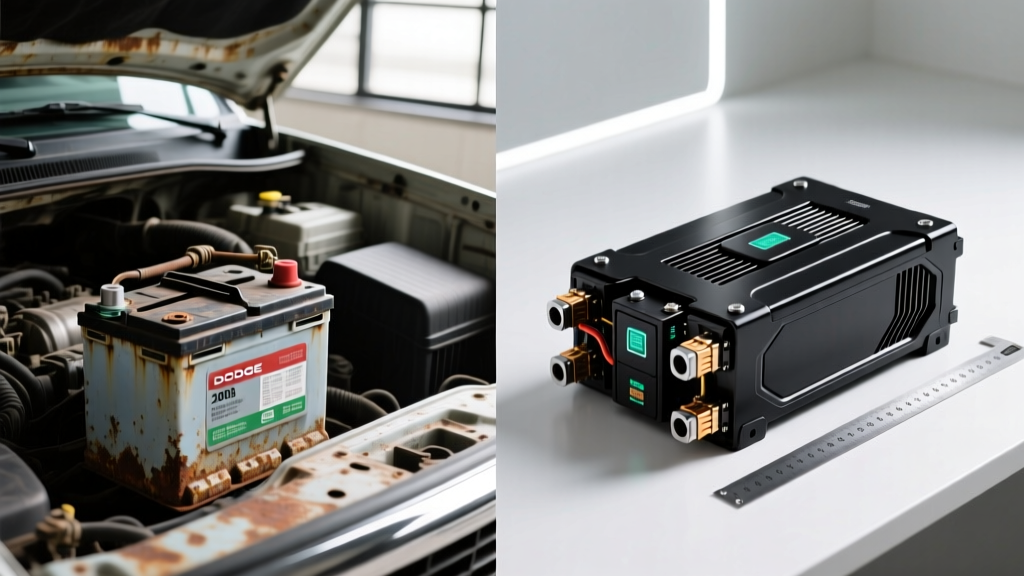
Before diving into chemistry, let's eliminate the most common confusion. The 2003 Dodge Ram 1500 battery is a 12-volt lead-acid unit (typically 650–850 cold cranking amps) that powers the starter motor, lights, and accessories. It weighs around 40 pounds, costs $120–$200, and needs replacement every 3–5 years.
An EV's high-voltage traction battery is fundamentally different:
- Voltage: 400V (most models) or 800V (Hyundai Ioniq 5, Kia EV6, Porsche Taycan, Lucid Air)
- Energy capacity: 50–130+ kWh (kilowatt-hours — the "gallon" measurement of EV energy storage)
- Weight: 700–1,500+ pounds, integrated into the vehicle floor
- Cost: $8,000–$25,000+ to replace out of warranty
- Lifespan: Designed for 15–20+ years and 200,000+ miles
EVs also carry a separate small 12V lithium or lead-acid auxiliary battery for electronics. That's the one you'd occasionally replace, similar to a truck battery. The traction battery is what we're focused on here.
LFP vs. NMC/NCA: Choosing Your Battery Chemistry
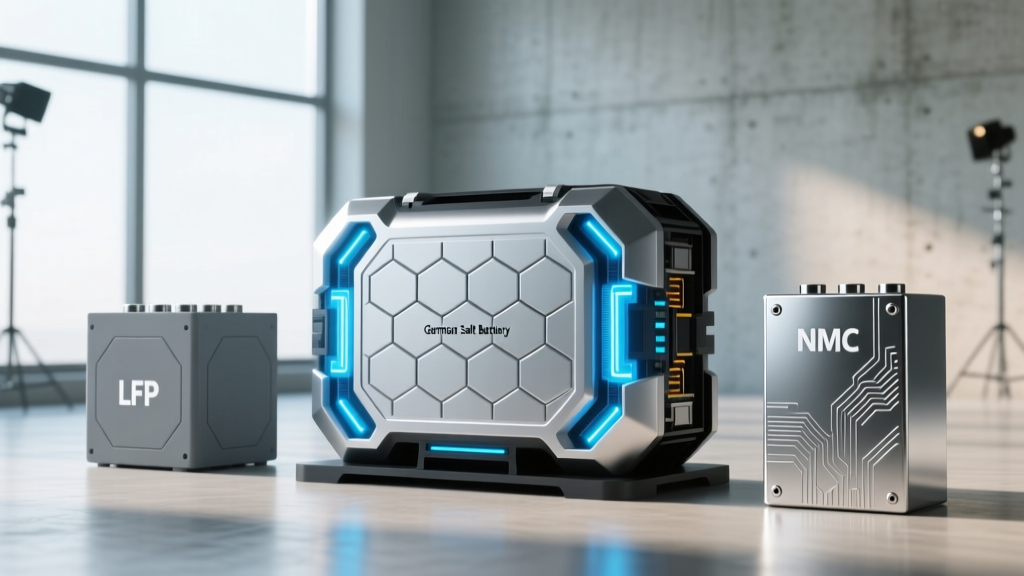
Two lithium-ion chemistries dominate the 2026 EV market. Your choice affects range, longevity, cold-weather behavior, and price.
| Factor | LFP (Lithium Iron Phosphate) | NMC/NCA (Nickel Manganese Cobalt / Nickel Cobalt Aluminum) |
|---|---|---|
| Energy Density | Lower (~160 Wh/kg cell-level) | Higher (~250–300 Wh/kg cell-level) |
| Real-World Range Impact | Slightly shorter range for same pack weight | Longer range per pound — preferred for 300+ mi vehicles |
| Cycle Life | 3,000–5,000+ full cycles | 1,000–2,000 full cycles |
| Calendar Lifespan | 20+ years typical | 15–20 years typical |
| Cold-Weather Performance | More range loss below 32°F; slower cold charging | Better low-temp efficiency and charge acceptance |
| Charging to 100% Daily | Recommended (BMS needs 100% for cell balancing) | Not recommended daily (80% preferred for longevity) |
| Cost per kWh (2026) | ~$80–$100/kWh pack-level | ~$110–$140/kWh pack-level |
| Cobalt Content | None (ethical sourcing advantage) | Contains cobalt (supply-chain concern) |
| Common In (2026) | Tesla Model 3/Y RWD, Ford Mustang Mach-E Select, BYD models | Tesla Long Range, Rivian, Hyundai Ioniq 5/6, most luxury EVs |
The short answer: LFP is better for buyers who want maximum cycle life, plan to keep the vehicle 10+ years, mostly drive in moderate climates, and don't need 350+ miles of range. NMC/NCA is better for maximum range, cold-weather drivers, and performance-oriented models.
How Long Do EV Batteries Actually Last?
The fear that EV batteries need frequent replacement is not supported by fleet data. Here's what real-world degradation looks like, compiled from owner-reported data and testing by sources like Recurrent Auto and manufacturer telemetry:
| Vehicle Age / Mileage | Typical Capacity Retained (NMC) | Typical Capacity Retained (LFP) |
|---|---|---|
| Year 1 / 15,000 mi | 95–98% | 97–99% |
| Year 3 / 45,000 mi | 90–94% | 94–97% |
| Year 5 / 75,000 mi | 86–92% | 92–96% |
| Year 8 / 120,000 mi | 80–88% | 88–94% |
| Year 12 / 180,000 mi | 75–85% | 85–92% |
Key observations:
- Early "break-in" loss: Most chemistries lose 2–5% in the first year, then degradation slows significantly — the curve flattens.
- Tesla's fleet data (published in their 2024 Impact Report) showed Model S/X packs retaining ~88% capacity at 200,000 miles.
- Taxi and rideshare fleets (high-mileage, frequent DC fast charging) show faster degradation — around 3–4% per year vs. 1.5–2% for typical home-charged vehicles.
- Catastrophic failure is rare: Under 1% of EV batteries require full replacement due to defect; most degradation is gradual capacity loss.
Battery Warranty Coverage: What's Protected and for How Long
Federal law mandates a minimum EV battery warranty of 8 years / 100,000 miles (10 years / 150,000 miles in California and states adopting CARB standards). Most manufacturers match or exceed this.
| Manufacturer (2026 Models) | Warranty Term | Capacity Threshold |
|---|---|---|
| Tesla (Model 3/Y RWD — LFP) | 8 yr / 100,000 mi | 70% retention |
| Tesla (Model 3/Y LR — NMC) | 8 yr / 120,000 mi | 70% retention |
| Hyundai / Kia (E-GMP platform) | 10 yr / 100,000 mi | 70% retention |
| Ford (Mach-E, F-150 Lightning) | 8 yr / 100,000 mi | 70% retention |
| Rivian (R1T / R1S) | 8 yr / 175,000 mi | 70% retention |
| GM (Ultium-based) | 8 yr / 100,000 mi | 70% retention (60% on some commercial) |
| BMW / Mercedes | 8 yr / 100,000 mi | 70% retention |
What triggers a warranty claim: If your battery's State of Health (SoH) drops below the threshold (usually 70% of original capacity) within the term, the manufacturer must repair or replace it — typically via module replacement rather than the full pack.
What's NOT covered: Damage from accidents, flooding, improper modifications, or using non-approved charging equipment. Normal gradual degradation above the threshold is not a claim event.
EV Battery Replacement Cost: Numbers and Context
Out-of-warranty replacement is the number-one anxiety for EV shoppers. Here's what it actually costs in 2026, based on manufacturer service bulletins and independent repair data:
| Vehicle / Pack Size | Full Pack Cost (Parts + Labor) | Module-Level Repair |
|---|---|---|
| Tesla Model 3 RWD (60 kWh LFP) | $10,000–$14,000 | $2,500–$5,000 |
| Tesla Model Y LR (82 kWh NMC) | $14,000–$18,000 | $3,000–$6,000 |
| Hyundai Ioniq 5 (77.4 kWh) | $13,000–$17,000 | $3,000–$5,500 |
| Ford F-150 Lightning Ext. Range (131 kWh) | $22,000–$28,000 | $4,000–$8,000 |
| Rivian R1T Max Pack (149 kWh) | $25,000–$32,000 | $5,000–$9,000 |
| Chevy Silverado EV (200+ kWh) | $30,000–$40,000 | $5,000–$10,000 |
Context that matters:
- Most EVs never need replacement. Data from Recurrent Auto shows fewer than 5% of EVs undergo battery replacement, and the majority of those are under warranty.
- Module-level repair is increasingly common. Many packs allow individual module swaps — a single failed module doesn't require a full pack replacement.
- Pack costs are declining. Battery pack prices have fallen from ~$1,200/kWh in 2010 to ~$100–$130/kWh in 2026, per BloombergNEF data. Expect continued decreases.
- Third-party and refurbished packs are becoming available for older models, reducing out-of-warranty costs by 30–50%.
Factors That Accelerate (or Preserve) Battery Life
Battery longevity isn't random — it's driven by measurable habits. Here's what the data shows:
What Hurts Longevity
- Exclusive DC fast charging: Vehicles that DC fast-charge more than 90% of the time show ~1–2% additional annual degradation vs. primarily Level 2 home charging. The heat from high-power charging (150–350 kW) is the stressor, not the electricity itself.
- Sustained high State of Charge (NMC/NCA): Storing an NMC battery at 100% for days at a time accelerates calendar degradation. LFP doesn't have this issue — charge it to 100% freely.
- Deep discharge below 10%: Regularly running the battery to near-zero stresses cells. Most EVs have a buffer (hidden reserve), but habitually arriving at 0% isn't ideal.
- Extreme heat exposure: Vehicles routinely parked in 100°F+ environments without thermal management see faster calendar aging. Most modern EVs have active liquid cooling to mitigate this.
- High-performance driving in extreme temps: Hard acceleration and track use generate internal cell heat beyond what thermal management can fully dissipate.
What Preserves Longevity
- Level 2 home charging (7–11 kW) as your primary method — gentle on cells, low heat.
- NMC/NCA daily limit of 80%: Use the vehicle's charge-limit setting. Charge to 100% only for road trips.
- LFP weekly 100% charge: Required for cell balancing — follow manufacturer guidance.
- Preconditioning: Warming the battery before DC fast charging (automatic in most EVs when you navigate to a charger) reduces stress and improves charge speed.
- Moderate SoC storage: If storing the vehicle for weeks, leave it at ~50% SoC, not 100% or near-zero.
EV Battery Care Checklist
- ☐ Set daily charge limit to 80% (NMC) or 100% (LFP)
- ☐ Use Level 2 home charger for daily needs
- ☐ Limit DC fast charging to road trips when possible
- ☐ Enable battery preconditioning in vehicle settings
- ☐ Avoid parking at 0% or 100% SoC for extended periods
- ☐ Keep tires properly inflated (reduces energy draw, less cycling)
- ☐ Use scheduled charging to finish near departure time (minimizes time at high SoC)
- ☐ Check SoH annually via vehicle app or service visit
Monitoring Battery Health: How to Check SoH
State of Health (SoH) is the percentage of original capacity your battery retains. Here's how to track it:
- In-vehicle displays: Tesla, Hyundai, Kia, BMW, and others show estimated range and, in some cases, SoH percentage in the settings menu.
- Manufacturer apps: The Tesla app, Hyundai Bluelink, Kia Connect, and FordPass provide battery health summaries.
- OBD-II scanners with EV support: Tools like the OBDeleven or ScanGauge can read battery management system (BMS) data, including SoH, cell voltage variance, and pack temperature.
- Third-party services: Companies like Recurrent and Geotab offer battery health reports based on telematics data — useful for used-EV buyers.
- Dealer diagnostic: A service center can pull a full BMS report showing individual module balance and capacity. Request this during routine service visits.
What to watch for: A sudden range drop of more than 5% in a short period, cell voltage variance above 0.3V between modules, or frequent "reduced power" warnings — these warrant a service visit.
Emerging Battery Technology: What's Next (and When)
Several next-generation technologies are in development. Here's a realistic timeline — none of these are available in production vehicles as of 2026:
- Solid-state batteries: Replace the liquid electrolyte with a solid material, promising 30–50% more energy density and faster charging. Toyota has announced a 2027–2028 limited production target; Samsung SDI aims for 2027. Mass-market availability is not expected before 2030. Challenges remain around manufacturing cost and cycle-life validation.
- Silicon-dominant anodes: Companies like Sila Nanotechnologies and Group14 are replacing graphite anodes with silicon composites, increasing energy density by 10–20%. Early deployments in the Mercedes G-Class (2025) and select premium models show promise, but cost and scalability limit widespread adoption until 2028+.
- Sodium-ion batteries: Lower-cost alternative to lithium, suited for budget EVs and stationary storage. CATL has begun limited production in China; US-market vehicles are not expected before 2028. Energy density is ~30% lower than LFP.
- LMFP (Lithium Manganese Iron Phosphate): An evolution of LFP with higher voltage and ~15–20% more energy density while retaining cobalt-free chemistry. Expected in Tesla and other models by 2027–2028.
For buyers shopping today: current LFP and NMC chemistries are mature, well-validated, and supported by robust warranties. Waiting for solid-state means waiting 4+ years for limited, premium-priced availability.
Frequently Asked Questions
How long do EV batteries last in years and miles?
Most modern EV batteries are designed to last 15–20 years and 200,000+ miles before reaching 70–80% of original capacity. Fleet data from Tesla, Hyundai, and independent trackers like Recurrent Auto confirms that the majority of EVs will outlive their first ownership cycle without needing battery replacement.
How much does an EV battery cost to replace?
Full pack replacement ranges from $10,000 for a 60 kWh LFP pack (Tesla Model 3 RWD) to $30,000–$40,000 for a 200 kWh pack (Chevy Silverado EV). However, most replacements are covered under warranty, and module-level repairs ($2,500–$10,000) are increasingly common for out-of-warranty issues. Fewer than 5% of EVs ever need a battery replacement.
What does the EV battery warranty cover?
Federal law requires a minimum of 8 years / 100,000 miles (10/150,000 in CARB states). The warranty covers capacity loss below a threshold — typically 70% of original capacity. If your battery degrades past this point within the term, the manufacturer repairs or replaces it at no cost. Damage from accidents, misuse, or unauthorized modifications is excluded.
How do I check and maximize my EV battery health?
Check SoH through your vehicle's app, in-vehicle settings, or an OBD-II EV scanner. Maximize longevity by primarily using Level 2 home charging, setting charge limits to 80% for NMC or 100% for LFP, minimizing exclusive DC fast charging, preconditioning before fast charges, and avoiding long-term storage at extreme SoC levels.
LFP vs. NMC — which is better and why?
Neither is universally better — it depends on your priorities. LFP offers longer cycle life (3,000–5,000 cycles), lower cost, no cobalt, and tolerance for daily 100% charging, but has lower energy density and worse cold-weather performance. NMC offers higher range per pound, better cold performance, and faster charging in cold weather, but has shorter cycle life and shouldn't be stored at 100%. Choose LFP for longevity and value; choose NMC for maximum range and cold-climate driving.
Is my 2003 Dodge Ram 1500 battery the same kind as an EV battery?
No. The 2003 Dodge Ram 1500 uses a 12V lead-acid battery (Group 65, ~700 CCA) for starting and accessories. An EV uses a 400V–800V lithium-ion traction battery (50–200+ kWh) for propulsion. EVs also have a separate small 12V battery for electronics, which is the functional equivalent of your truck battery.
For authoritative reference data on EV efficiency and range, consult fueleconomy.gov. For federal battery warranty requirements, see EPA emissions warranty guidance, which aligns with battery coverage mandates.