If you've ever searched for a 2001 Buick LeSabre battery, you already know the basics of automotive 12-volt lead-acid replacements: they cost around $120–$180, weigh roughly 35 pounds, and need swapping every 3–5 years. But stepping into the electric vehicle world introduces an entirely different beast — the high-voltage lithium-ion traction battery that actually propels the car. This guide bridges that gap, explaining everything a curious buyer or new EV owner needs to know about modern EV battery technology, from chemistry trade-offs to real-world degradation data, warranty coverage, and emerging solid-state timelines.
We'll also address a common point of confusion: the 12V auxiliary battery that still exists in every EV (yes, even a 2026 Tesla Model Y or Hyundai Ioniq 5) versus the massive traction pack underneath the floor. Let's get precise.
The 2001 Buick LeSabre Battery vs. an EV Traction Battery: What's the Difference?
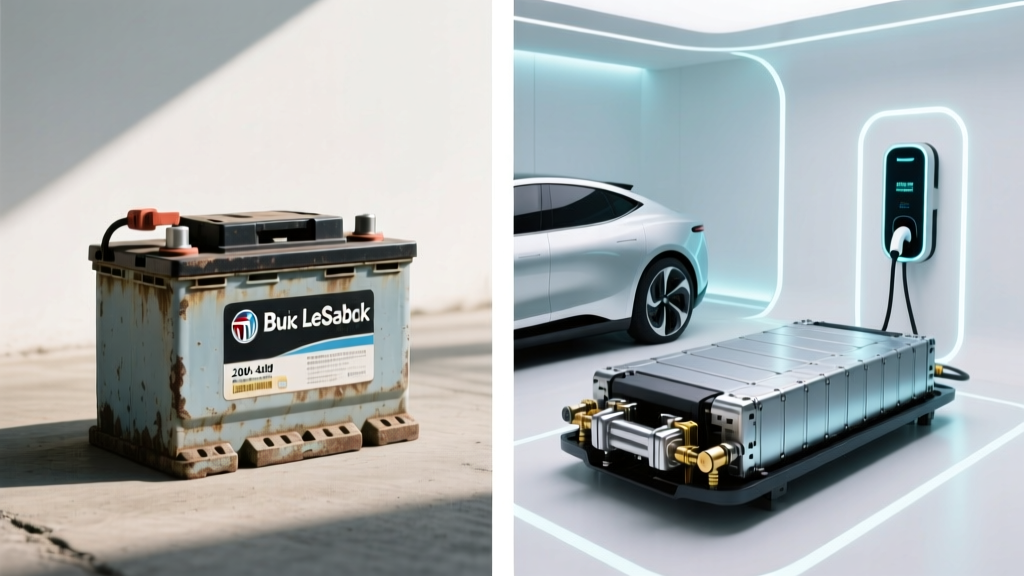
The 2001 Buick LeSabre used a Group 78 lead-acid 12V battery rated at roughly 70 Ah (amp-hours) and about 0.84 kWh of total energy storage. Its job was simple: crank a 3.8L V6 engine and run accessories. It weighed ~38 lbs and cost about $130–$170 to replace at an auto parts store.
By contrast, a modern EV traction battery stores between 50 kWh and 130 kWh of usable energy — that's 60 to 155 times the energy of that LeSabre's 12V battery. These packs weigh 800–1,500 lbs, cost $8,000–$22,000+ to replace, and are engineered to last the life of the vehicle (typically 15–20 years or 200,000+ miles). Every EV still carries a small 12V auxiliary battery (or a lithium-ion 12V equivalent, as Tesla now uses) to power lights, computers, and safety systems — but the traction battery does the heavy lifting.
LFP vs. NMC/NCA: EV Battery Chemistry Explained
Not all lithium-ion batteries are the same. The two dominant chemistries in 2026 EVs are LFP (lithium iron phosphate) and NMC/NCA (nickel manganese cobalt / nickel cobalt aluminum). Each has distinct trade-offs that affect range, longevity, cost, and cold-weather performance.
| Attribute | LFP (Lithium Iron Phosphate) | NMC / NCA |
|---|---|---|
| Energy Density | Lower (~160–180 Wh/kg cell-level) | Higher (~250–300 Wh/kg cell-level) |
| Typical Use | Standard-range models (Tesla Model 3 RWD, Ford Mustang Mach-E Select, BYD) | Long-range & performance models (Model 3 LR, Ioniq 5, Rivian, Lucid) |
| Cycle Life | 3,000–5,000+ full cycles | 1,000–2,000 full cycles |
| Cold Performance | Weaker in freezing temps (10–15% more range loss) | Better cold-weather efficiency |
| Cost | ~15–25% cheaper per kWh | Higher raw-material cost (cobalt, nickel) |
| Charging to 100% | Can charge to 100% regularly without harm | Best kept at 80% daily; 100% for trips only |
| Thermal Stability | Excellent (less prone to thermal runaway) | Good, but requires more active cooling |
Which is better? It depends on your driving profile. If you commute short distances, charge at home nightly, and live in a mild climate, LFP is a longevity champion — it can outlast the car itself. If you need maximum range for road trips, tow frequently, or live where winters are harsh, NMC/NCA packs deliver more miles per kWh and handle cold better. According to fueleconomy.gov, a 2026 Tesla Model 3 Long Range (NMC, 82 kWh usable) achieves an EPA-estimated 363 miles, while the Model 3 RWD (LFP, 57.5 kWh usable) is rated at 272 miles.
How Long Do EV Batteries Actually Last? Degradation Data
The single most persistent EV myth is that batteries need frequent replacement. Real-world fleet data tells a different story. Most modern EV batteries are engineered to retain 70–80% of their original capacity after 150,000–200,000 miles.
Here's what degradation actually looks like based on aggregated fleet data from sources including Recurrent Auto and manufacturer warranty filings:
- Year 1 / 15,000 mi: ~2–4% capacity loss (initial formation loss)
- Year 3 / 45,000 mi: ~5–8% total loss
- Year 5 / 75,000 mi: ~8–12% total loss
- Year 8 / 120,000 mi: ~10–15% total loss
- Year 12 / 180,000 mi: ~14–20% total loss
Source: Recurrent Auto 2025 fleet study of 15,000+ vehicles; Tesla Impact Report aggregated data.
Notice the pattern: degradation is steepest in the first year or two, then flattens into a very slow, linear decline. A 2026 Hyundai Ioniq 5 with its 77.4 kWh NMC pack (EPA 305-mile range) might realistically deliver ~265–275 miles of range at 100,000 miles — still very usable for daily driving and road trips.
LFP batteries degrade even more slowly. Tesla's LFP-equipped Model 3 RWD fleet shows roughly 5–8% loss at 100,000 miles, with the curve flattening significantly after the initial break-in period.
What Does the EV Battery Warranty Cover?
Federal law in the United States mandates that EV batteries carry a minimum warranty of 8 years or 100,000 miles (whichever comes first). California Air Resources Board (CARB) states extend that to 10 years or 150,000 miles. Most manufacturers exceed these minimums.
| Manufacturer (2026 Models) | Warranty Period | Capacity Retention Threshold |
|---|---|---|
| Tesla (Model 3/Y) | 8 yr / 120,000 mi (LR) or 100,000 mi (RWD) | 70% minimum |
| Hyundai / Kia | 10 yr / 100,000 mi | 70% minimum |
| Ford (Mach-E, F-150 Lightning) | 8 yr / 100,000 mi | 70% minimum |
| GM (Ultium-based: Equinox EV, Blazer EV, Silverado EV) | 8 yr / 100,000 mi | 70% minimum (some trims 60%) |
| Rivian | 8 yr / 175,000 mi | 70% minimum |
| BMW (i4, iX, i7) | 8 yr / 100,000 mi | 70% minimum |
The warranty covers defects and excessive capacity loss — meaning if your battery's State of Health (SoH) drops below the stated threshold within the warranty window, the manufacturer will repair or replace it at no cost. According to the IRS, vehicles that qualify for the federal §30D clean vehicle credit must meet battery-component and critical-mineral sourcing requirements, which also ensures a baseline of supply-chain accountability for warranty claims.
EV Battery Replacement Cost: What Owners Actually Pay
Here's where context matters enormously. The vast majority of EV owners will never need a traction battery replacement. But for those who do — typically after warranty expiration on high-mileage vehicles, or due to physical damage — the costs are significant.
| Vehicle / Pack Size | Estimated Replacement Cost (2026) | Typical Need Scenario |
|---|---|---|
| Tesla Model 3 RWD (57.5 kWh, LFP) | $8,000–$12,000 | Post-warranty, 200k+ mi, rare |
| Tesla Model Y Long Range (82 kWh, NMC) | $12,000–$16,000 | Post-warranty or collision damage |
| Hyundai Ioniq 5 (77.4 kWh, NMC) | $11,000–$15,000 | Out-of-warranty failure, very rare |
| Ford F-150 Lightning Extended Range (131 kWh, NMC) | $18,000–$25,000+ | Post-warranty or severe underbody impact |
| Chevrolet Bolt EV/EUV (65 kWh, NMC) | $9,000–$14,000 | Post-recall replacements mostly covered |
| Rivian R1T / R1S (128–149 kWh) | $18,000–$22,000+ | Out-of-warranty, extremely rare |
For perspective: the average 2026 EV battery cost at the pack level has fallen to roughly $110–$130 per kWh (down from $180+ in 2020), according to BloombergNEF data. Module-level repairs are increasingly common — many shops can replace individual failed modules rather than the entire pack, reducing costs to $2,000–$6,000 depending on the failure. Most EV batteries outlive the vehicles they're installed in.
Factors That Affect EV Battery Lifespan
Battery longevity isn't just about miles — it's about how you treat the pack. Here are the primary factors, ranked by impact:
- Avoid sustained 100% SoC (NMC/NCA only): Charge to 80% for daily use; reserve 100% for road trips. LFP owners can charge to 100% regularly — Tesla and BYD recommend it for accurate BMS calibration.
- Minimize DC fast charging when possible: Frequent 150+ kW DCFC sessions accelerate degradation by ~1–2% extra over 100k miles vs. primarily Level 2 charging. Use DCFC for road trips, Level 2 for daily.
- Precondition before fast charging: Most EVs do this automatically when you navigate to a charger. A cold battery charged at high power degrades faster. Preconditioning warms the pack to ~95°F (35°C) for optimal charge acceptance.
- Avoid extreme SoC storage: Don't leave your EV sitting at 100% or below 10% for weeks. Aim for 50–60% if storing for extended periods.
- Extreme heat is worse than extreme cold: Sustained ambient temperatures above 95°F (35°C) accelerate chemical degradation. Garage parking in hot climates extends pack life. Cold temps reduce range temporarily but don't cause permanent damage.
- Use scheduled charging: Set your EV to finish charging just before departure rather than sitting at full charge overnight. Most 2026 EVs offer this in the app or infotainment.
How to Check and Monitor Your EV's Battery Health
State of Health (SoH) is the percentage of original capacity your battery retains. A brand-new pack is 100% SoH; at 70% SoH, you've lost 30% of your original range. Here's how to check it:
Manufacturer Apps and In-Car Displays
Most 2026 EVs display battery health through the manufacturer's app or service menu. Tesla owners can access a "Battery Health" check in the service menu (or via the Tesla app under "Battery Health Test"). Hyundai's Bluelink and Kia Connect provide SoH data through the connected-services portal. GM's Ultium-based vehicles report battery health through the myChevrolet/myCadillac apps.
Third-Party Tools
Apps like Recurrent, Tessie (Tesla-specific), and OBDeleven (for VW Group EVs) pull SoH data from the vehicle's OBD-II port or API. These tools track capacity trends over time and compare your pack against fleet averages — invaluable when buying a used EV.
Manual Calculation
Charge to 100%, note the displayed range, and compare to the original EPA-rated range adjusted for the pack's usable kWh. If your 77.4 kWh Ioniq 5 originally showed 305 miles at 100% and now shows 270 miles, your approximate SoH is 270/305 = ~88.5%. Note: displayed range estimates fluctuate with driving style and temperature, so this is an approximation best done under similar conditions.
Emerging Battery Tech: Solid-State and Silicon Anodes
The next frontier in EV batteries is solid-state technology, which replaces the liquid electrolyte with a solid material (ceramic, sulfide, or polymer). The theoretical benefits are substantial:
- 40–50% higher energy density (potentially 500+ mile packs in midsize sedans)
- Faster charging (10–80% in under 10 minutes)
- Improved safety (no flammable liquid electrolyte)
- Longer cycle life (5,000+ cycles with minimal degradation)
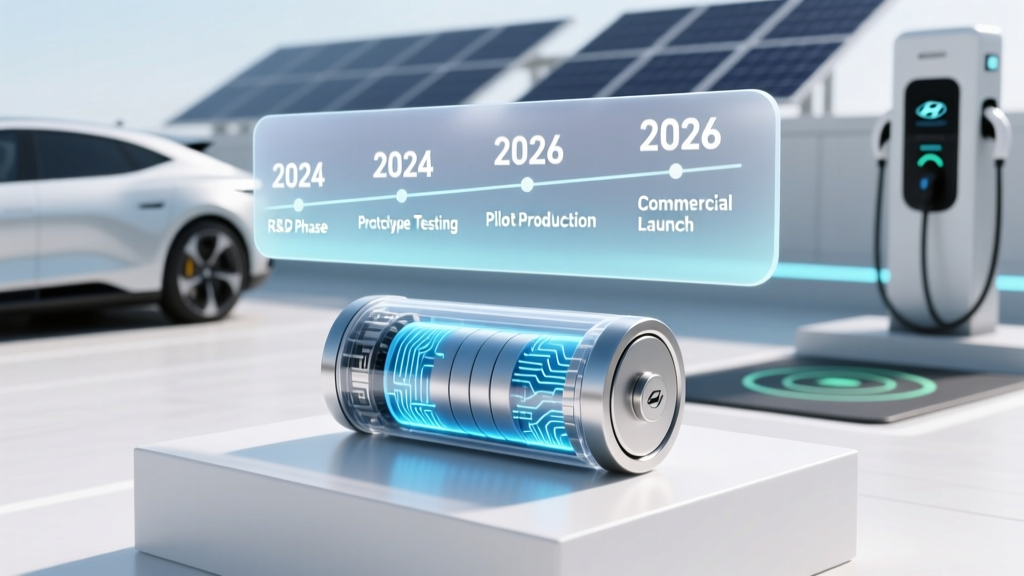
Realistic timeline: As of 2026, solid-state batteries are in limited production. Toyota has announced a solid-state-equipped EV for limited release in Japan, and Samsung SDI is ramping sample production for 2027–2028 model-year vehicles. Widespread commercial availability at scale is expected no earlier than 2028–2030, with cost parity with current lithium-ion likely around 2032.
Silicon anode technology is closer to market. Companies like Sila Nanotechnologies and Group14 are supplying silicon-dominant anode materials that boost energy density by 15–25% over conventional graphite anodes. The 2026 Mercedes-Benz G-Class EV (announced) uses a silicon anode pack, and broader adoption across premium EVs is expected through 2027–2028.
Frequently Asked Questions
How long do EV batteries last in years and miles?
Most modern EV batteries (2020 and newer) are designed to retain at least 70% of their original capacity after 8–10 years or 100,000–150,000 miles, backed by manufacturer warranties. Real-world fleet data from Recurrent Auto shows that the median EV battery at 100,000 miles retains roughly 85–90% of its original capacity. Many packs will outlast the vehicle itself, reaching 200,000+ miles before falling below 70% SoH.
How much does an EV battery cost to replace?
Full pack replacement costs range from roughly $8,000 for a smaller pack (Tesla Model 3 RWD, ~57.5 kWh) to $25,000+ for a large pack (Ford F-150 Lightning Extended Range, 131 kWh). However, most replacements are covered under warranty (8 yr/100,000 mi minimum), and module-level repairs can reduce out-of-pocket costs to $2,000–$6,000. The vast majority of EV owners never pay for a battery replacement.
What does the EV battery warranty actually cover?
EV battery warranties cover defects in materials and workmanship, plus excessive capacity loss. The threshold is typically 70% State of Health within 8 years/100,000 miles (10 years/150,000 miles in CARB states). If your battery drops below the threshold, the manufacturer repairs or replaces it free of charge. Warranties do not cover damage from collisions, flooding, or unauthorized modifications.
How do I check and maximize my EV's battery health?
Check SoH through your vehicle's app (Tesla, Bluelink, myChevrolet) or third-party tools like Tessie or Recurrent. Maximize longevity by: charging to 80% daily for NMC/NCA (100% is fine for LFP), minimizing DC fast charging, preconditioning before fast charges, avoiding prolonged storage at extreme SoC levels, and parking in shade/garages in hot climates.
LFP vs. NMC — which battery chemistry is better for me?
Choose LFP if you prioritize longevity, lower cost, and mostly commute or charge at home — it handles daily 100% charges and offers 3,000–5,000 cycle life. Choose NMC/NCA if you need maximum range, tow frequently, regularly road-trip, or live in a cold climate — it offers higher energy density and better cold-weather performance. Neither is universally "better"; the right choice depends on your driving pattern.
Does a 2001 Buick LeSabre battery have anything in common with an EV battery?
Only in the broadest sense — both store electrical energy. The LeSabre's 12V lead-acid battery (~0.84 kWh) powers a starter motor and accessories. An EV traction battery (50–130 kWh) powers one or more electric motors that drive the wheels. Interestingly, every 2026 EV still has a 12V auxiliary battery (lead-acid or lithium) that serves the same basic function as that LeSabre's battery: running lights, computers, and safety systems. So if you can handle replacing a 12V battery in a 2001 Buick, you already understand one small piece of EV ownership.