If you've searched for a 2000 Chevy Silverado 1500 battery, you're likely dealing with a familiar scenario: a dead Group 78 lead-acid starter battery that costs $120–$200 at an auto parts store and takes five minutes to swap. But if you're also considering the jump to an electric truck like the 2026 Chevrolet Silverado EV, the battery conversation changes entirely. Modern EV traction batteries store 85–200+ kWh of energy, weigh over 1,000 pounds, and cost thousands to replace — yet they're engineered to outlast the vehicles they power.
This guide breaks down everything EV buyers and curious truck owners need to know about high-voltage battery chemistry, degradation, warranties, replacement costs, and emerging technology — with honest numbers and real-world context.
The 2000 Silverado 1500 Battery: A Quick Baseline
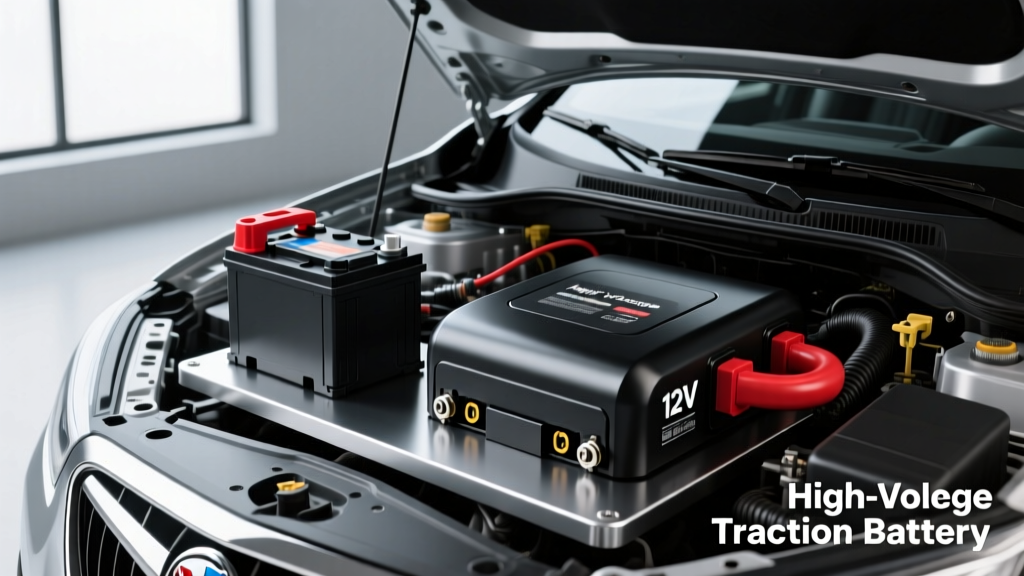
The 2000 Chevrolet Silverado 1500 uses a conventional 12V lead-acid starter battery (typically Group 78, ~700–800 CCA). Its sole job is cranking the engine and powering accessories when the alternator isn't running. Expect 3–5 years of life, a replacement cost of $120–$220, and zero impact on drivetrain operation once the engine is running.
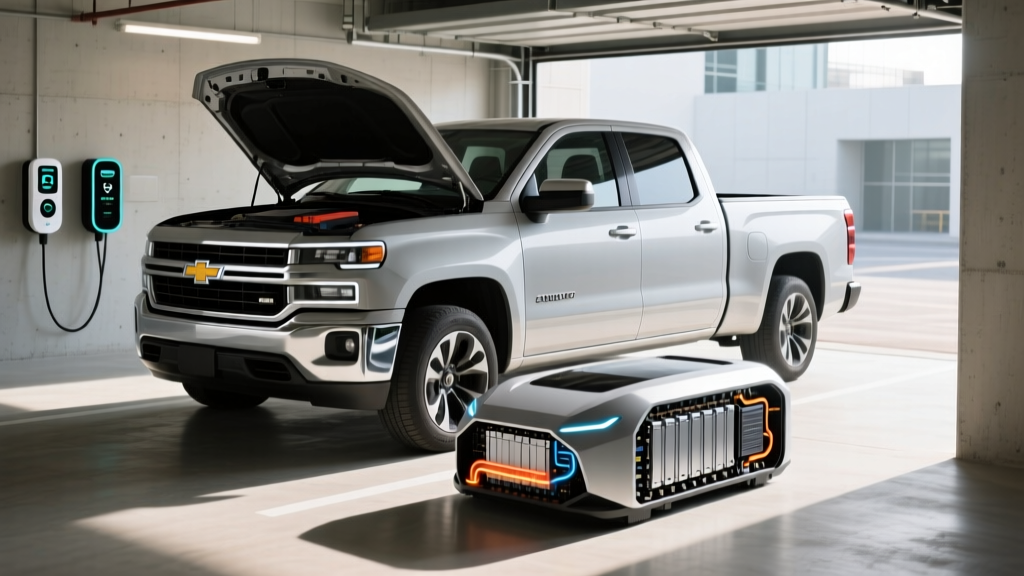
An EV traction battery is fundamentally different. It's the vehicle's primary energy source — the equivalent of both the gas tank and the engine's fuel delivery system combined. Understanding that distinction is critical before evaluating EV ownership.
EV Battery Chemistry: LFP vs NMC Explained
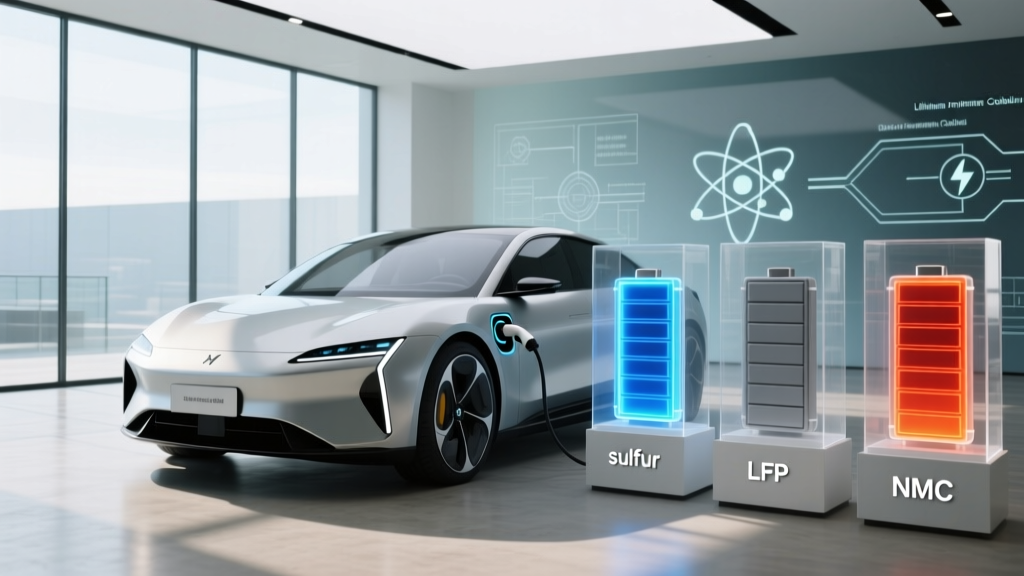
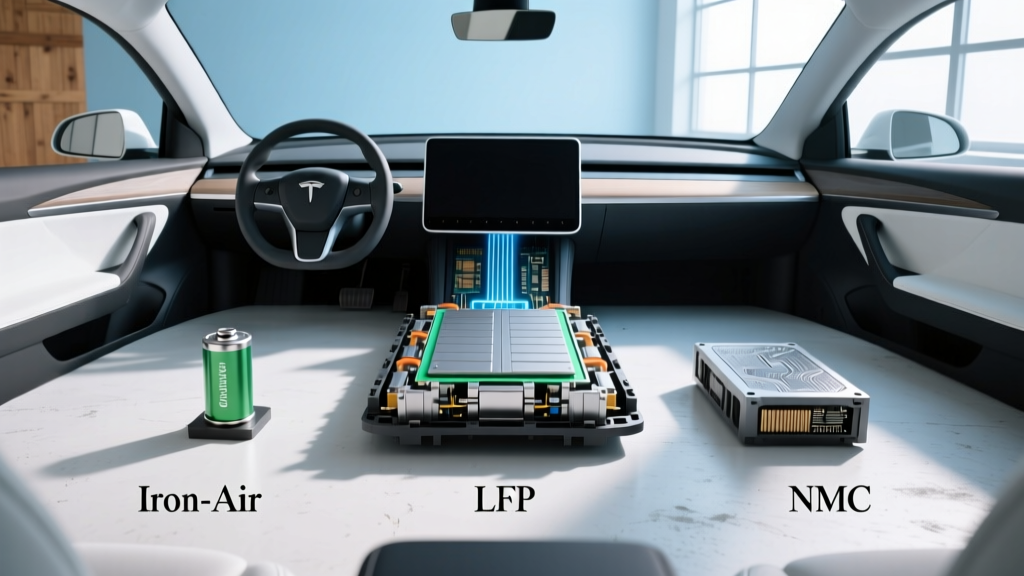
Two dominant chemistries power today's EVs: Lithium Iron Phosphate (LFP) and Nickel Manganese Cobalt (NMC). Each has distinct trade-offs that affect range, longevity, cold-weather performance, and price.
| Attribute | LFP (LiFePO4) | NMC / NCA |
|---|---|---|
| Energy Density | ~160–180 Wh/kg (lower) | ~220–300 Wh/kg (higher) |
| Typical Cycle Life | 3,000–5,000+ cycles | 1,000–2,000 cycles |
| Cold-Weather Performance | Reduced; slower charging below 32°F | Better low-temp charge acceptance |
| Cost per kWh | ~$80–$100 (lower) | ~$110–$140 (higher) |
| Recommended Charge Habit | Can charge to 100% daily | Best kept 20–80% for daily use |
| Notable Vehicles (2026) | Tesla Model 3 RWD, Ford Mustang Mach-E Select (LFP option) | Silverado EV, Rivian R1T, Hyundai Ioniq 5 |
| Cobalt/Nickel Content | None | Contains cobalt and/or nickel |
The practical takeaway: LFP wins on longevity and cost but sacrifices range per pound and cold-weather charging speed. NMC delivers more range in a lighter package but degrades faster if routinely charged to 100%. For high-mileage drivers in moderate climates, LFP is increasingly the pragmatic choice. For maximum range and towing — like the Silverado EV 4WT's 492-mile EPA estimate — NMC remains the standard.
How Long Do EV Batteries Actually Last?
The short answer: far longer than most buyers assume. Data from fueleconomy.gov and fleet studies show most modern EV batteries retain 85–95% of original capacity after 100,000 miles.
Typical EV Battery Degradation Curve
| Milestone | Average Capacity Retained | Data Source / Context |
|---|---|---|
| Year 1 / 15,000 mi | 95–98% | Initial calibration drop, then plateau |
| Year 3 / 45,000 mi | 91–95% | Gradual linear decline |
| Year 5 / 75,000 mi | 88–93% | Tesla fleet data, Recurrent Auto studies |
| Year 8 / 120,000 mi | 82–90% | Within most warranty thresholds |
| Year 10 / 150,000 mi | 78–87% | Most packs still functional for daily use |
Note: Degradation rates vary by chemistry, thermal management quality, and charging habits. LFP packs generally show slower fade. Liquid-cooled packs (standard on most 2026 EVs) outperform passively cooled designs.
Crucially, "end of life" for an EV battery doesn't mean the vehicle is dead — it means the pack has dropped below ~70–80% capacity. A Silverado EV with a degraded 200 kWh pack still holding 75% capacity retains roughly 150 kWh of usable energy — enough for 300+ miles of real-world range.
What Does the EV Battery Warranty Cover?
Federal law mandates a minimum 8-year/100,000-mile warranty on EV batteries for emissions-related compliance, but most manufacturers exceed this baseline. The warranty guarantees the battery will retain a specified percentage of its original capacity.
| Vehicle | Warranty Term | Capacity Threshold | Coverage Notes |
|---|---|---|---|
| Chevrolet Silverado EV | 8 yr / 100,000 mi | ≥70% retention | Includes battery management system |
| Tesla Model 3 (LFP) | 8 yr / 120,000 mi | ≥70% retention | Higher mile limit for LFP trims |
| Hyundai Ioniq 5 | 10 yr / 100,000 mi | ≥70% retention | Industry-leading term length |
| Ford F-150 Lightning | 8 yr / 100,000 mi | ≥70% retention | Covers individual module replacement |
| Rivian R1T | 8 yr / 175,000 mi | ≥70% retention | Highest mileage threshold in segment |
Key detail: Warranties cover capacity loss below the threshold and defects — they do not cover damage from accidents, flooding, or improper charging equipment. If your pack drops to 68% capacity at year 6 and 85,000 miles, the manufacturer must repair or replace it at no cost. Per IRS §30D guidelines, a valid battery warranty also supports federal tax credit eligibility for the original purchaser.
EV Battery Replacement Cost: Real Numbers
This is where the 2000 Silverado 1500 battery comparison becomes stark. A lead-acid Group 78 costs ~$160. An EV traction battery replacement is a five-figure event — but one that very few owners ever face during typical ownership.
| Vehicle / Pack Size | Battery Cost (Parts) | Labor | Total Estimated | Typical Need Timeline |
|---|---|---|---|---|
| Tesla Model 3 RWD (60 kWh LFP) | $6,000–$8,000 | $1,500–$2,500 | $7,500–$10,500 | 15+ years / 200,000+ mi |
| Hyundai Ioniq 5 (77.4 kWh NMC) | $9,000–$12,000 | $2,000–$3,000 | $11,000–$15,000 | 15+ years / 200,000+ mi |
| Ford F-150 Lightning Ext. (131 kWh) | $15,000–$20,000 | $3,000–$4,500 | $18,000–$24,500 | 15+ years / 200,000+ mi |
| Chevy Silverado EV (200 kWh) | $20,000–$28,000 | $3,500–$5,000 | $23,500–$33,000 | 15+ years / 200,000+ mi |
Context that matters: According to data aggregated by Recurrent Auto, fewer than 2% of EVs from model years 2018–2024 have required out-of-warranty battery replacements. Most packs outlive the vehicle's useful economic life. Additionally, module-level repair (replacing individual cell groups rather than the entire pack) is increasingly available, reducing costs to $3,000–$7,000 for localized failures.
Factors That Affect EV Battery Lifespan
Not all miles are created equal. Battery longevity depends heavily on how you charge, where you drive, and how the vehicle manages thermal loads.
Battery Care Checklist for Maximum Longevity
- Limit DC fast charging to road trips: Frequent 150+ kW charging accelerates degradation. For daily use, Level 2 home charging at 7–11 kW is ideal.
- Maintain 20–80% State of Charge (NMC): Storing an NMC pack at 100% for extended periods stresses cells. LFP owners can charge to 100% regularly without significant penalty.
- Use preconditioning: Most 2026 EVs let you precondition the battery before fast charging or departure. This warms or cools cells to optimal temperature, reducing stress.
- Avoid extreme SoC in extreme heat: A fully charged battery parked in 110°F Phoenix heat degrades faster than one stored at 50% SoC in a garage.
- Don't baby it too much: Modern battery management systems (BMS) include buffers — a "100%" charge typically uses only ~95% of physical capacity. Drive normally.
- Monitor coolant systems: Liquid-cooled packs rely on thermal management fluid. Follow manufacturer service intervals for coolant checks.
How to Check and Monitor Battery Health (SoH)
State of Health (SoH) is the percentage of original capacity your battery currently holds. Unlike the 2000 Silverado's battery — which is either alive or dead — EV batteries degrade gradually, and monitoring that curve is essential for resale value and warranty claims.
Methods to check SoH:
- In-vehicle diagnostics: Many 2026 EVs (Tesla, Rivian, Hyundai/Kia) display battery health metrics in the service menu or companion app.
- OBD-II dongles + apps: Tools like OBDeleven or Car Scanner (for compatible models) read the BMS directly, showing SoH, cell voltage variance, and cycle count.
- Dealer diagnostic reports: Request a battery health printout during service visits. This is essential documentation for warranty claims.
- Third-party services: Companies like Recurrent and Geotab offer fleet and individual battery monitoring using telematics data.
Red flags to watch for: Sudden range drops exceeding 5% year-over-year, individual cell voltage deviations over 0.1V, or rapid capacity loss after a specific DC fast-charging event. Any of these warrant a dealer diagnostic.
Emerging Battery Technology: What's Next
While today's lithium-ion batteries are mature and reliable, several next-generation technologies are in development. None are commercially available in production vehicles as of early 2026, but timelines are crystallizing.
Solid-state batteries: Replace the liquid electrolyte with a solid conductor, promising 30–50% higher energy density and improved safety. Toyota has announced solid-state production for select 2027–2028 models, though initial availability will be limited and expensive. Expect mainstream adoption no earlier than 2029–2030.
Silicon anode cells: Companies like Sila Nanotechnologies and Group14 are replacing graphite anodes with silicon composites, boosting energy density by 15–25%. These are beginning to appear in limited production (Mercedes-Benz G580 EQ uses silicon-anode cells from Group14) but remain cost-prohibitive for mass-market vehicles.
Sodium-ion batteries: CATL and BYD are producing sodium-ion packs for budget EVs in China, offering lower cost and better cold performance than LFP, but with ~30% lower energy density. US-market availability is not expected before 2028.
Realistic takeaway: If you're buying an EV in 2026, current lithium-ion technology (LFP or NMC) is proven, well-warrantied, and sufficient for 15+ years of service. Waiting for solid-state means waiting 3–5 years for limited, premium-priced availability.
Frequently Asked Questions
How long do EV batteries last in years and miles?
Most modern EV batteries are designed to last 15–20 years and 200,000+ miles before dropping below 70–80% capacity. Fleet data from Tesla, Hyundai, and others shows average degradation of 1–2% per year under normal use. Many packs will outlast the vehicle's economic life.
How much does an EV battery cost to replace?
Replacement costs range from ~$7,500 for a smaller pack (Tesla Model 3 LFP, 60 kWh) to $25,000–$33,000 for large truck packs (Silverado EV, 200 kWh). However, fewer than 2% of EVs from recent model years have needed out-of-warranty replacements. Module-level repairs can cost $3,000–$7,000.
What does the EV battery warranty cover?
Federal minimum is 8 years/100,000 miles with a 70% capacity retention guarantee. Some manufacturers (Hyundai, Rivian) extend this to 10 years or 175,000 miles. Warranties cover capacity fade below the threshold and manufacturing defects but not accident damage or misuse.
How do I check my EV battery health?
Use the vehicle's built-in diagnostics menu or companion app, OBD-II diagnostic tools that read BMS data, or request a dealer health report during service. Track SoH annually to catch abnormal degradation early and document it for warranty purposes.
LFP vs NMC — which battery chemistry is better?
It depends on your priorities. LFP offers longer cycle life (3,000–5,000 cycles), lower cost, and the ability to charge to 100% daily, but has lower energy density and weaker cold-weather charging. NMC provides more range per pound and better cold performance but degrades faster if stored at high SoC. For fleet/high-mileage use: LFP. For maximum range and towing: NMC.
Can I swap my 2000 Silverado's lead-acid battery for a lithium 12V?
Yes — lithium iron phosphate (LiFePO4) 12V replacement batteries are available for older trucks like the 2000 Silverado 1500. They weigh ~60% less and last 3–4× longer than lead-acid, but cost $250–$400 vs. $120–$200. This is a 12V auxiliary battery upgrade and is entirely separate from EV traction battery technology.
Does fast charging damage my EV battery?
Occasional DC fast charging (road trips) has minimal impact. Daily fast charging at 150+ kW can accelerate degradation by 1–3% over the battery's life compared to Level 2 charging. Modern BMS systems actively manage charge rates and temperatures to minimize harm, but Level 2 home charging remains the longevity-friendly choice.
Whether you're maintaining a classic 2000 Chevy Silverado 1500 or evaluating the 2026 Silverado EV, understanding battery technology — from a $160 lead-acid starter to a $25,000 lithium-ion traction pack — is the foundation of smart ownership. The data is clear: modern EV batteries are built to last, backed by robust warranties, and rarely need replacement during typical ownership. The question isn't whether the battery will survive — it's whether the rest of the truck will.