Why Searching for a "08 GMC Acadia Battery" Leads to an EV Reality Check
If you've landed here searching for a 08 GMC Acadia battery, you're likely dealing with a familiar frustration: a dead 12-volt lead-acid battery in a 2008 GMC Acadia. That Group 48 AGM or flooded-cell battery typically costs $150–$250 at an auto parts store, lasts 3–5 years, and powers your starter motor, lights, and infotainment. It has nothing to do with propulsion.
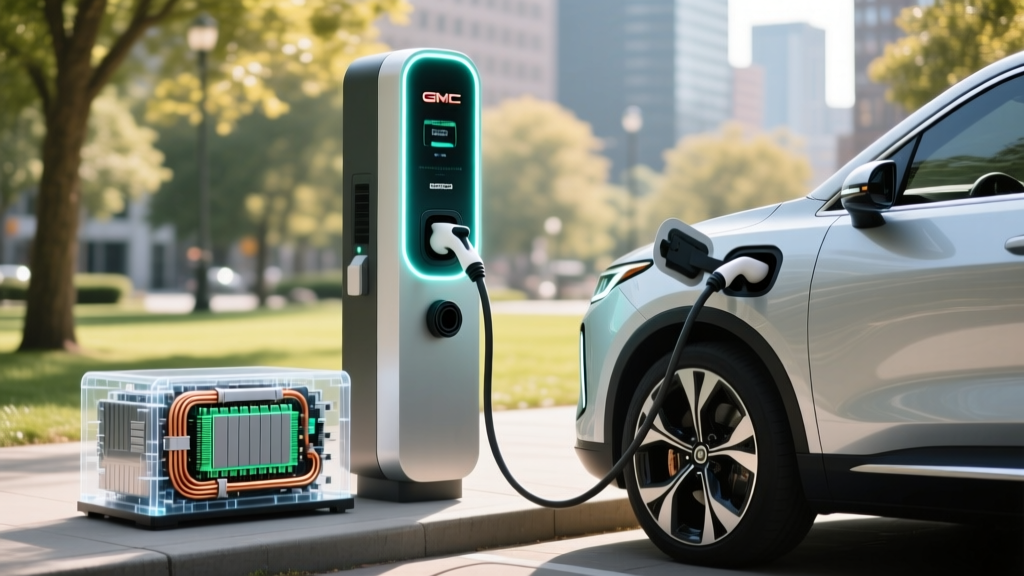
But if that search brought you into the orbit of electric vehicles, you've stumbled onto one of the most consequential — and misunderstood — topics in modern automotive ownership: the high-voltage EV traction battery. These lithium-ion packs store 60–130+ kWh of energy, propel the vehicle, and represent the single most expensive component in any electric car.
This guide bridges both worlds. We'll briefly address the 2008 Acadia's 12V battery so you can get back on the road, then deliver a comprehensive, data-driven breakdown of EV battery technology — chemistry, degradation, warranties, replacement costs, and care — for anyone considering the jump to electric.
LFP vs NMC: The Two Chemistries Powering Modern EVs
Every EV battery sold in the US market in 2026 uses one of two dominant lithium-ion chemistries: LFP (Lithium Iron Phosphate) or NMC/NCA (Nickel Manganese Cobalt / Nickel Cobalt Aluminum). Your choice of vehicle often dictates which chemistry you get, and each has distinct trade-offs.
| Attribute | LFP (LiFePO4) | NMC / NCA |
|---|---|---|
| Energy Density | Lower (~160–180 Wh/kg cell-level) | Higher (~220–300 Wh/kg cell-level) |
| Cycle Life | 3,000–5,000+ cycles to 80% SoH | 1,000–2,000 cycles to 80% SoH |
| Cold-Weather Performance | Weaker — greater range loss below 32°F; slower charge acceptance without preconditioning | Better low-temp conductivity; still loses 20–30% range in deep cold |
| Thermal Stability / Safety | Excellent — higher thermal runaway threshold (~270°C) | Good but lower threshold (~210°C); requires more robust BMS cooling |
| Cost (per kWh) | Lower — no cobalt or nickel; ~$80–100/kWh at pack level (2026) | Higher — commodity-sensitive; ~$110–140/kWh at pack level (2026) |
| Usable SoC Window | Can charge to 100% daily without significant degradation | Best kept 20–80% daily; 100% only for road trips |
| Common 2026 Vehicles | Tesla Model 3/Y RWD, Ford Mustang Mach-E Select (LFP option), BYD models, Rivian Standard | Tesla Long Range/Performance, Hyundai Ioniq 5/6, Kia EV6/EV9, GM Ultium vehicles, BMW iX |
Which is better? Neither is universally superior. If you want maximum range per charge and don't mind babying your state of charge, NMC delivers the energy density. If you want a battery that tolerates daily 100% charging, lasts longer in cycle count, and costs less upfront, LFP is the pragmatic pick — especially for commuters who charge at home nightly.
The trade-off most buyers underestimate: LFP's cold-weather penalty. In sub-freezing testing, LFP-equipped vehicles can lose 35–40% of EPA-rated range without preconditioning, compared to 25–30% for NMC. If you live in Minnesota or Maine, this matters.
How Long Do EV Batteries Actually Last? Degradation Data by the Numbers
The fear that EV batteries "die" like phone batteries after two years is the single biggest misconception in electric mobility. Real-world fleet data tells a different story.
Here's what the data shows across major platforms:
| Vehicle Platform | Chemistry | Avg. Capacity at 50k mi | Avg. Capacity at 100k mi | Avg. Capacity at 150k mi |
|---|---|---|---|---|
| Tesla Model 3/Y (NMC Long Range) | NMC | ~95% | ~90% | ~86% |
| Tesla Model 3 RWD (LFP) | LFP | ~97% | ~93% | ~90% |
| Hyundai Ioniq 5 (77.4 kWh) | NMC | ~94% | ~89% | ~84% |
| Chevrolet Bolt EV/EUV (65 kWh) | NMC | ~93% | ~88% | ~83% |
| Ford Mach-E (Extended Range) | NMC | ~94% | ~88% | ~84% |
Key insight: At 85% State of Health (SoH), a vehicle originally rated for 310 miles EPA still delivers ~263 miles — more than adequate for 95% of American daily driving, which averages under 40 miles round-trip according to FHWA data.
Most EV batteries will outlast the vehicle's economic life. Catastrophic failure (sudden death) is exceedingly rare; degradation is gradual and linear after the initial settling period.
What Does the EV Battery Warranty Actually Cover?
Federal law mandates that all EV batteries carry a minimum warranty of 8 years / 100,000 miles. In California Air Resources Board (CARB) states — which include CA, CO, CT, ME, MD, MA, NJ, NY, OR, RI, VT, and WA — that extends to 10 years / 150,000 miles.
| Manufacturer | Warranty Period | Capacity Retention Threshold | Notes |
|---|---|---|---|
| Tesla | 8 yr / 120k–150k mi (varies by model) | 70% | Model 3/Y RWD: 8yr/100k; LR: 8yr/120k; S/X: 8yr/150k |
| Hyundai / Kia | 10 yr / 100,000 mi | 70% | Among the longest standard coverage |
| GM (Chevy, Cadillac, GMC) | 8 yr / 100,000 mi | 60% (Ultium); 70% (Bolt) | Ultium threshold is lower — read fine print |
| Ford | 8 yr / 100,000 mi | 70% | Covers battery and hybrid/electric components |
| Rivian | 8 yr / 175,000 mi | 70% | Highest mileage threshold in the segment |
| BMW | 8 yr / 100,000 mi | 70% | Transferable to subsequent owners |
Critical nuance: The warranty threshold (typically 70%) means the manufacturer only replaces or repairs the battery if it degrades below that percentage within the warranty window. A battery at 72% SoH at year 7 is functioning "within spec" — even though you've lost 28% of your original range. Most owners never hit this threshold under normal use.
EV Battery Replacement Cost: What You'll Actually Pay (and When)
This is where context matters enormously. Replacement cost headlines are designed to shock. The reality is more nuanced.
| Vehicle | Battery Size | Full Pack Replacement | Module-Level Repair |
|---|---|---|---|
| Tesla Model 3 (LFP, 60 kWh) | 60 kWh | $10,000–$14,000 | $2,500–$5,000 |
| Tesla Model Y LR (82 kWh) | 82 kWh | $13,000–$18,000 | $3,000–$6,000 |
| Hyundai Ioniq 5 (77.4 kWh) | 77.4 kWh | $14,000–$19,000 | $3,500–$7,000 |
| Ford F-150 Lightning (131 kWh) | 131 kWh | $22,000–$32,000 | $5,000–$10,000 |
| GMC Hummer EV (212 kWh) | 212 kWh | $35,000–$45,000 | $7,000–$14,000 |
| Chevrolet Bolt EV (65 kWh) | 65 kWh | $13,000–$16,000 | $3,000–$5,500 |
When is replacement actually needed? Almost never during typical first-ownership. Pack-level replacement is typically pursued only after 200,000+ miles or when the battery suffers physical damage (flood, collision, manufacturing defect outside warranty). More commonly, if a specific module or cell group fails, shops can perform module-level repairs — replacing a fraction of the pack for a fraction of the cost.
Battery pack prices have fallen from over $1,000/kWh in 2010 to approximately $100–140/kWh at the pack level in 2026, according to BloombergNEF. This trend continues, meaning replacement costs in 2035 will likely be significantly lower than today's figures.
Five Factors That Accelerate (or Preserve) Battery Life
Your habits directly influence how quickly your battery degrades. Here's what the electrochemistry actually responds to:
Battery Care Checklist — Maximize Your Pack's Lifespan
- Avoid sustained 100% SoC (NMC only): For NMC/NCA batteries, set your daily charge limit to 80%. Reserve 100% for road trips. LFP batteries can and should be charged to 100% regularly — this helps the BMS calibrate cell balancing.
- Minimize DC fast charging as a daily habit: Occasional DCFC (50–350 kW) is fine. Daily reliance on DCFC accelerates degradation by 1–3% over the battery's life compared to Level 2 home charging. The heat generated at high C-rates stresses the electrolyte.
- Don't let the battery sit at 0% or below 10% for extended periods: Deep discharge causes copper dissolution in the anode current collector. If storing the vehicle, leave it at 50% SoC.
- Precondition before fast charging in cold weather: Battery temperature below 50°F severely limits charge acceptance and can cause lithium plating. Use your vehicle's navigation-to-charger preconditioning feature (Tesla, Hyundai, Ford, Rivian all offer this).
- Park in shade or a garage during extreme heat: Sustained battery temperatures above 95°F accelerate calendar degradation. A garage in Phoenix can shave 2–4% off degradation over 5 years compared to outdoor parking.
How to Check Your EV Battery's State of Health (SoH)
Unlike the 12V battery in your 08 GMC Acadia — where you'd use a multimeter or load tester at an auto parts store — monitoring an EV traction battery requires software-level access to the Battery Management System (BMS).
Here's how owners check SoH in 2026:
- In-vehicle displays: Tesla offers a battery health percentage in the Service menu (added via OTA in 2024). Hyundai/Kia displays a "Battery Condition" readout in the EV diagnostics screen. GM's Ultium vehicles show estimated range vs. original, from which SoH can be derived.
- OBD-II dongles + apps: Devices like the OBDLink SX paired with apps such as EV Health or Car Scanner ELM OBD2 can read BMS-reported SoH, cell voltage delta, and pack impedance. This works on most 2018+ EVs.
- Dealer diagnostics: Any authorized service center can pull a full battery health report. Request this during routine service — it's typically free and takes 10 minutes.
- Third-party services: Recurrent offers a free battery health score for participating owners, comparing your pack's degradation against a fleet of identical vehicles. This is especially useful when buying or selling a used EV.
What to watch for: Cell voltage delta (the spread between highest and lowest cell voltages in the pack) is a more actionable metric than SoH percentage. A delta under 30mV is healthy; above 50mV suggests an imbalanced module that may need attention.
What's Next: Solid-State and Silicon Anode Batteries
Multiple next-generation battery technologies are in development, but none are available in production vehicles as of 2026. Here's the realistic timeline:
Solid-state batteries replace the liquid electrolyte with a solid ceramic, polymer, or sulfide conductor. The theoretical benefits are enormous: 2x energy density, 10-minute fast charging, no fire risk, and 10,000+ cycle life. Toyota, Samsung SDI, and QuantumScape are the most advanced developers.
Realistic timeline: Toyota has announced solid-state production for a limited-run vehicle in 2027–2028, but at extremely high cost and low volume. Mass-market solid-state EVs are not expected before 2030–2032. Manufacturing yield and cost remain unsolved challenges.
Silicon anode batteries (pursued by Sila Nanotechnologies, Group14, and others) replace graphite anodes with silicon, boosting energy density by 20–40%. These are closer to market — the Mercedes G-Class 580e (2025+) uses a silicon-anode pack from Sila. Expect broader adoption in premium EVs by 2027–2028, trickling to mainstream models by 2030.
Frequently Asked Questions
How long do EV batteries last in years and miles?
Based on fleet data from over 15,000 vehicles, modern EV batteries (2020+) retain 85–90% of original capacity at 100,000 miles and 5 years. Most will provide usable service for 15–20 years or 200,000+ miles before degrading below 70% SoH. The battery will almost certainly outlast the vehicle's body, suspension, and interior.
How much does it cost to replace an EV battery?
Full pack replacement ranges from $10,000–$18,000 for sedans and crossovers (60–82 kWh) to $22,000–$45,000 for large trucks and SUVs (131–212 kWh). However, most failures can be addressed via module-level repair for $2,500–$10,000. The vast majority of EV owners never pay for battery replacement — the pack outlives the car.
What does the EV battery warranty cover?
Federally mandated minimum: 8 years / 100,000 miles (10 years / 150,000 miles in CARB states). The warranty covers capacity loss below a threshold — typically 70% of original capacity. If your battery falls below that threshold within the warranty period, the manufacturer repairs or replaces it at no cost. Manufacturing defects and premature failure are also covered.
How do I check and maximize my EV battery health?
Check SoH via your vehicle's diagnostics screen, an OBD-II scanner app, or a dealer service visit. To maximize longevity: charge NMC batteries to 80% daily (100% for LFP), minimize daily DC fast charging, avoid storing at 0% or 100% SoC, precondition before fast charging in cold weather, and park in shade during extreme heat.
LFP vs NMC — which battery chemistry is better for me?
Choose LFP if you want longer cycle life, lower cost, the ability to charge to 100% daily, and don't drive in extreme cold regularly. Choose NMC/NCA if you need maximum range per charge, better cold-weather performance, and are willing to manage charge limits (20–80% daily). For most commuters with home charging, LFP is the lower-stress option.
Can I jump-start an EV like I would my 08 GMC Acadia?
EVs still have a 12V auxiliary battery (just like the Acadia) that powers the computers and contactors. If the 12V dies, the car won't start even if the main traction battery is full. You can jump-start the 12V system using a portable lithium jump pack or jumper cables — but you are never jump-starting the high-voltage traction battery. If the 12V is healthy but the car won't drive, the issue is in the high-voltage system and requires professional service.
Sources: fueleconomy.gov (EPA), Recurrent Auto fleet data, BloombergNEF Battery Price Survey. Warranty data sourced from manufacturer spec sheets. All costs are 2026 estimates and may vary by region and service provider.