Why a 2008 Ram Owner Is Asking About EV Batteries in 2026
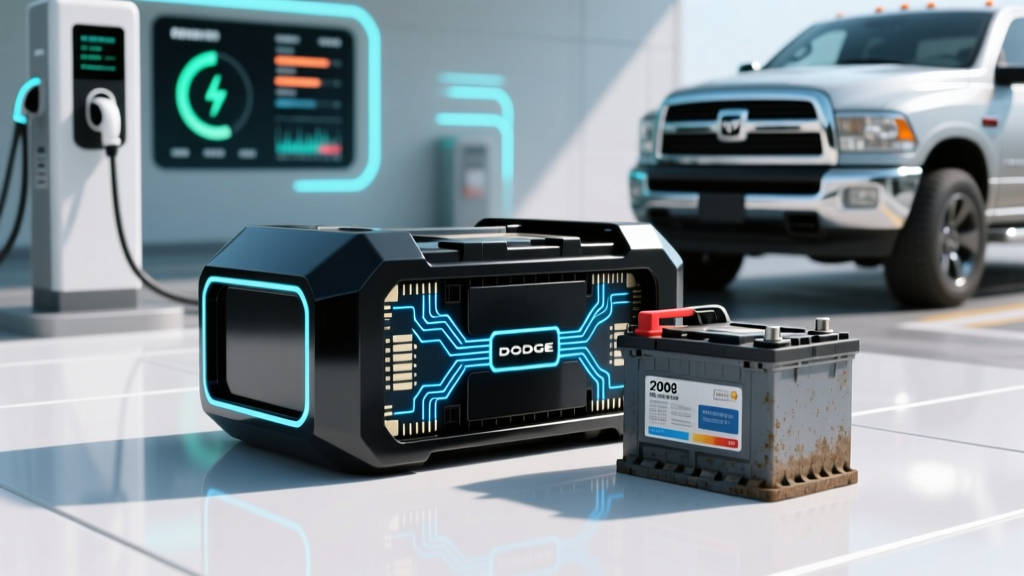
If you've ever replaced the 12-volt lead-acid battery in a 2008 Dodge Ram 1500 — a $150–$220 job at any auto parts store — you already understand the basic anxiety around vehicle batteries: they degrade, they die, and they cost money to fix. That same anxiety now follows electric vehicles, but the scale, chemistry, and economics are entirely different. A 08 Dodge Ram 1500 battery is a 730 CCA AGM or flooded-cell unit weighing about 45 pounds. A modern EV traction battery is a 60–130 kWh lithium-ion pack weighing 700–1,200 pounds and costing $5,000–$20,000 to replace.
This guide bridges that gap. We'll cover the chemistry, degradation curves, warranty protections, and real replacement costs for modern EV battery packs — using the familiar Ram 1500 battery swap as a baseline for comparison. By the end, you'll know exactly how long an EV battery lasts, what kills it prematurely, and why most packs outlive the vehicles they power.
LFP vs. NMC vs. NCA: Which Chemistry Powers Your EV?
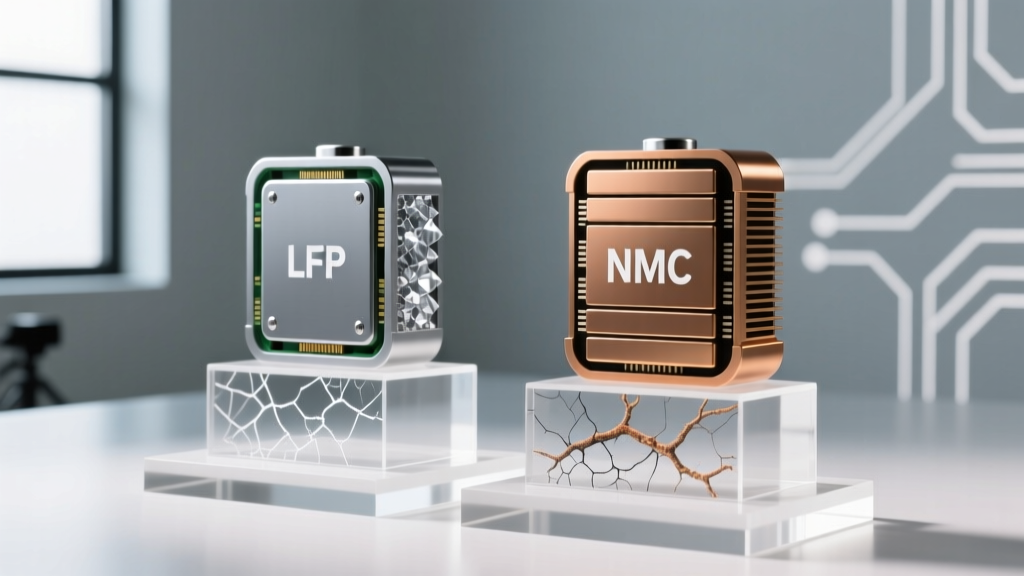
Not all lithium-ion batteries are the same. The two dominant chemistries in 2026 EVs are LFP (lithium iron phosphate) and NMC/NCA (nickel manganese cobalt / nickel cobalt aluminum). The chemistry determines energy density, cycle life, cold-weather behavior, and cost.
| Attribute | LFP (LiFePO₄) | NMC / NCA |
|---|---|---|
| Energy Density | ~160–180 Wh/kg (lower) | ~220–300 Wh/kg (higher) |
| Typical Cycle Life | 3,000–6,000 cycles | 1,000–2,500 cycles |
| Cold-Weather Performance | Moderate; slower charging below 32°F | Better low-temp charge acceptance |
| Cost per kWh (pack-level) | ~$85–$105/kWh | ~$115–$145/kWh |
| Cobalt Content | None | Yes (supply-chain/ethical concern) |
| Recommended Daily SoC | 100% is acceptable | 80% daily; 100% for trips only |
| Notable 2026 Applications | Tesla Model 3/Y RWD, Ford Mustang Mach-E Select, Rivian Standard | Hyundai Ioniq 5/6 Long Range, BMW iX, Chevrolet Silverado EV Extended Range |
Which Is Better?
Neither is universally superior. LFP wins on longevity and cost — if you plan to keep a vehicle 10+ years or 200,000+ miles, LFP's 3,000+ cycle life is a significant advantage. You can also charge to 100% daily without accelerated degradation, which simplifies ownership. NMC wins on range and cold-weather usability — its higher energy density means more miles in a lighter pack, and it accepts DC fast charging more readily in freezing temperatures. For a commuter who charges at home nightly and rarely road-trips, LFP is the pragmatic pick. For a driver in northern climates who needs maximum range and frequent fast-charging, NMC remains the better fit.
How Long Do EV Batteries Actually Last?
The short answer: far longer than most buyers expect. Data from fleet operators, manufacturer reports, and independent testing consistently shows that modern EV batteries retain 85–95% of original capacity after 100,000 miles, and most packs will outlast 200,000 miles before dropping below the 70% warranty threshold.
- Tesla Model 3/Y (NMC, 2020–2023): Average 8–12% capacity loss at 100,000 miles per Tesla's 2024 Impact Report. Fleet data from Tesloop showed some units at 90%+ SoH past 150,000 miles.
- Chevrolet Bolt EV/EUV (NMC, 2017–2023): Geotab fleet analysis found ~6% average degradation at 100,000 miles — among the best in class, attributed to conservative buffer management.
- Hyundai Ioniq 5 (NMC, 2022–2025): Early fleet data suggests 5–9% loss at 80,000 miles; thermal management system keeps cells in the 20–40°C optimal range.
- LFP-equipped Tesla Model 3 RWD (2022–2025): Limited long-term data, but accelerated cycle testing by academic researchers shows less than 10% loss after 2,000 equivalent full cycles — roughly 500,000+ miles of driving.
For comparison, the 12V battery in a 2008 Dodge Ram 1500 typically lasts 3–5 years regardless of mileage, because lead-acid chemistry degrades with time and heat even when the truck sits idle. Modern EV traction batteries degrade primarily with charge cycles, not calendar age — so a high-mileage EV may actually have a healthier battery than a low-mileage one that sat at 100% SoC for months.
What Does the EV Battery Warranty Actually Cover?
Federal law mandates a minimum 8-year / 100,000-mile warranty on EV battery packs for emissions-related compliance, and every major automaker meets or exceeds this. California-emissions states (which include 17+ states adopting CARB standards) often require 10 years / 150,000 miles.
| Manufacturer | Warranty Term | Capacity Retention Threshold | Notes |
|---|---|---|---|
| Tesla (Model 3/Y RWD — LFP) | 8 yr / 100,000 mi | 70% | Covers defects + capacity below threshold |
| Tesla (Model 3/Y LR — NMC) | 8 yr / 120,000 mi | 70% | Longer mileage for LR/AWD trims |
| Hyundai / Kia | 10 yr / 100,000 mi | 70% | Among the longest calendar coverage |
| GM (Chevrolet, GMC, Cadillac) | 8 yr / 100,000 mi | 60–70% (varies by model) | Ultium packs; Silverado EV is 8/100k |
| Ford | 8 yr / 100,000 mi | 70% | Mustang Mach-E, F-150 Lightning |
| Rivian | 8 yr / 175,000 mi | 70% | Higher mileage cap — aimed at truck/SUV buyers |
| BMW | 8 yr / 100,000 mi | 70% | iX, i4, i7 lineup |
The warranty triggers when your battery's State of Health (SoH) drops below the stated percentage — typically 70%. So a 75 kWh pack warranted at 70% means the manufacturer will repair or replace it if usable capacity falls below ~52.5 kWh within the warranty window. In practice, warranty claims remain rare: most batteries degrade linearly and slowly, staying well above threshold within the warranty period.
How Much Does an EV Battery Replacement Cost?
This is the question that dominates EV forums, and the honest answer depends heavily on the vehicle, pack size, and whether you need a full replacement or a module-level repair.
| Vehicle | Pack Size | Full Replacement Cost | Module Repair (if available) | Typical Need Timeline |
|---|---|---|---|---|
| Tesla Model 3 RWD (LFP) | ~60 kWh | $8,000–$12,000 | $2,000–$4,000 per module | 200,000+ mi (if ever) |
| Tesla Model Y LR (NMC) | ~75 kWh | $12,000–$16,000 | $3,000–$5,000 per module | 200,000+ mi |
| Hyundai Ioniq 5 (NMC) | ~77.4 kWh | $11,000–$15,000 | Module-level repair available | 180,000+ mi |
| Ford F-150 Lightning Ext. Range | ~131 kWh | $18,000–$25,000 | Limited module service | 200,000+ mi |
| Chevrolet Bolt EV (NMC) | ~65 kWh | $9,000–$14,000 | Post-recall packs improved | 150,000+ mi |
| Rivian R1T (Large Pack) | ~135 kWh | $20,000–$28,000 | Modular architecture allows section swap | 200,000+ mi |
Context matters. A full out-of-warranty replacement is expensive — but consider that most EV batteries never need one. The degradation data above shows that even at 150,000 miles, most packs retain 85%+ capacity. For comparison, a 2008 Dodge Ram 1500 might go through four or five 12V batteries ($150–$220 each) and a transmission rebuild ($2,500–$4,500) in the same 200,000-mile lifespan. The EV's single large battery expense is offset by eliminating oil changes, transmission fluid, spark plugs, timing belts, and exhaust system repairs.
What Kills an EV Battery Prematurely?
While EV batteries are engineered for longevity, certain habits accelerate degradation. Understanding these factors is the difference between a pack that lasts 250,000 miles and one that needs attention at 150,000.
- Avoid sustained 100% SoC (NMC/NCA only): Daily charging to 80% significantly reduces calendar degradation. LFP owners can charge to 100% without concern.
- Limit DC fast charging to road trips: Frequent 150–350 kW sessions generate heat that accelerates cell wear. For daily use, Level 2 home charging (7–11.5 kW) is ideal.
- Don't let the pack sit at 0% or 100% for weeks: If storing the vehicle, leave it at ~50% SoC. Both extremes stress cell chemistry.
- Precondition before fast charging in cold weather: Most EVs do this automatically when you navigate to a charger. A cold battery accepting high kW causes lithium plating — permanent capacity loss.
- Park in shade or a garage in extreme heat: Battery thermal management runs even when parked; prolonged 100°F+ ambient temps increase parasitic drain and long-term wear.
- Use scheduled charging: Set your EV to finish charging right before you leave, minimizing time spent at high SoC.
How to Check Your EV Battery's State of Health
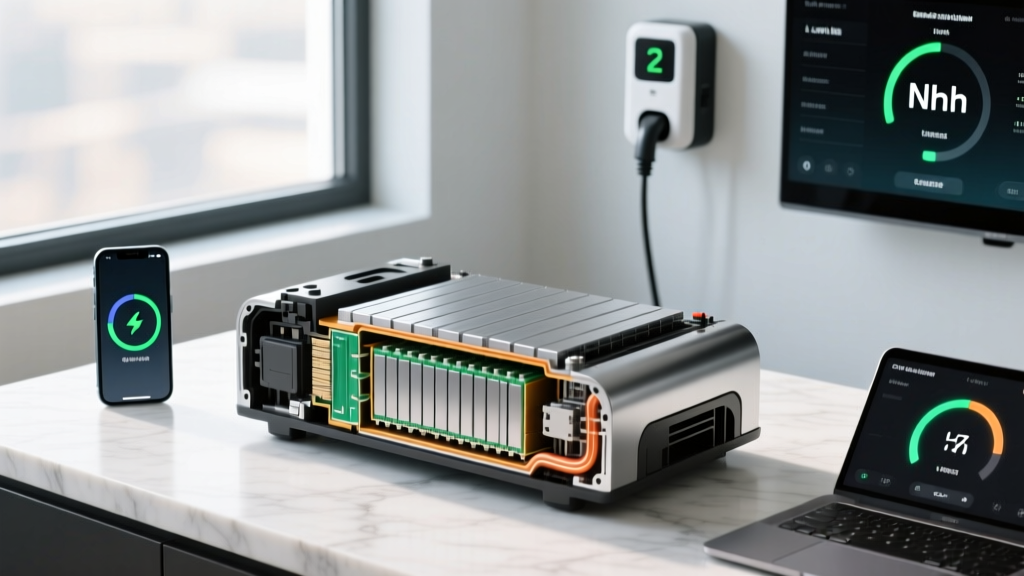
State of Health (SoH) is the percentage of original capacity your battery can still hold. A new 75 kWh pack at 92% SoH holds ~69 kWh usable. Here's how to monitor it:
- In-vehicle diagnostics: Tesla, Hyundai, BMW, and Rivian display SoH or estimated range-vs-new in the service menu. Tesla's "Battery Health" test (available in Service Mode) runs a ~24-hour analysis.
- OBD-II + third-party apps: Tools like Scan My Tesla, Leaf Spy (Nissan), and ABRP + OBD dongle can read cell-level voltage, pack temperature, and degradation estimates from the BMS (Battery Management System).
- Dealer inspection: Any authorized service center can pull a full BMS report showing individual module balance, total capacity, and cycle count.
- Range tracking: The simplest method — compare your current full-charge range to the EPA sticker. A 2022 Ioniq 5 that originally showed 303 miles at 100% but now shows 275 miles has roughly 91% SoH (adjusting for temperature and driving style).
Check SoH every 6–12 months, or before purchasing a used EV. A pre-purchase BMS report is the EV equivalent of a compression test on a used gas engine.
What's Next: Solid-State, Silicon Anodes, and Realistic Timelines
The battery landscape is shifting, but buyers should separate laboratory announcements from showroom reality.
- Silicon-dominant anodes: Companies like Sila Nanotechnologies and Group14 are already supplying silicon-carbon anode materials to manufacturers like Mercedes-Benz and Panasonic. These increase energy density by 10–20% and are appearing in limited 2025–2026 production vehicles. Expect broader adoption by 2028.
- Semi-solid-state batteries: NIO's 150 kWh semi-solid pack (available in China since 2024) demonstrates 360+ Wh/kg energy density. U.S. availability remains limited; the U.S. DOE continues funding solid-state R&D.
- True solid-state batteries: Toyota, Samsung SDI, and QuantumScape target 2027–2030 for limited production. These promise 400+ Wh/kg, 10-minute charging, and no flammable electrolyte — but manufacturing scale-up remains the unsolved challenge. Do not delay a 2026 purchase waiting for solid-state; it is at least 3–5 years from mainstream U.S. availability.
- LFP improvements: CATL's second-generation LFP cells (2025–2026) push energy density to ~190 Wh/kg, narrowing the gap with NMC while retaining cost and cycle-life advantages.
These are forward-looking developments. Current 2026 EVs use proven, well-characterized lithium-ion chemistry with extensive real-world track records.
The 2008 Ram 1500 vs. 2026 EV: A Battery Ownership Comparison
Bringing it full circle — here's what battery ownership actually looks like over 15 years and 200,000 miles:
| Cost Item | 2008 Dodge Ram 1500 (Gas) | 2026 EV (e.g., Model Y LR) |
|---|---|---|
| 12V Battery Replacements | 3–5 units × $150–$220 = $450–$1,100 | 1–2 units × $150–$300 = $150–$600 |
| Traction Battery Replacement | N/A | Likely $0 (most packs last 200k+ mi); $12k–$16k worst case |
| Engine/Transmission (comparable) | Timing chain, water pump, trans rebuild: $3,000–$6,000 | N/A — no engine, no multi-speed transmission |
| Estimated Total Drivetrain/Battery Cost | $3,450–$7,100 | $150–$16,600 (wide range; most owners at low end) |
The EV's worst-case scenario is expensive. But the likely scenario — zero traction battery replacement, one 12V swap — costs under $500 over the vehicle's life. The Ram's powertrain maintenance is almost guaranteed to exceed $3,000 in the same period.
Frequently Asked Questions
How long do EV batteries last in years and miles?
Most modern EV batteries (2020–2026 production) are designed for 200,000+ miles and 15–20 years of service before dropping below 70% capacity. Real-world fleet data from Tesla, Geotab, and independent analysts shows average degradation of 8–12% at 100,000 miles, with the rate slowing significantly after the initial break-in period. Calendar aging matters less than cycle count — a heavily driven EV may outlast a garage-kept one if the latter sits at high SoC.
How much does an EV battery cost to replace?
Full replacement costs range from ~$8,000 for a 60 kWh LFP pack (Tesla Model 3 RWD) to $25,000+ for a 131 kWh NMC pack (Ford F-150 Lightning Extended Range). Module-level repairs, where available, cost $2,000–$5,000. However, the vast majority of EV owners never replace their traction battery — degradation data shows most packs retain 80%+ capacity at 150,000 miles, well above the 70% warranty threshold.
What does the EV battery warranty cover?
Standard warranties cover 8 years / 100,000 miles (10 years / 150,000 miles in CARB states) against manufacturing defects and capacity loss below a stated threshold — typically 70% of original capacity. If your battery drops below that threshold within the warranty period, the manufacturer will repair or replace it at no cost. Warranties do not cover damage from accidents, flooding, or unauthorized modifications.
How do I check and maximize my EV battery health?
Check SoH through your vehicle's service menu, a BMS readout via OBD-II dongle, or a dealer diagnostic report. To maximize longevity: charge NMC/NCA packs to 80% daily (100% for LFP), use Level 2 home charging for routine needs, precondition before DC fast charging in cold weather, avoid prolonged storage at 0% or 100% SoC, and park in temperature-moderate environments when possible.
LFP vs NMC — which battery chemistry is better for me?
Choose LFP if you prioritize maximum cycle life (3,000–6,000 cycles), lower cost, cobalt-free sourcing, and the convenience of daily 100% charging. Choose NMC if you need maximum range per charge, better cold-weather fast-charging performance, and don't mind limiting daily charge to 80%. Neither is objectively superior — the right choice depends on your climate, driving pattern, and ownership timeline.
Is the 12V battery in an EV the same as my 08 Dodge Ram 1500 battery?
Functionally, yes — it's a small 12V lead-acid or lithium battery that powers accessories, computers, and the contactor that connects the high-voltage pack. Many EVs use a Group 47 or H5 size similar to what fits a 2008 Ram 1500. However, the EV's 12V battery is charged by a DC-DC converter from the traction pack, not an alternator. If the 12V dies, the EV won't start even if the main battery is full — a quirk that surprises former gas-car owners.
Sources: U.S. EPA Fuel Economy, IRS §30D Clean Vehicle Credit, manufacturer warranty documentation (Tesla, Hyundai, Ford, GM, Rivian). Battery cost estimates reflect 2025–2026 service pricing and may vary by region and provider.