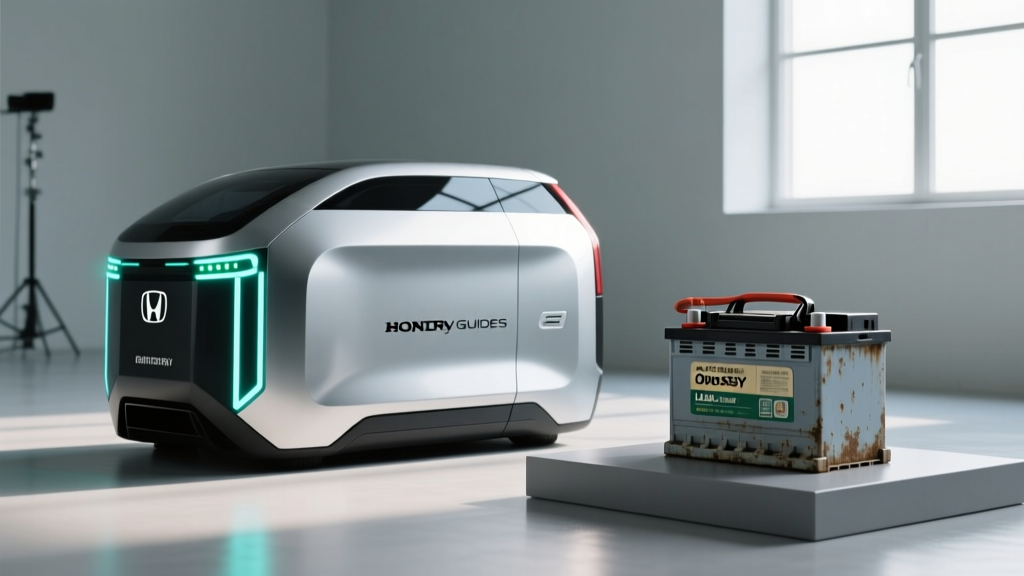
If you've landed here searching for an 05 Honda Odyssey battery, you're likely dealing with a familiar scenario: a minivan that won't crank on a cold morning, or a dashboard lighting up with warning indicators. The 2005 Honda Odyssey uses a conventional Group 24F or Group 35 12-volt lead-acid battery — a $130–$220 part you swap at any auto store in ten minutes.
But if you're researching that aging Odyssey battery because you're considering stepping into a modern electric vehicle, the word "battery" takes on an entirely different meaning. Today's EV traction batteries are 400–800 volt, 60–120+ kWh energy-dense systems that cost between $5,000 and $20,000+ to replace. Understanding how they work, how long they last, and what they cost is the single most important piece of EV ownership homework you can do.
This guide covers everything a current gas-car owner or prospective EV buyer needs to know about EV battery technology in 2026 — while clearing up the critical difference between the 12V battery in your Odyssey and the high-voltage traction pack that powers a modern electric vehicle.
The 05 Honda Odyssey Battery vs. an EV Traction Battery: Two Completely Different Things
Before diving into EV battery chemistry, it's essential to resolve the most common confusion in automotive electrification: the difference between a 12-volt auxiliary battery and a high-voltage traction battery.
| Attribute | 05 Honda Odyssey 12V Battery | Modern EV Traction Battery |
|---|---|---|
| Voltage | 12V | 400V–800V (some 900V+) |
| Capacity | ~0.7–1.0 kWh | 60–120+ kWh usable |
| Chemistry | Lead-acid (flooded or AGM) | LFP or NMC/NCA lithium-ion |
| Purpose | Starter motor, lights, accessories | Propulsion — moves the vehicle |
| Replacement Cost | $130–$220 | $5,000–$20,000+ |
| Typical Lifespan | 3–5 years | 15–20+ years / 150,000–300,000+ miles |
| Warranty | 1–3 years (retail) | 8 years / 100,000 miles minimum (federal mandate) |
Every modern EV also has a 12V auxiliary battery (or increasingly a 12V lithium-ion module) that powers the computers, lights, and door locks — just like your Odyssey. But the traction battery is what actually moves the car, stores 70–130 times more energy, and is the component buyers worry about.
EV Battery Chemistry in 2026: LFP vs. NMC Explained
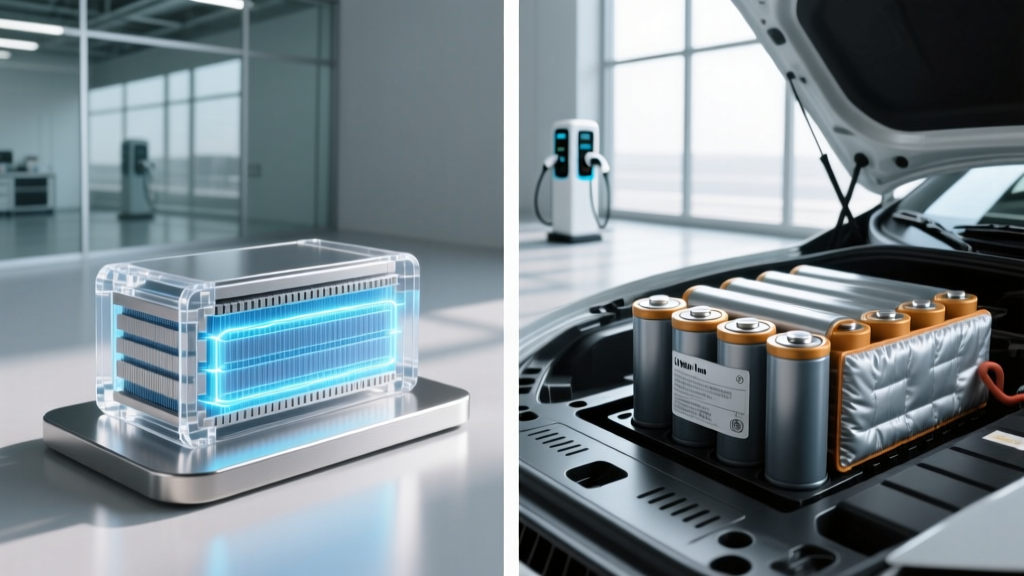
The two dominant lithium-ion chemistries in 2026 EVs are LFP (lithium iron phosphate) and NMC/NCA (nickel manganese cobalt / nickel cobalt aluminum). Your choice of chemistry affects range, longevity, charging behavior, and cold-weather performance.
| Factor | LFP (Lithium Iron Phosphate) | NMC/NCA (Nickel-based) |
|---|---|---|
| Energy Density | Lower (~160–180 Wh/kg cell-level) | Higher (~220–300 Wh/kg cell-level) |
| Cycle Life | 3,000–5,000+ cycles to 80% SoH | 1,000–2,000 cycles to 80% SoH |
| Cold Performance | Weaker — greater range loss below 32°F | Better — less range loss in freezing temps |
| Charging to 100% | Recommended regularly (helps BMS calibration) | 80% daily recommended; 100% for trips only |
| Cost | ~$80–$100/kWh (pack-level, 2026) | ~$110–$140/kWh (pack-level, 2026) |
| Cobalt Content | None (cobalt-free) | Contains cobalt and/or nickel |
| Common In (2026) | Tesla Model 3/Y RWD, Ford Mustang Mach-E Select, BYD models | Hyundai Ioniq 5/6 Long Range, Kia EV6/9, Rivian, Lucid, most AWD/Performance trims |
What this means practically: LFP batteries sacrifice some energy density (meaning slightly less range in the same physical package) but gain massively in cycle life and cost. An LFP pack can comfortably handle daily 100% charging — which is why Tesla recommends it for their Standard Range models. NMC packs deliver more range per pound but prefer staying between 20–80% state of charge for daily use.
Neither chemistry is universally "better." If you prioritize maximum range and live in a cold climate, NMC is typically the stronger pick. If you charge at home every night, want the longest possible pack lifespan, and don't need 350+ miles of range, LFP is increasingly the smart money.
How Long Do EV Batteries Actually Last? Real Degradation Data
This is the question that keeps prospective EV buyers up at night — and it's where the data tells a far more reassuring story than internet forums suggest.
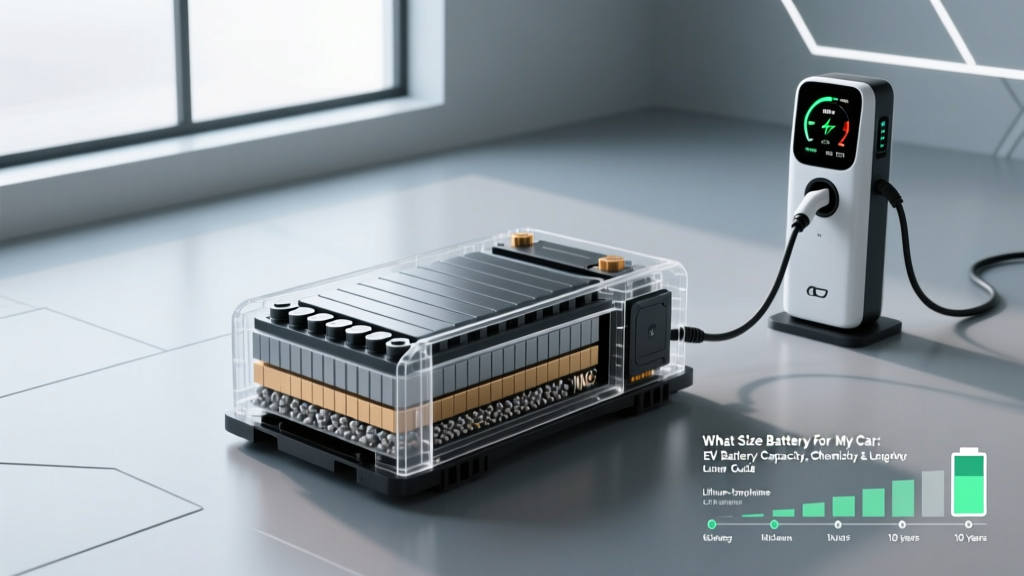
EV battery degradation is not linear. Most packs experience a steeper drop in the first 1–2 years (roughly 2–5% loss), then settle into a very gradual decline of approximately 1–2% per year thereafter. Based on aggregated fleet data from sources like Geotab's long-term EV battery health study and owner-reported datasets, here's what typical degradation looks like:
Typical EV Battery Degradation Curve (NMC, liquid-cooled, average use)
- Year 1 / 15,000 mi: ~2–4% capacity loss (96–98% SoH)
- Year 3 / 45,000 mi: ~5–8% loss (92–95% SoH)
- Year 5 / 75,000 mi: ~8–12% loss (88–92% SoH)
- Year 8 / 120,000 mi: ~10–15% loss (85–90% SoH)
- Year 10 / 150,000 mi: ~12–18% loss (82–88% SoH)
- Year 15 / 225,000 mi: ~18–25% loss (75–82% SoH)
Note: LFP packs typically show slower degradation in years 3–10, often retaining 90%+ SoH at 150,000 miles. Liquid-cooled packs consistently outperform passively air-cooled packs.
For context, a 2026 Hyundai Ioniq 5 Long Range with a 77.4 kWh NMC battery and an EPA range of 305 miles would, at 10 years and 150,000 miles with ~15% degradation, still offer approximately 260 miles of EPA-equivalent range. That's more usable range than many brand-new EVs sold just a few years ago.
The vast majority of modern liquid-cooled EV batteries will outlast the vehicle's body, suspension, and interior. According to data from Recurrent Auto, fewer than 2% of EV batteries in their study fleet required replacement outside of warranty — and most of those were due to manufacturing defects caught early, not end-of-life wear.
Battery Warranty Terms: What's Covered and What Isn't
Federal law in the United States mandates that EV batteries carry a minimum warranty of 8 years / 100,000 miles (whichever comes first). In California Air Resources Board (CARB) states — which include California, Colorado, Connecticut, Maine, Maryland, Massachusetts, New Jersey, New York, Oregon, Rhode Island, Vermont, Virginia, and Washington — the requirement extends to 10 years / 150,000 miles for PZEV/TZEV-classified vehicles.
| Manufacturer | Battery Warranty | Capacity Retention Threshold |
|---|---|---|
| Tesla (Model 3/Y RWD — LFP) | 8 yr / 120,000 mi | 70% minimum SoH |
| Tesla (Model 3/Y LR, S, X — NMC) | 8 yr / 120,000–150,000 mi | 70% minimum SoH |
| Hyundai / Kia (Ioniq 5, EV6, EV9) | 10 yr / 100,000 mi | 70% minimum SoH |
| Ford (Mach-E, F-150 Lightning) | 8 yr / 100,000 mi | 70% minimum SoH |
| GM (Ultium-based: Blazer EV, Silverado EV, Equinox EV) | 8 yr / 100,000 mi | 70% minimum SoH (some trims 60%) |
| Rivian (R1T, R1S) | 8 yr / 175,000 mi | 70% minimum SoH |
| BMW (i4, i5, iX) | 8 yr / 100,000 mi | 70% minimum SoH |
| Volkswagen (ID.4) | 8 yr / 100,000 mi | 70% minimum SoH |
What the warranty covers: If your battery's State of Health drops below the stated threshold (typically 70% of original capacity) within the warranty period, the manufacturer will repair or replace the battery at no cost. Some manufacturers replace individual modules rather than the entire pack.
What it doesn't cover: Physical damage (collision, flooding, road debris puncture), unauthorized modifications, or damage from using non-approved charging equipment. Normal gradual degradation above the threshold is not a warranty claim — a battery at 72% SoH at 9 years and 95,000 miles is functioning within spec.
EV Battery Replacement Cost: What to Expect and When
Here's the number that generates the most anxiety — and the most misinformation. Let's ground it in actual 2026 figures.
| Vehicle | Battery Size | Chemistry | Estimated Replacement Cost |
|---|---|---|---|
| Tesla Model 3 RWD | ~60 kWh | LFP | $7,000–$10,000 |
| Tesla Model Y Long Range | ~82 kWh | NMC | $12,000–$16,000 |
| Hyundai Ioniq 5 Long Range | 77.4 kWh | NMC | $10,000–$15,000 |
| Ford Mustang Mach-E Extended Range | 91 kWh | NMC | $14,000–$18,000 |
| Ford F-150 Lightning Extended Range | 131 kWh | NMC | $18,000–$25,000 |
| Chevrolet Silverado EV | ~200 kWh (max) | NMC (Ultium) | $25,000–$35,000 |
| BMW iX xDrive50 | 111.5 kWh | NMC | $20,000–$28,000 |
| Rivian R1T (Large Pack) | ~135 kWh | NMC | $18,000–$24,000 |
When is replacement typically needed? For the vast majority of owners, it isn't — at least not within the vehicle's practical lifespan. Based on current degradation data, a liquid-cooled NMC pack will retain 75–85% capacity at 200,000 miles, and LFP packs often do better. Most EVs will be retired due to body damage, suspension wear, or obsolescence before the battery reaches end-of-life.
For the small percentage of owners who do need out-of-warranty replacement, costs are declining. Pack-level prices have fallen from approximately $200/kWh in 2020 to roughly $90–$130/kWh in 2026, according to BloombergNEF battery price surveys. Additionally, a growing network of independent EV repair shops now performs module-level repairs — replacing only the degraded cells rather than the full pack — for 30–50% less than a full replacement.
Factors That Affect EV Battery Life: What Hurts and What Helps
Not all miles are equal when it comes to battery wear. Here are the primary factors that influence how quickly your EV battery degrades, ranked roughly by impact:
Battery Care Best Practices for Maximum Longevity
- ✅ DO: Keep daily SoC between 20–80% (NMC) — Charging to 100% and leaving it there accelerates degradation in NMC packs. LFP packs are an exception: periodic 100% charges help the BMS calibrate.
- ✅ DO: Use Level 2 home charging as your primary method — Slow, steady AC charging generates far less heat than DC fast charging and is gentler on cells.
- ✅ DO: Precondition your battery before fast charging — Most 2026 EVs do this automatically when you navigate to a charger. A warm battery charges faster and with less stress.
- ✅ DO: Park in shade or a garage during extreme heat — Sustained high temperatures (above 95°F battery temp) are the #1 enemy of lithium-ion longevity.
- ⚠️ LIMIT: DC fast charging frequency — Occasional road-trip fast charging is fine. Daily reliance on 150–350 kW DCFC adds measurable wear over years. One Recurrent Auto analysis found that vehicles fast-charging more than 90% of the time showed slightly higher degradation (~3% more at 100k miles) vs. those primarily using Level 2.
- ⚠️ LIMIT: Storing at 100% or 0% SoC for extended periods — If leaving your EV for a week or more, aim for ~50% SoC.
- ❌ AVOID: Letting the battery sit at 0% in hot weather — A fully depleted battery in high heat can suffer accelerated cell damage.
- ❌ AVOID: Aftermarket "battery optimization" devices — These can interfere with the vehicle's BMS and may void your warranty.
How to Monitor Your EV Battery Health (State of Health)
Unlike your 05 Honda Odyssey, where battery health meant checking voltage with a multimeter, modern EVs provide sophisticated State of Health (SoH) monitoring — though access varies by brand.
Built-in methods:
- Tesla: Navigate to Service → Battery Health in the vehicle's touchscreen. Displays estimated capacity as a percentage of original.
- Hyundai/Kia: The infotainment system's EV diagnostics page shows battery health percentage. The Bluelink/UVO connected app also provides periodic SoH reports.
- Ford: The FordPass app includes a battery health indicator. The SYNC screen also shows estimated range vs. original, which serves as a proxy.
- GM (Ultium): The myChevrolet/myCadillac app provides battery health status and energy capacity metrics.
- BMW: The iDrive system includes a battery health report under Vehicle Settings → Battery.
OBD-II diagnostic tools: Third-party apps like LeafSpy (originally for Nissan LEAF but now supporting many models), Scan My Tesla, and ABRP (A Better Route Planner) with OBD dongles can read detailed cell-level data, including individual cell voltage variance, total energy throughput, and precise SoH percentage. These tools typically cost $30–$80 for the hardware and provide dealer-level detail.
What to watch for: If your SoH drops more than ~3% per year consistently, or if you notice sudden range loss (more than 10% in a short period), it's worth scheduling a dealer diagnostic — this could indicate a module imbalance or defect covered under warranty.
Emerging Battery Technology: What's Next (and When)
While today's lithium-ion batteries are mature and reliable, several next-generation technologies are in development. It's important to be realistic about timelines — these are not available in production vehicles as of 2026.
Solid-state batteries: These replace the liquid electrolyte with a solid material, promising higher energy density (potentially 400+ Wh/kg), faster charging, and improved safety. Toyota has announced a solid-state battery targeting 2027–2028 production vehicles, and Samsung SDI has begun sample production. However, manufacturing scale-up remains the primary challenge. Realistic widespread availability is 2029–2032.
Silicon-dominant anodes: Companies like Sila Nanotechnologies and Group14 are replacing graphite anodes with silicon-based materials, boosting energy density by 20–40%. Mercedes-Benz's next-generation EQ models and some 2027+ vehicles are expected to incorporate partial silicon anodes. This is closer to production reality than full solid-state.
Sodium-ion batteries: CATL and BYD have begun producing sodium-ion packs for lower-cost, shorter-range EVs (primarily in China). These use no lithium, cobalt, or nickel, making them extremely cheap (~$50–$60/kWh) but with lower energy density. They may appear in US-market budget EVs by 2028–2029.
For buyers shopping today, current LFP and NMC batteries represent mature, well-understood technology with proven track records over hundreds of billions of real-world miles. Waiting for next-gen tech is a valid personal choice, but today's batteries are not a compromise — they're a solved engineering problem.
Frequently Asked Questions
How long do EV batteries last in years and miles?
Based on aggregated fleet data, modern liquid-cooled EV batteries (both LFP and NMC) typically retain 80–90% of their original capacity at 150,000 miles and 10 years. Many will exceed 200,000 miles before dropping below 75% State of Health. In practical terms, most EV batteries will outlast the rest of the vehicle. The federal government mandates a minimum 8-year / 100,000-mile battery warranty, and CARB-state warranties extend to 10 years / 150,000 miles.
How much does an EV battery cost to replace in 2026?
Out-of-warranty EV battery replacement costs range from approximately $7,000 for a smaller LFP pack (like a Tesla Model 3 RWD) to $25,000–$35,000 for the largest packs (like the Chevrolet Silverado EV's 200 kWh Ultium). Most mainstream EVs (70–90 kWh packs) fall in the $10,000–$18,000 range including labor. However, replacement is rarely needed — fewer than 2% of EV batteries require replacement outside of warranty claims for defects.
What does the EV battery warranty actually cover?
EV battery warranties cover capacity loss below a specified threshold (typically 70% of original capacity) within the warranty period (8 years/100,000 miles minimum, 10 years/150,000 miles in CARB states). If your battery's State of Health falls below this threshold during the warranty term, the manufacturer will repair or replace it at no cost. Warranties do not cover physical damage from accidents, flooding, road debris, or unauthorized modifications.
How do I check and maximize my EV battery health?
Check your SoH through your vehicle's built-in diagnostics screen, the manufacturer's mobile app, or an OBD-II diagnostic tool like LeafSpy or Scan My Tesla. To maximize longevity: keep NMC batteries between 20–80% SoC for daily use (LFP can charge to 100%), rely primarily on Level 2 home charging rather than daily DC fast charging, precondition the battery before fast charging, avoid parking in extreme heat for extended periods, and don't store the vehicle at 0% or 100% SoC for long durations.
LFP vs. NMC — which battery chemistry is better and why?
Neither is universally superior — it depends on your priorities. LFP wins on cycle life (3,000–5,000+ cycles vs. 1,000–2,000 for NMC), cost (~$80–$100/kWh vs. ~$110–$140/kWh), and convenience (you can charge to 100% daily). NMC wins on energy density (more range in a lighter, smaller pack), cold-weather performance (less range loss below freezing), and is the standard for long-range and AWD/performance trims. Choose LFP if you want maximum longevity and charge at home nightly. Choose NMC if you need 300+ miles of range or regularly drive in freezing conditions.
Does DC fast charging damage my EV battery?
Occasional DC fast charging — such as on road trips — has minimal impact on battery health. However, exclusive reliance on DC fast charging (150–350 kW) does add measurable wear over time. A Recurrent Auto study found roughly 3% additional degradation at 100,000 miles for vehicles that fast-charged more than 90% of the time versus those primarily using Level 2. The key factor is heat: fast charging generates significant thermal load. Modern EVs with active liquid cooling manage this well, but minimizing unnecessary fast charging is still good practice.
Can I still drive my EV if the battery degrades to 70% capacity?
Absolutely. A battery at 70% State of Health is still fully functional — it simply holds 70% of its original energy. A vehicle that originally offered 300 miles of EPA range would still provide approximately 210 miles, which exceeds most daily driving needs (the average American drives ~37 miles per day according to FHWA data). Degradation does not mean the battery "fails" — it simply means reduced range, much like a phone battery that doesn't last as long after a few years.
From Your Odyssey to an EV: The Bottom Line on Battery Longevity
The 12V battery in your 2005 Honda Odyssey was designed to last 3–5 years and cost $150 to replace. It was a consumable, like brake pads or wiper blades. EV traction batteries are fundamentally different: they're engineered to last 15–20+ years, are covered by 8–10 year warranties, and in most cases will still be providing useful range long after the rest of the vehicle has retired.
The data is clear and consistent across millions of vehicles on the road: modern EV batteries are not the ticking time bomb that early internet skepticism suggested. With basic care — primarily Level 2 home charging, moderate SoC habits, and avoiding extreme heat exposure — your EV's battery will very likely be the most durable component in the vehicle.
If you're transitioning from a gas vehicle like the Odyssey to your first EV, the battery should be one of your least worries. Focus instead on home charging setup, finding the right model for your range needs, and understanding the current federal EV tax credit rules under IRS §30D — which, in 2026, offers up to $7,500 for qualifying new EVs (subject to MSRP caps, buyer income limits, and battery sourcing requirements, with point-of-sale transfer available at participating dealers).