From a 2003 Jeep Liberty Battery to EV Traction Packs: What Changed
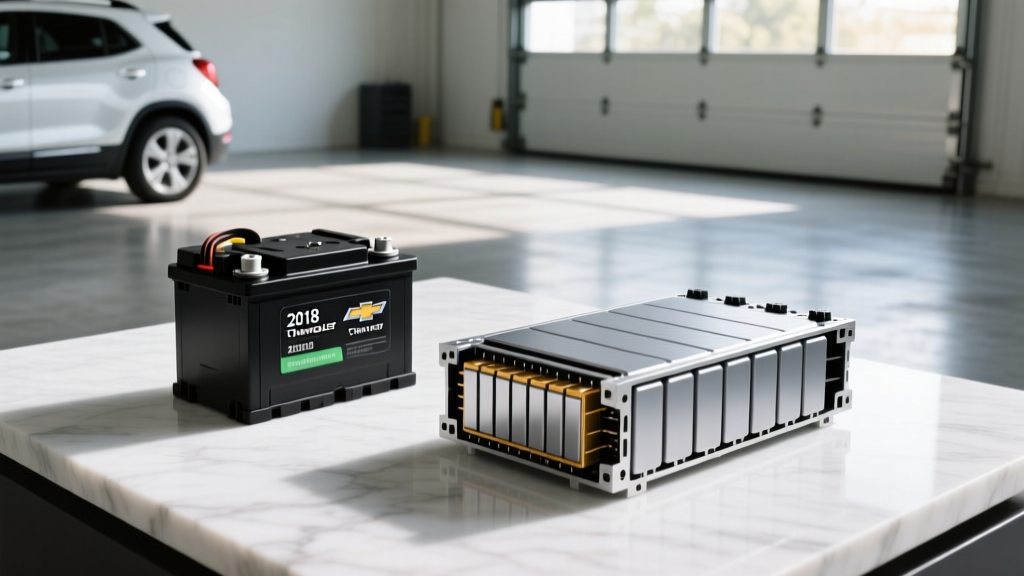
If you've been searching for an 03 Jeep Liberty battery, you're likely dealing with a familiar scenario: a dead 12-volt lead-acid unit under the hood of a vehicle that's now over two decades old. A replacement Group 34 or Group 75 battery for a 2003 Jeep Liberty typically costs between $120 and $200 at an auto parts store, weighs around 40–50 pounds, and is rated for 550–700 cold cranking amps (CCA). It's a consumable item — one you'll swap every 3–5 years without much thought.
But if that search has you curious about how batteries work in modern electrified vehicles — whether you're considering a plug-in hybrid (PHEV), a full battery-electric vehicle (BEV), or just want to understand what you'd be signing up for — the battery conversation changes dramatically. An EV's high-voltage traction battery is an entirely different class of technology: it stores 50–130+ kilowatt-hours (kWh) of energy, weighs 700–1,500 pounds, costs $5,000–$20,000+ to replace, and is engineered to last the lifetime of the vehicle.
This guide bridges that gap. We'll walk through exactly how modern EV batteries work, what chemistry options exist in 2026, how long they actually last, what warranties cover, and what replacement really costs — all the data points you need before making an electrified purchase.
LFP vs. NMC/NCA: The Chemistry Decision That Matters Most
The single most important spec to understand when evaluating an EV battery is its cell chemistry. In 2026, two dominant chemistries power nearly every EV sold in the U.S. market, and they involve fundamentally different trade-offs.
NMC (Nickel Manganese Cobalt) and the closely related NCA (Nickel Cobalt Aluminum) chemistries offer higher energy density — meaning more range packed into a lighter, smaller battery pack. This is why NMC/NCA dominates in long-range vehicles like the Tesla Model 3 Long Range (75 kWh usable, ~341 miles EPA), the Ford F-150 Lightning Extended Range (131 kWh usable, ~320 miles EPA), and the Hyundai Ioniq 5 Long Range (77.4 kWh, ~305 miles EPA).
LFP (Lithium Iron Phosphate) batteries sacrifice some energy density for dramatically longer cycle life, greater thermal stability (much lower risk of thermal runaway), lower cost, and the ability to routinely charge to 100% without accelerating degradation. Tesla uses LFP in the Model 3 and Model Y Standard Range trims. Ford offers LFP in the Mustang Mach-E Select. BYD builds its entire global lineup around LFP (branded as "Blade Battery").
| Attribute | LFP (Lithium Iron Phosphate) | NMC / NCA |
|---|---|---|
| Energy Density | ~160–180 Wh/kg (cell-level) | ~220–300 Wh/kg (cell-level) |
| Typical Cycle Life | 3,000–6,000+ cycles to 80% SoH | 1,000–2,500 cycles to 80% SoH |
| 100% Charge Tolerance | Excellent — routine 100% charging recommended for BMS calibration | Poor — daily charging to 80% recommended; 100% only for trips |
| Cold-Weather Performance | Weaker — more range loss below freezing, slower cold charging | Better — retains more range and charges faster in cold |
| Cost per kWh (2026) | ~$80–$100/kWh (cell-level) | ~$110–$140/kWh (cell-level) |
| Thermal Stability | Very high — resistant to thermal runaway | Moderate — requires more active thermal management |
| Common In 2026 | Tesla Model 3/Y RWD, Ford Mach-E Select, BYD models, Rivian Standard | Tesla LR/Performance, Hyundai/Kia E-GMP, GM Ultium, Ford Extended Range |
The practical takeaway: if you charge at home daily and mostly drive under 250 miles a day, LFP is the superior longevity play. If you need maximum range in a single charge or frequently drive in sub-freezing climates, NMC/NCA's energy density and cold performance justify the trade-offs.
How Long Do EV Batteries Actually Last? Real Degradation Data
The fear that EV batteries will fail like the 12-volt battery in your 03 Jeep Liberty is one of the most persistent myths in the EV space. The data tells a very different story.
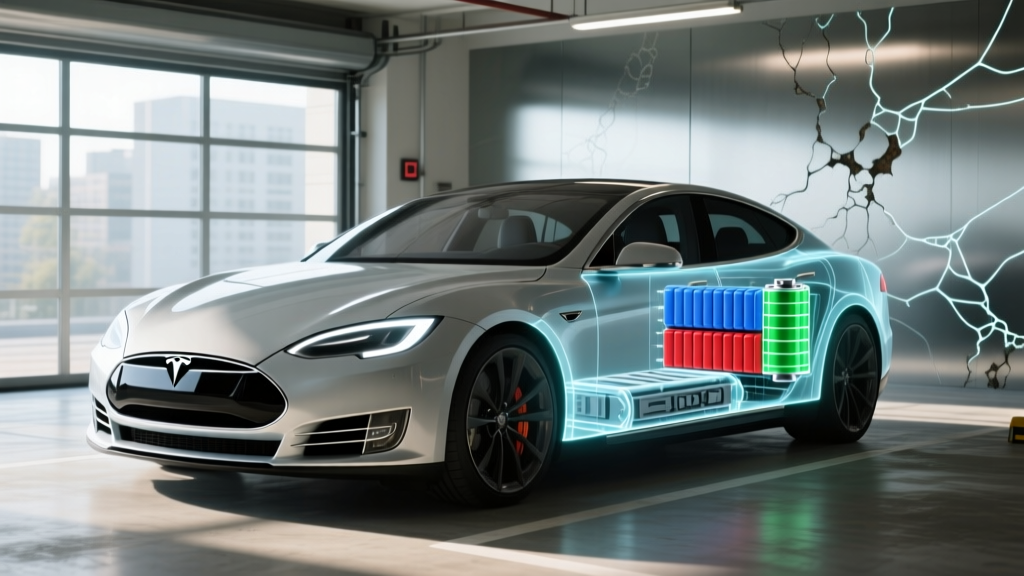
Modern liquid-cooled EV battery packs are engineered to retain 70–80% of their original capacity over 150,000–200,000 miles. Most will outlast the vehicle's useful life. Here's what the real-world data shows:
EV Battery Degradation Data Points:
- Tesla fleet data (2025 Impact Report): Model S/X batteries retain ~88% capacity at 150,000 miles; Model 3/Y (NMC) retain ~90% at 100,000 miles.
- Recurrent Auto (2025 fleet study of 15,000+ EVs): Average degradation across all brands was 5–8% after 4 years / 60,000 miles. LFP packs showed 2–4% loss over the same period.
- Nissan LEAF (passive-cooled, earlier generations): 2013–2017 models showed 15–25% degradation by 100,000 miles — a cautionary tale for why active thermal management matters.
- Chevrolet Bolt EV/EUV (NMC, liquid-cooled): Fleet data shows ~6–10% loss at 80,000 miles, with most packs retaining 90%+ at 60,000 miles.
Sources: Recurrent Auto, Tesla Impact Report
The degradation curve is not linear. Most EV batteries lose 2–5% capacity in the first year or two (initial "break-in" degradation), then the rate flattens to roughly 0.5–1.5% per year for the remainder of the pack's life. This means a 300-mile EPA-rated EV might deliver 285 miles of range after year two, and 270 miles after year eight — still entirely usable.
What Does the EV Battery Warranty Actually Cover?
Federal law in the United States mandates that EV battery warranties cover a minimum of 8 years / 100,000 miles (in California Air Resources Board — CARB — states, the requirement extends to 10 years / 150,000 miles for certain emissions-related components, though battery warranty terms vary by manufacturer).
Here's how major manufacturers structure their battery warranties in 2026:
| Manufacturer | Warranty Term | Capacity Threshold | Notes |
|---|---|---|---|
| Tesla (Model 3/Y RWD — LFP) | 8 years / 120,000 miles | 70% retention | LFP packs expected to exceed threshold easily |
| Tesla (Model 3/Y LR, Model S/X) | 8 years / 120,000 miles (LR) or 150,000 miles (S/X) | 70% retention | NMC chemistry; covers defects + excessive degradation |
| Hyundai / Kia (E-GMP platform) | 10 years / 100,000 miles | 70% retention | Among the longest terms in the industry |
| GM (Ultium-based: Equinox EV, Blazer EV, Silverado EV) | 8 years / 100,000 miles | 70% retention (60% for commercial) | Covers battery, drive motor, power electronics |
| Ford (Mach-E, F-150 Lightning) | 8 years / 100,000 miles | 70% retention | Covers high-voltage battery components |
| Rivian (R1T, R1S) | 8 years / 175,000 miles | 70% retention | Higher mileage cap reflects adventure/truck use case |
| BMW (i4, iX, i7) | 8 years / 100,000 miles | 70% retention | BMW also offers optional extended battery protection plans |
The key detail: these warranties cover capacity degradation below the stated threshold, not just total failure. If your 300-mile EV drops below 210 miles of range (70% of 300) within the warranty period, the manufacturer is obligated to repair or replace the battery to bring it above that threshold. In practice, warranty claims for degradation remain rare — most liquid-cooled packs hold well above 80% at the 100,000-mile mark.
EV Battery Replacement Cost: What It Really Takes
Here's the question that causes the most anxiety: if the battery does eventually need replacement, what does it cost? The honest answer depends heavily on the vehicle, battery size, and chemistry — but context matters enormously.
| Vehicle | Battery Size (kWh usable) | Chemistry | Replacement Cost (parts + labor) | Typical Replacement Timeline |
|---|---|---|---|---|
| Tesla Model 3 RWD | 57.5 kWh | LFP | $8,000–$12,000 | 200,000+ miles / rarely needed |
| Tesla Model Y Long Range | 75 kWh | NMC | $12,000–$16,000 | 180,000+ miles / rarely needed |
| Hyundai Ioniq 5 Long Range | 77.4 kWh | NMC | $13,000–$18,000 | 180,000+ miles |
| Ford F-150 Lightning Extended Range | 131 kWh | NMC | $20,000–$30,000 | 150,000+ miles |
| Chevrolet Equinox EV | 85 kWh | NMC (Ultium) | $14,000–$19,000 | 180,000+ miles |
| Nissan LEAF (40 kWh pack) | 40 kWh | NMC (passive cooling) | $6,500–$9,000 | 100,000–150,000 miles (higher risk due to no liquid cooling) |
| BMW iX xDrive50 | 105.2 kWh (net) | NMC | $18,000–$25,000 | 180,000+ miles |
For comparison, that 03 Jeep Liberty battery you were searching for? About $150 at AutoZone. A transmission replacement on that same Liberty? $3,000–$5,000. The point is this: EV battery replacement costs are significant, but the vast majority of modern liquid-cooled packs will never need replacement during original ownership. The internal combustion engine in that Liberty will likely need a timing chain, water pump, or head gasket job before an equivalent EV needs a new battery.
When replacements are needed — typically on early-generation EVs with passive cooling (pre-2018 Nissan LEAF, early Fiat 500e) or vehicles involved in collisions — the emerging used and refurbished battery market is bringing costs down. Refurbished Model S packs sell for $5,000–$8,000, and module-level repairs (replacing individual bad cells rather than the full pack) are becoming more common at independent EV shops.
Factors That Actually Kill EV Batteries (And How to Prevent It)
Not all battery miles are created equal. A 100,000-mile battery that was well cared for can be healthier than a 50,000-mile battery that was abused. Here are the factors that matter most, ranked by impact:
Battery Care Checklist — Maximize Lifespan:
- Avoid sustained 100% SoC: For NMC/NCA batteries, set your daily charge limit to 80%. Charge to 100% only when you need the full range for a trip, and drive off shortly after reaching full. LFP batteries are the exception — Tesla and Ford recommend periodic 100% charges for BMS calibration.
- Minimize DC fast charging when possible: Frequent use of 150–350 kW DC fast chargers generates significant heat. Occasional road-trip fast charging is fine, but daily reliance on DCFC accelerates degradation. Home Level 2 (7–11.5 kW) charging is gentler on the pack.
- Don't let SoC sit at 0% or near-0%: Storing an EV at very low state of charge for days or weeks causes copper dissolution in the anode. If you're going on vacation, leave the car plugged in with a 50% charge limit set.
- Extreme heat is worse than extreme cold: Sustained ambient temperatures above 95°F (35°C) accelerate chemical degradation. Garage parking in hot climates meaningfully extends battery life. Cold weather reduces range temporarily but doesn't cause permanent damage.
- Use preconditioning: When navigating to a DC fast charger, most modern EVs (Tesla, Hyundai/Kia, GM, Ford) automatically precondition the battery to optimal temperature. This protects the pack and enables faster charging. Always use the car's built-in navigation to route to chargers rather than just driving to one cold.
- Regenerative braking settings: Moderate regen settings are fine. There's no evidence that aggressive regen harms the battery — the BMS manages charge acceptance rates.
The single most impactful habit? Charge to 80% daily on NMC, use Level 2 at home, and fast-charge only on road trips. Follow that rule and your battery will very likely outlast the rest of the vehicle.
How to Check Your EV's Battery Health (State of Health — SoH)
Unlike the 12-volt battery in a 2003 Jeep Liberty — where you'd need a multimeter or a trip to an auto parts store for a load test — modern EVs provide built-in tools for monitoring high-voltage battery health.
In-vehicle indicators: Most EVs display estimated range, which indirectly reflects SoH. If your fully charged range has dropped from 300 miles (when new) to 280 miles after three years, that's roughly 7% degradation — entirely normal. Some vehicles, like the Hyundai Ioniq 5 and Kia EV6, display a more direct battery health indicator in the settings menu.
Third-party tools: Apps like Recurrent, TeslaFi (for Tesla owners), and OBDeleven (for VW Group EVs) can read detailed SoH data from the vehicle's CAN bus via an OBD-II dongle or API connection. These tools show exact capacity in kWh vs. original capacity, giving you a precise degradation percentage.
Dealer diagnostics: Any authorized dealer can run a full battery health report. This is especially useful when buying a used EV — ask for a printout of the SoH test before purchase. A healthy used EV should show 90%+ SoH at under 60,000 miles and 80%+ at under 120,000 miles.
Charging data analysis: If you track your charging sessions (via the car's app or a tool like ChargePoint), you can calculate SoH manually. Divide the kWh added from 10% to 90% by 0.80, then compare to the battery's original usable capacity. A 77.4 kWh Ioniq 5 that accepts only 68 kWh from 10–90% has roughly 88% SoH (68 ÷ 0.80 = 85 kWh effective capacity; 85 ÷ 77.4 = ~110% — indicating the BMS buffer, but tracking this number over time reveals the trend).
What's Next: Solid-State, Silicon Anodes, and Beyond
If you're researching EV batteries in 2026, you've likely seen headlines about solid-state batteries promising 600-mile range and 10-minute charging. Here's where the technology actually stands — with realistic timelines.
Solid-state batteries replace the liquid electrolyte in current lithium-ion cells with a solid material (ceramic, sulfide, or polymer). The theoretical benefits are substantial: higher energy density (potentially 400–500 Wh/kg vs. today's 250–300 Wh/kg for NMC), faster charging, improved safety (no flammable liquid), and longer cycle life.
The reality: Toyota has announced a solid-state battery for a limited-production vehicle expected in 2027–2028, with broader availability projected for 2030+. Samsung SDI and QuantumScape are in advanced testing phases, with pilot production runs underway. However, manufacturing challenges — particularly achieving consistent solid-electrolyte interfaces at scale — have repeatedly delayed timelines. No solid-state EV is currently available for purchase in 2026.
Silicon anode technology is closer to market. Companies like Sila Nanotechnologies and Group14 are producing silicon-dominant anode materials that replace the graphite anodes in current cells, boosting energy density by 20–40%. The Mercedes G-Class 580e (PHEV) already uses a silicon anode battery from Group14. Expect broader adoption in BEVs by 2027–2028 as production scales.
Sodium-ion batteries are emerging as a low-cost alternative for budget EVs and stationary storage. CATL has begun mass production for the Chinese market, offering ~160 Wh/kg at significantly lower material cost than lithium. These won't compete on range with NMC, but they could power affordable city EVs in the $20,000–$25,000 price range within 2–3 years.
Frequently Asked Questions: EV Batteries
How long do EV batteries last in years and miles?
Modern liquid-cooled EV batteries are engineered to last 15–20 years or 150,000–200,000+ miles while retaining 70–80% of their original capacity. Fleet data from Tesla, Recurrent Auto, and manufacturer warranty claims support this. Early-generation EVs with passive cooling (pre-2018 Nissan LEAF) degraded faster, but this is no longer representative of the market.
How much does an EV battery cost to replace in 2026?
Replacement costs range from approximately $6,500 for a small pack (Nissan LEAF 40 kWh) to $20,000–$30,000 for a large pack (Ford F-150 Lightning 131 kWh). Most mainstream EVs (Tesla Model 3, Hyundai Ioniq 5, Chevrolet Equinox EV) fall in the $8,000–$19,000 range including labor. However, the vast majority of modern EV batteries never require replacement during the vehicle's life.
What does the EV battery warranty actually cover?
Federal law requires a minimum of 8 years / 100,000 miles of battery coverage. Most manufacturers warrant the battery against defects and capacity loss below 70% of original capacity. Some, like Hyundai/Kia and Rivian, extend to 10 years or 175,000 miles. The warranty covers repair or replacement to restore capacity above the threshold — not just catastrophic failure.
LFP vs. NMC — which battery chemistry is better for me?
Choose LFP if you charge at home daily, drive under 250 miles per day, want maximum cycle life (3,000–6,000+ cycles), and don't mind slightly reduced cold-weather range. Choose NMC/NCA if you need the longest possible single-charge range, frequently drive in freezing temperatures, or want faster DC fast charging in cold conditions. Both chemistries are proven and reliable in 2026.
Can I replace just one battery module instead of the full pack?
In some cases, yes. Many EV battery packs are modular — the Tesla Model S/X, BMW iX, and GM Ultium packs contain individually replaceable modules. If a single module degrades or fails, a qualified EV technician can replace just that module for $1,000–$3,000 rather than replacing the entire pack. However, not all packs are easily serviceable at the module level, and this work should only be done by certified high-voltage technicians.
Does fast charging damage my EV battery?
Occasional DC fast charging (road trips, a few times per month) causes negligible additional degradation. However, daily reliance on 150–350 kW DC fast charging does accelerate wear due to sustained high temperatures and high C-rates. For daily charging, a home Level 2 charger (7–11.5 kW / 240V) is the healthiest option for long-term battery life.